Dr. Barbara Holmes: An Everyday Mystic
Our Daily Meditations this week honor the wisdom, teachings, and legacy of Dr. Barbara Holmes (1943–2024), a beloved CAC teacher. After her university career, “Dr. B,” as she was known to many CAC students and colleagues, enjoyed offering her perspective as an “everyday mystic.”
Every person has had some mystical experience. Maybe the seas have not parted, and maybe they haven’t walked on water, but there have nevertheless been amazing miracles in our lives. We just haven’t shared them in community, so we don’t feel comfortable sharing them as individuals. I will tell you the basis of my personal mysticism so that you will consider yours….
I’m an ordinary, everyday mystic. I’m not claiming special powers, just a life steeped in mystery. My family was comfortable with mysticism, spiritual discernment, and the use of spiritual gifts such as healing and words of knowledge. My Aunt Lee, a Gullah shaman Catholic, was my biggest influence. She saw dead people and mediated mystery for our family. She could tell you who was coming and going and how they were when they got to the other side!… She relayed messages from ancestors on the other side back to us….
It seems that at least in her understanding, you could choose your age in the life after life. So when you saw people in dreams, you would see them embodied as the age that best reflected their spiritual joy. My dad chose his 50s, and when I see him in dreams, that’s what he looks like. My mom chose her late 30s. I’m not familiar with that look for my mom, so I always hesitate, because at this point on the spiritual side, she’s younger than I am. There were all kinds of rules about dreams and encounters. My aunt’s messages always included what they called “verification.” She would seal the deal with the information that no one would know except the loved ones who had gone on. She’d tell you where a piece of lost jewelry could be found, or the content of a few last words spoken in private….
The weird part is that all of this seemed normal to me. Despite the fact that schooling and further education tried to invalidate my experience, I knew that everyday mysticism was real. I could not be persuaded or taught otherwise. I’m describing mysticism as a natural part of everyday life and all of the things that I’m describing happened in ordinary time. There was no weird music, sweeping cloaks, or spooky incantations … just a deep understanding of the sacred and a willingness to allow the gifts to lead. [1]
CAC Dean of Faculty Brian McLaren encourages us to honor Dr. B’s life with our own lives:
In honoring Dr. B, may we continue the struggle she so passionately embraced—the struggle for justice, the healing of the human spirit, and the call to radical creativity. May her “intelligence on fire” continue to burn within us as we move forward in love, action, and contemplation. [2]
Encouraging Everyday Mysticism
Dr. Barbara Holmes continues to share her experiences as an ordinary, everyday mystic:
What was it like growing up as an ordinary mystic? Dreams and visions were shared, discussed, and interpreted. Ancestors and elders communicated with us from the life after life. They issued warnings, blessings, and updates. It took a while for me to realize that what I considered normal was considered weird by everybody else.
Despite this history and my acquaintance with biblical mystery, I tried to subdue the mysticism in me as I entered the academic world. I remember creating the longest, most boring PowerPoint ever on the subject of mysticism when I first started teaching. I used words like “noetic” and “ineffable.” Of course, my students went into an academic stupor, and I wondered why they didn’t get it. Instead, I should have wondered why I was hiding in plain sight. The students already knew that something was different about my process and background, and they sought me out to tell me their stories.…
I know about everyday mystics because they were in my house, in my family, at the corner store, and hugging me at church.… They mediated the realms of life and the life after life. They were amazing, and they were a little bit scary, too.
The everyday mystics I grew up with had knapsacks full of spiritual gifts. They could conjure in the kitchen, offer blessed assurance, and braid hair. An aunt or a grandma could shake the dirt from a bunch of beets and transform it into a dish that took you to heaven, even when you don’t like beets. The elders knew how to cure you of your ailments…. The mystics I knew could get a prayer through. They could birth babies and they could bring you messages from the other side.
Holmes invites us to recognize divine presence and mystery in all of life:
I hear mystery in drumming, in singing bowls, rattles, and in basic hymns, but that’s not the only place mysticism is found. Sacred texts of all faiths contain stories of wondrous happenings. In the Christian tradition we have virgin births, burning bushes not consumed, waters parting, healing, and prophetic leadership. Yet some Christians are nervous as to whether miracles are tied to faith! Miracles and mysteries can be extraordinary. They can be experienced by the entire community or as a vision or a dream for an individual. Today, we are not looking for colossal mysteries like the parting of the seas. We just want to tap into, or at least recognize, everyday mysticism. Our ancestors hosted this type of mysticism for ages, and we didn’t lose our connection to those many sources of wisdom until more recent generations when we decided that scientific verification and proof would be the only criteria by which we decide between reality and delusion. But we can make better decisions now. We can acknowledge the continued value of science as we explore our worlds and while we continue our dance with the mysteries of life.
God Contains All Pasts and Futures
| MARK LONGHURST NOV 17 |
“I am the Alpha and the Omega,” says God to John of Patmos (Revelation 1:8).
Alpha is the first, the beginning. Omega is the last, the end. Alpha and Omega are on the literal level simply the first and last letters of the Greek alphabet.
But what does it mean to call God—or rather, to hear God say through John through sacred text—that “I am the Alpha and the Omega”? People who are fed up with patriarchal religion, like myself and so many others, don’t need another Alpha God before whom all others submit. But that’s just what we turned God and Jesus into: the one before whom all will bow. And as I’ve been exploring in this Revelation series, we turned “the end” into something to be afraid of rather than a narrative arc of hopefulness.
Readers of the Gospel of John may be familiar with statements that begin with “I Am.” It’s a mysterious phrase, hearkening back to a desert encounter between Moses and God. Moses wishes to know just who this voice is speaking a life call to him from a burning bush. “Liberate my people,” God says, and Moses understandably replies: “Who are you? Why should I believe you? Can I trust my experience?” To which God replies, “I Am Who I Am.” I am—in different words—existence, aliveness, being itself and mystery. This mystery-presence identifies in John’s Gospel as “Bread of Life,” “Resurrection and Life,” “Way, Truth, and Life,” and more. Whatever this is, it is beginning and end.
To read John of Patmos telling of his own encounter with I Am, like the disciples telling of their time with Jesus, like the storytellers writing about Moses, is to be drawn into relationship with that same mystery-presence.
One way I’ve been thinking about “Alpha and Omega” is that God contains my past and my future, along with the past and future.
I think of my family heritage, much of which still remains unknown to me—grandparents settling outside of Albany, NY; other grandparents rooting down in rural, Southern Illinois. My mom, dad, sister and I living first in small-town Michigan, then Geneva, Switzerland, and so on. I think of the gifts my grandparents gave: the simple life of George and “Peg,” baking bread, tending their expansive vegetable and flower gardens, beginning each day with prayer. Or the kindness and life-affirming nature of my other grandma, Phyllis, who never missed an opportunity to get dressed up and go out for cocktails at The Elks. The past unveils the shadow side, of course, too, of rigid control in one grandfather and alcoholism and deceit in the other. God contains my past, the parts I know about and don’t, the family story that unfolded to this present moment and to me.
God contains my future—the opportunities, delights, transformations, joys, struggles, and tragedies—that I do not know about. Including my own end, the great personal mystery of my own eventual death. Each of our bodies has an end, after all; my thinking is it’s better to develop a relationship with that unknown moment now rather than wait until the last minute!
My past and future matter to me, of course, but in cosmic scope they are hardly important. God’s Alpha is the gestating presence at the very beginning, in the first expansion-explosion of the Big Bang. God’s Omega is not a fearful punishing end, but a hopeful point towards which that same universe itself, including us, is expanding.
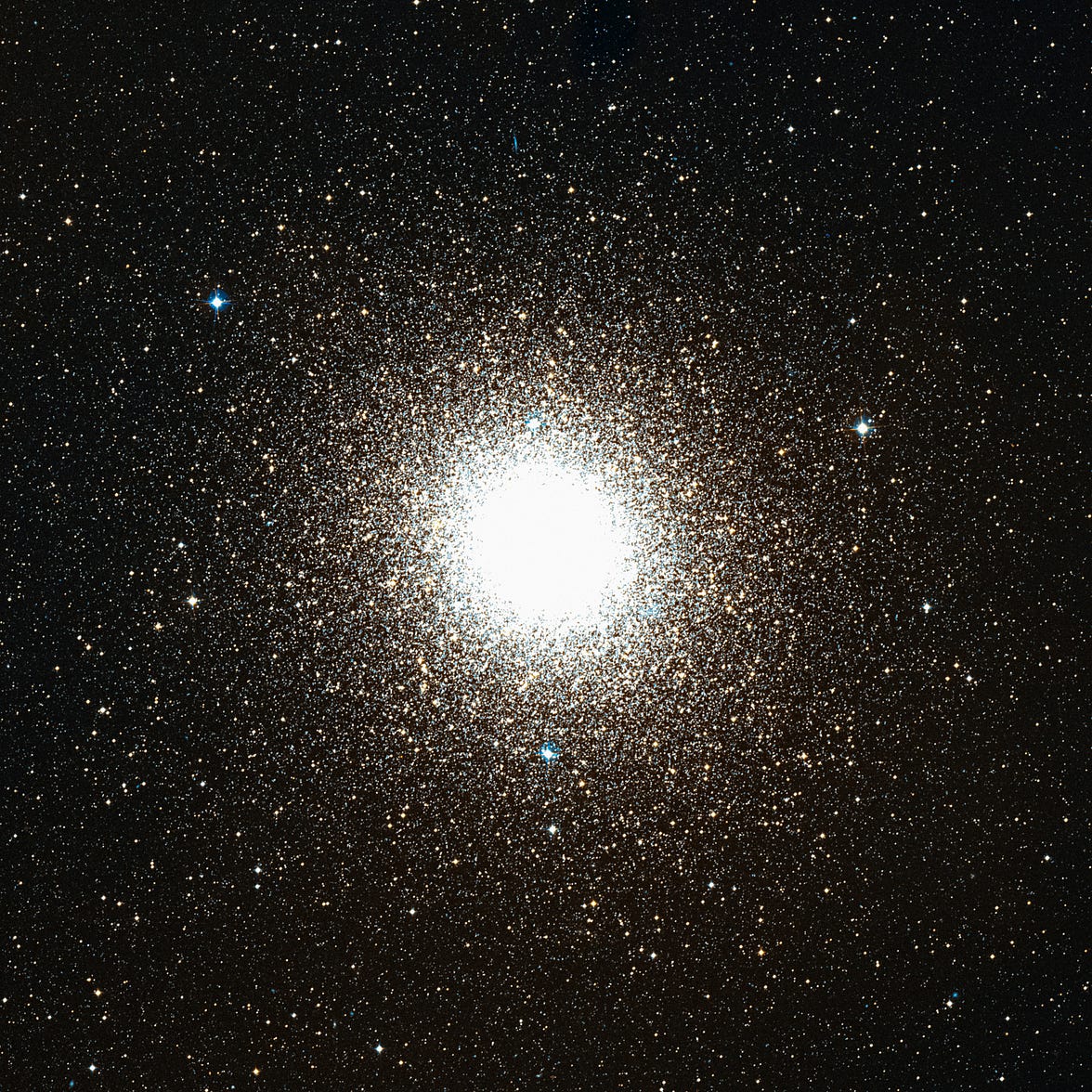
Photo by NASA Hubble Space Telescope on Unsplash
We are in the realm of science, but more importantly, the realm of mystics who seek to uncover the meaning behind and within beginnings and ends. Take the French Jesuit Teilhard de Chardin, banned for years by the Catholic Church but making a comeback today. He wrote of Christ as the “Omega point,” Christ as the center of the evolutionary process itself, and also the direction towards which everything is converging. This Christ is far more than a human Jesus, but a personal, cosmic dynamism. Here’s Teilhardian scholar Ilia Delio on the “Omega point”:
Through his penetrating view of the universe, Teilhard found Christ present in the entire cosmos, from the least particle of matter to the convergent human community. Christ invests himself organically with all of creation, immersing himself in things, in the heart of matter, and thus unifying the world.
My alpha and omega find themselves in the universe’s alpha and omega, which finds itself in God as Alpha and Omega. This brings me great hope in a time in which so many human lives are deemed “unworthy.” My life matters profoundly, and yours does, too, but not in the sense that we are ourselves very important. Instead, we participate in the loving presence of God and reality. We find ourselves in a much larger story.
