Evolutionary Thinking
From the beginning of time until now, the entire creation, as we know, has been groaning in one great act of giving birth. —Romans 8:22
Father Richard Rohr writes of an evolutionary faith informed by Scripture and a foundational trust in God’s never-ending love and creativity:
In this passage, St. Paul seems to fully acknowledge evolution. It’s always seemed completely strange to me that there should be any resistance whatsoever to evolution or evolutionary thinking in Christian theology or practice. Christians should have been the first in line to recognize and cooperate with such a dynamic notion of God. But maybe many do not enjoy such a relational God—with all that implies—and have just met a “substance” they call God. A static notion of God makes everything else static too, including our very notions of spirituality, history, and religion.
If our God is both incarnate and implanted, both Christ and Holy Spirit, then an unfolding inner dynamism in all creation is not only certain, but also moving in a positive direction. If not, we would have to question the very efficacy, salvation, hope, and victory that the Christian gospel so generously promises. Foundational hope demands a foundational belief in a world that is still and always unfolding.
I believe that as “children of the resurrection” (Luke 20:36), we are both burdened and brightened by a cosmic and irrepressible hope—and we can never fully live up to it. We are both burdened and brightened with the gift of an optimism whose headwaters are neither rational, scientific, nor even provable to those who do not have it. Yet it ticks away from a deep place within us. [1]
Evolutionary thinking is actually contemplative thinking, because it leaves the full field of the future in God’s hands. It’s a way of thinking that agrees to hold the present humbly, with what it only tentatively knows for sure. For me, that’s true faith, and it’s the heart of the matter, because we no longer need a totally predictable outcome. I know it’s very hard to exist in such an uncertain place and most of us aren’t practiced in it. The Christianity handed down to many of us didn’t define faith in that way; it was a very static notion of time and knowledge. We didn’t have to participate in the organic movement in our own soul, in the soul of our marriage, our family, or our community.
The contemplative mind is an evolutionary mind, and I think it’s the mind of Christ. It allows the future to reveal itself, without present circumstances totally predicting it. We all need some degree of predictability, but in faith, I can live without certainty to some degree. Living in that tension, that in-between, could be called evolutionary thinking or it could be called trusting in deep time. I’m trusting there’s a deep river flowing. Even when not much is happening on the upper river, I still trust the deeper river. [2]
Evidence for Things Not Seen
Faith provides evidence for things not seen. —Hebrews 11:1
Richard Rohr describes how mystics and sincere seekers discover “evidence for things not seen”:
The entire faith tradition insisted that there was indeed “evidence for things not seen,” and yet too often the common notion of faith had little to do with discerning the actual evidence available in the present, in the mind, memory, heart, soul, and in creation itself.
Sts. Augustine, Teresa of Ávila, and John of the Cross all found that “unseen” evidence in the very nature of the soul and its inner workings, but we must admit this hasn’t been taught to or experienced by most Sunday Christians. Many formal believers found evidence in Scripture and dogmas that supported and affirmed their personal God encounter, but perhaps even more of them used Scripture and dogma to make their own experience unnecessary. Others like St. Francis, St. Bonaventure, Teilhard de Chardin, many poets, and everyday mystics found evidence in the natural world, in elements, seasons, animals, and all living things, but sadly they were often marginalized as mere “nature mystics” and placed outside the mainline tradition. This makes me think that we Christians never understood our core message of incarnation, must less its massive implications. This was despite St. Paul’s direct and clear message:
What can be known about God is perfectly plain since God has made it plain. Ever since God created the world, God’s everlasting power and deity—however invisible—has been perfectly evident for the mind to see in the things that God has made (Romans 1:19–20).
This generation has at its disposal a whole new type of evidence, display, and apparition that is proving Paul was correct. And this wonderful evidence is arising from the discoveries of the scientific mind! God comes into the world in always-surprising ways so that the sincere seeker will always find evidence. Is sincere seeking perhaps the real meaning of walking in faith?
The search for truth, the search for authentic love, and the search for God are finally the same search. I would rather have “one who lays down one’s life for one’s friend” (John 15:13) by sincere seeking, demanding scholarship, and authentic service, than those who are on no search, do no mental or emotional work, and have no open heart for the world, but just want to personally “go to heaven.” We have coddled this individualistic non-Christianity for far too long, and with no encouragement from Jesus whatsoever.
The very shape, possibility, and meaning of evidence is quickly broadening. Religious people would be wise to get on board. Frankly, I think it is what the Christian desert fathers and mothers, mystics and saints, meant by concrete spiritual “practices,” and what Eastern religions meant by “skillful means.” Such “doing” will give us the kind of evidence that cannot be denied. It moves us into the world of action and beyond the mind—to a place where we now “believe” because we know for ourselves.
| Learning from the Mystics: John of the Cross |
| Quote of the Week: “How gently and lovinglyyou wake in my heart,where in secret you dwell alone;and in your sweet breathing,filled with good and glory,how tenderly you swell my heart with love.”- Verse 4 of The Living Flame of Love Reflection: The Living Flame of Love is a wonderful companion and sequel of sorts to the Dark Night of the Soul. After one has gone through the ruthless elimination of idols and competing loves, there is nothing left but the sweet embrace of God. It is nothing more than a love poem to God in the vein of the Song of Songs (also known as the Song of Solomon) from the Bible. There is something both sweet as well as scandalous about this poem. In this original Spanish, it reads almost erotically. The intimacy described is quite profound and touching. This is in large part due to the intimacy with God that St. John of the Cross models for us. In the medieval ages, there were three stages of sanctification: illumination, purgation, and union (sometimes called perfection). Illumination is the act of God shining on the human heart and conscience, awakening the person to the reality of the Spirit. Purgation is the act of purging or burning away that which does not belong in the human heart, a purifying of one’s love. Union, though, is the final stage. It is understood as the marriage of the soul to and with God. Throughout church history, there have been many figures who wrote from this marriage perspective. Many are “courting” God, fewer are “engaged/betrothed” to God, and fewer still are “married” to God. Some have called this final stage “Spiritual Marriage.” The Living Flame of Love is a poem of a soul being united and married to God. The brilliance of the poem is that the maturity of faith is not defined by perfection, morality, or doctrine. Rather, the maturity of faith is completely defined by loving intimacy with God. In many ways, despite his difficult life, St. John of the Cross has stood as an example of divine intimacy despite the hardships of life, some imposed by life outside of the church and some imposed by life within the church. St. John of the Cross believed in this intimacy with God so much, that he couldn’t NOT want to write eloquent Spanish poetry about it… and it has been all to our benefit that he did. Prayer: Oh Love That Will Not Let Us Go, enable us the tenacity as well as the vulnerability to be intimate with you. Swell our hearts to ever greater love of you, and our neighbors as ourselves. Help us not to distance ourselves from you and help us to instead long for your sweet embrace at every moment of every day, knowing that that same sweet embrace is already happening, if only we have the faith to trust that it is true. In the name of the Father, the Son and the Holy Spirit. Amen and amen. |
| Life Overview of St. John of the Cross: Who Were They: Juan de Yepes y Alvarez, later known as Juan de la Cruz (John of the Cross) Where: Born in Fontiveros, Spain. Died in Ubeda, Spain. When: June 24, 1542-December 14, 1591 Why He is Important: Understood as a prime example of scholasticism and spirituality. What Was Their Main Contribution: John of the Cross is most known for his commentary on his own poetry, of which the Dark Night of the Soul is one of a few main texts. He was jailed and beaten by his religious superiors and escaped to only then write some of his most enduring work. Click here for The Collected Works of St. John of the Cross. |
Hillsong’s Joel Houston Clarifies Evolution Views After Sparking Debate With Worship Song ‘So Will I’
By Jeannie Ortega Law, Christian Post Reporter Friday, June 29, 2018
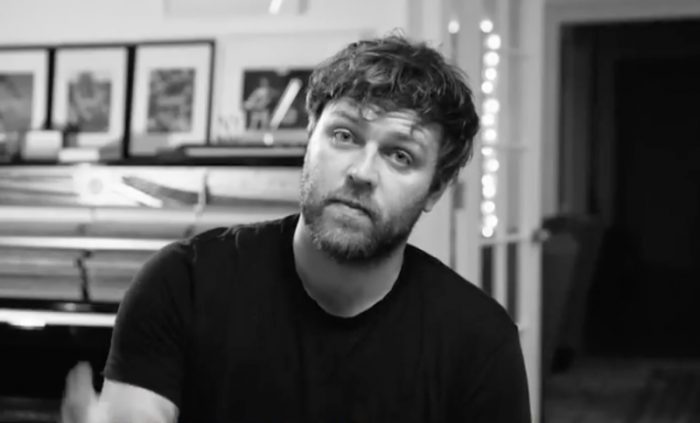
With one of Hillsong United’s latest hits, “So Will I (100 Billion X),” at the center of a creation versus evolution debate, worship leader Joel Houston is setting the record straight on where he stands.
“So Will I (100 Billion X)” is a song off of the album, There Is More, recorded live at the Hillsong Worship and Creative Conference in Sydney, Australia. Houston was recently asked on Twitter why the song mentions evolution.
The lyrics in question are: “And as You speak/A hundred billion creatures catch Your breath/Evolving in pursuit of what You said.”
Houston, who is the eldest son of Hillsong Church’s founders as well as lead musician in the worship band Hillsong United and worship leader of Hillsong Church in New York City, responded by saying:
“Evolution is undeniable—created by God as a reflective means of displaying nature’s pattern of renewal in pursuance of God’s Word—an ode to the nature of the creative God it reflects—and only ever in part—not the SOURCE! Science and faith aren’t at odds. God created the Big-Bang.”
His response sparked a Twitter debate on evolution versus creation and drew some backlash. In back-and-forth exchanges with various Twitter users, Houston went on to offer some context to his earlier tweet.
He wrote: “Context—things evolve, they change and adapt, I DON’T believe in evolution as a theory of SOURCE, I believe it’s merely a pattern of nature—created by God, reflecting Nature’s desire for renewal, survival, new life—something-SomeONE—Like God.”
He also said: “I think what gets lost, strangely enough, is that in any case, The Word, comes before any kind of Big Bang.. ‘let there be light’!! BOOM!! And there WAS!!!
When asked if he believes in the “Big Bang theory” or “literal 6 day creation,” Houston said, “It means I believe God created everything and His Word cane first..”
He further clarified his beliefs on whether man evolved from an ape, saying, “i believe God created humanity out of the dust.. and breathed his breath/Spirit into us..”
The popular worship leader admitted that when writing the song, the band was “aware of the implications ‘evolving’ would serve as a conflicting adjective for some” but said they still felt “it was worth it—if just a foolish desire to enlarge our thinking of a God who was-is-&-is to come, making all things new, ‘from-Him, through-Him, To-Him.'”
He explained that God is “way bigger than we think,” and regardless of one’s theological or scientific beliefs, He “is undiminished by our limitations.”
“If God’s creative process was an easy working week, or finely crafted over six-ages of millennia, does it make Him any more or less God?” Houston posed. “Or us any more or less created in His image? Either way, it was an unfathomably wonderful six-day process, however you think to see it.”
He added, “The way I see it—the NATURE of a fallen-world evolves in-decay BECAUSE of our best attempts to adapt to a—’survival of the fittest’ kind of existence—yet God, fully reveals His NATURE in-and-through JESUS, who embodied ours, and showed us a DIFFERENT way. Spirit & Flesh.”
The millennial worshiper went on to break down the structure of the song to help critics understand the development of the lyrics. He maintained they couldn’t sing of or understand God’s promises (in second verse) without the premise of the first verse (God of Creation). “Nor can we fully comprehend the reconciling power of the third-verse (God of SALVATION), without the tension in the middle.”
“The entire premise of ‘So Will I’, is the redemptive, creative, authority & power of God’s Word. That at the end of the day, all our best theories, ideas, dogmas & best attempts at understanding, will ultimately surrender to the ‘Word at the beginning,'” he concluded.
In an interview on TBN earlier this month, Hillsong Church Senior Pastor Brian Houston shared that all of Hillsong’s music is reviewed by theologians.
The pastor revealed they’ve been “more intentional” about vetting their songs in the last decade.
“We do put more effort into the theology of our songs than we ever have before for that very reason (of being able to reach into the hearts of people around the world),” he said. “So we have people specifically who, every single song has to fit through a system of being tested by theologians.
“There’s often a lot of grind, hopefully in a positive way, between the songwriter and getting it to a point where we feel like it’s not going to be too easily misrepresented.”
He noted that they usually do not throw a song out but they work on it until it’s theologically sound. Otherwise, if they release a song “that’s going to be misunderstood or theologically weak, believe me, we hear about it.”
