Father Richard Rohr describes how we can discover our true identity in God:
There is only one question we must definitely answer: “Who am I?” Or, restated, “Where do I abide?” If we can get that right, the rest largely takes care of itself. Paul answers the questions directly: “You are hidden with Christ in God, and Christ is your life” (Colossians 3:3–4). Every time we start judging ourselves, we can ask, “Who am I?” The answer will come: “I am hidden with Christ in God in every part of my life. I am bearing both the mystery of suffering humanity and the mystery of God’s glory, which is precisely the mystery of Christ.” (Relish the universality of Scriptures like 1 Corinthians 3:21–23, 15:22–28, or Colossians 1:15–20.)
God looks at us and always sees Christ, and God thus finds us always and entirely lovable. God fixes God’s gaze intently where we refuse to look, on our shared, divine nature as God’s children (1 John 3:2). Hopefully, one day our gaze will match God’s gaze. We will find God entirely lovable and ourselves fully lovable in the same moment. Why? Because it’s the same set of eyes that is doing the looking: “All of us, gazing with unveiled face on the glory of the Lord, are being transformed into the same image from glory to glory, as from the Lord who is the Spirit” (2 Corinthians 3:18).
All we have to do is receive God’s gaze and then return what we have received. We simply complete the divine circuit, “love returning love” as my father St. Francis of Assisi showed so well. This is our spiritual agenda for our whole life.
We are saved by standing consciously and confidently inside the force field that is Christ, not by getting it right in our private selves. This is too big a truth for the small self to even imagine. We’re too tiny, too insecure, too ready to beat ourselves up. We don’t need to be correct, but we can always try to remain connected to our Source. The great and, for some, disappointing surprise is that many people who are not at all correct are the most connected by reason of their intense need and desire.
All we can do is fall into the Eternal Mercy—into Love—which we can never really fall out of because “we belong to Christ and Christ belongs to God,” as Paul so beautifully stated (1 Corinthians 3:23). Eventually, we know that we are all saved by mercy in spite of ourselves. That must be the final humiliation to the ego.
Our holiness is really only God’s holiness, and that’s why it’s certain and secure. It is a participation in love, a mutual indwelling, not an achievement or performance on our part. “If anyone wants to boast, let them boast in the Lord,” Paul shouts (1 Corinthians 1:31).
Born Anew
Anglican hermit Maggie Ross describes an experience of God’s indwelling presence:
December is the season of Advent, the time of expectancy, of hushed hearts and quiet waiting. And though many Christians don’t make too much of her, it is the season of Mary.… One day I had my own annunciation. The raked winter sun was streaming through the east window of the hermitage, illuminating various items stuck on the rough sawn wall, including a little icon of our Lady of Guadalupe….
As the angled shaft of light set the icon on fire … I realized that the angel was greeting not only her but also me; that the intimacy of bread made God and God made Bread was possible only because of her obedience; that sacrament is the earthly and tangible culmination of her yes and our yes to participate in the fact of the Incarnation.
Annunciations are events of infinite and immense silence, for all that the Gospel records of conversation. The walls or scenery push back, become transparent to reveal all that is, was, will be, and then converge within.
That morning I came to understand that it is by baptism that we say, “Be it unto me according to your Word,” to bear that Word by the power of the Holy Spirit, and to bring it to fruition in our lives. It’s difficult to describe the impact of sunlight on a piece of printed paper stuck to fiberboard, and the insight may seem obvious, but it shook me to the heart.
Inspired by a Gospel passage about being “born again” (John 3:1–21), Ross recognizes how she is born anew through her yes to God’s invitation:
I took another step when the story of Nicodemus was read at the Eucharist the morning I was to leave for retreat at a Cistercian abbey. His question, “How shall this be?” awoke the echoing voices of Mary and Zechariah, of Abraham and Sarah’s laughter over God’s preposterous proposal that he at a hundred years, and she in her nineties would bear a son.…
To bear the Word, to enter the kingdom, we must indeed be born from the Spirit, not for the second time in the womb of our natural mothers, but continually in the love of the Mother of God that brought forth her son, and like her, in the same movement, to bear Christ as well. Mary, then, is my mother in this second birth, just as she is for Nicodemus.
That my heart is still not big enough to encompass this paradox I readily admit. I still feel unease about Mary sometimes…. But if nothing else, Mary has taught me to say yes: as Abraham and Sarah said yes, as Elizabeth and Zechariah said yes, as Jesus said yes to the cup that did not pass from him.
And each time that cup is passed to me at the Eucharist, I look into its depths beyond the dark wine shimmering gold and, trembling, I say, “yes.”
FRIDAY FIVE. John Chaffee
1.
“My idea of God is not a divine idea. It has to be shattered time after time. And God will do the shattering.“
– CS Lewis, English Author and Apologist
We are beholden to our ideas about God. We build them and craft them together. We preach, teach, and defend them. All of this makes sense because we are only human and organize our lives around our concepts of God.
What Lewis touches on here, then, is vitally important.
Our concepts of God can become obstacles to experiencing, knowing, loving, and being loved by God. Throughout our lives, it is not that we ever “outgrow” God. I question if that is even possible. What is true is that we can outgrow our concept or model of God and, therefore, must do the work to find a decent upgrade.
Years ago, as a youth pastor, I taught that it was a good idea to smash one’s idols before God must do it for us…
And this includes our occasionally idolatrous ideas about God.
2.
“Concepts create idols. Only wonder comprehends anything.“
– Gregory of Nyssa, 4th Century Cappadocian Theologian
Certainty and logic are helpful tools for navigating the world and dealing with problems within the realm of human comprehension.
However, when we approach the infinite, not so much.
At the microscopic and macroscopic views of the universe, we butt up against the limits of human comprehension and stand upon the cliff’s edge of what we can imagine.
This is where wonder comes in. This is where awe takes over.
The older I get, the more I am convinced that faith has little to do with certainty or logic and everything to do with wonder.
3.
“I pray God rid me of God.”
– Meister Eckhart, 13th Century German Preacher
This hearkens back to the first quote today from CS Lewis. Eckhart is not praying that God makes anyone into an atheist.
Meister Eckhart is a “master” theologian of apophatic theology. Apophatic is an adjective that means “away from what can be said” or “defining something by what it is not.” Apophatic theology is a healthy counter to all the other approaches of theology, which can rely too much on certainty and logic.
Another way of thinking about it is that some approaches to theology seek to explain away the mystery of God. In contrast, apophatic theology aims explicitly to protect this mystery.
What if this Christmas season, the gift that God offers you is the permission to let go of every small, limited, safe, predictable, controllable understanding of God?
4.
“Si comprehendus, non est Deus [If you comprehend it, it is not God].“
– Augustine of Hippo, 4th Century Church Father
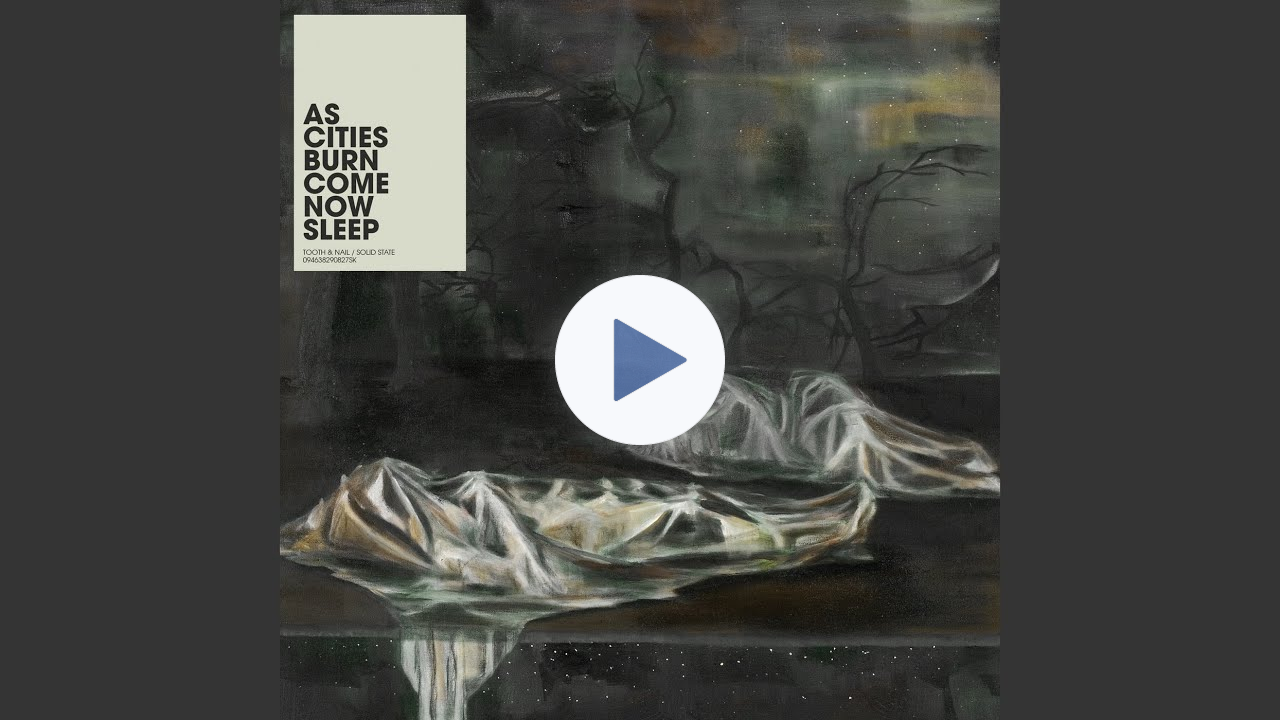
Here is a video of the song Clouds by As Cities Burn, which takes lyrical inspiration from this quote by Augustine.
I hope you enjoy it.
5.
“Our idea of God tells us more about ourselves than about Him.“
– Thomas Merton, Trappist Monk
Modern psychologists are not wrong when they say we sometimes project our issues or hopes onto others. They are equally onto something when they say we can project those same issues or hopes onto our concept of God.
In our modern technological world, it is easy to come across good and bad snippets of preachers mid-sermon. Within a minute, I can usually tell what worldview/value system the preacher is coming from. It is hidden in the vocabulary used, how those words are used, and how they are used in delivering their sermon…
We will inevitably preach and teach in a way informed by our view of God.
All the more reason to chase after speaking about God from a mature, second-half-of-life posture!
What is fascinating is that when we speak of God, we are tangentially talking about what it means to be human. The theologian-pastor Karl Barth said that we only ever are doing “theo-anthropology” since Jesus was both 100% God and 100% man.
This means whatever we are struggling with about God is also connected to whatever we are struggling with about what it means to be human.
Fortunately, the season of Christmas is all about “theo-anthropology.” If our understanding of God is that God is proud and keeps a record of wrongs, vengeful, retributive, dominating, and exclusive, then we should not be surprised if we start to resemble that. However, if our understanding of God is that God is humble, forgiving, patient, healing, helping, and inclusive, then that sounds like the best of what it means to be human.
