Minding Positivity
Friday, November 28, 2025
Richard Rohr explores how our brains are wired to hold onto negativity, and how contemplative practice helps us choose positivity instead:
Brain studies have shown that we may be hardwired to focus on problems at the expense of a positive vision. The human brain wraps around fear and problems like Velcro. We dwell on bad experiences long after the fact and spend vast amounts of energy anticipating what might go wrong in the future. Conversely, positivity and gratitude and simple happiness slide away like cheese on hot Teflon. Studies like the ones done by the neuropsychologist Rick Hanson show that we must consciously hold on to a positive thought or feeling for a minimum of fifteen seconds before it leaves any imprint in the neurons. The whole dynamic, in fact, is called the Velcro/Teflon model of the mind. [1] We are more attracted to the problem than to the solution, you might say.
Please don’t simply take me at my word. Watch your own brain and emotions. You will quickly see there is a toxic attraction to the “negative,” whether it’s a situation at work, a bit of incriminating gossip you overheard, or a sad development in the life of a friend. True freedom from this tendency is exceedingly rare, since we are ruled by automatic responses most of the time. The only way, then, to increase authentic spirituality is to deliberately practice actually enjoying a positive response and a grateful heart. And the benefits are very real. By following through on conscious choices, we can rewire our responses toward love, trust, and patience. Neuroscience calls this neuroplasticity. This is how we increase our bandwidth of freedom, and it is surely the heartbeat of any authentic spirituality.
Most of us know that we can’t afford to walk around fearing, hating, dismissing, and denying all possible threats and all otherness. But few of us were given practical teaching in how to avoid this. It’s interesting that Jesus emphasized the absolute centrality of inner motivation and intention more than outer behavior, spending almost half of the Sermon on the Mount on this subject (see Matthew 5:20–6:18). We must—yes, must—make a daily and even hourly choice to focus on the good, the true, and the beautiful. A wonderful description of this act of the will is found in Philippians 4:4–9, where Paul writes, “Rejoice in the Lord always” [italics added]. If you’re tempted to write this off as idyllic “positive thinking,” remember that Paul wrote this letter while literally in chains (1:12–13). How did he pull this off? You might call it “mind control.” Many of us just call it “contemplation.”
______________________________________________
John Chaffee 5 On Friday
1.
“People forget facts, but they remember stories.”
– Joseph Campbell, American Mythologist
This may be why the scientific era is not that inspiring. Sure, the impetus to explore and discover is, in its own way, inspiring, but there is something about narrative that is better at shaping and informing our moral compass than scientific facts.
If you have ever seen the movie Interstellar, you know it has impressive science displayed in a cinematic fashion. However, the emotional tone of that movie and its emphasis on family, loneliness, grief, sacrifice, and hope are what drive the story and make the protagonist the “hero.”
2.
“The love of God is a reckless, raging fury.”
– Brennan Manning, Former Franciscan
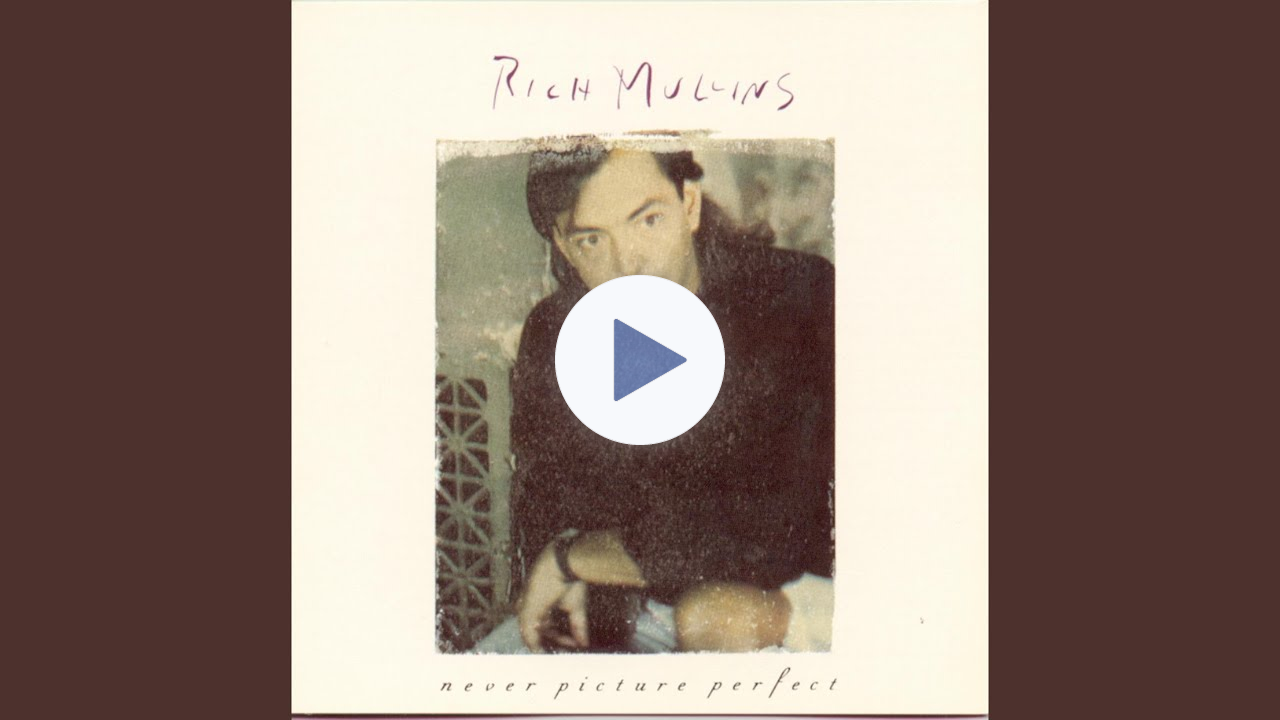
This week, I began journaling through the Spiritual Exercises of St. Ignatius of Loyola. During one of the journaling sessions, something triggered my memory of how Brennan Manning (inspired by GK Chesterton) would write and talk about the “furious love of God.” In turn, Rich Mullins wrote a short song on the same topic.
In fact, here is the Rich Mullins song, in a YouTube format!
3.
“Holiness is goodness on fire.”
– Walter Rauschenbusch, Baptist Minister
I never heard of Walter Rauschenbusch before two weeks ago. He was a Baptist minister in Rochester, NY, and his work helped to inform/inspire Howard Thurman, Martin Luther King Jr., and many others. He was pretty active in social activism, which was impressive at the end of the 19th century.
One of the impressive markers of Raushenbusch’s theology was his connection between the private sins we commit and the social or collective sins that are often overlooked. For him, it is a betrayal of the ethics of Christianity and of Christ to preach about the personal virtues of individuals without calling the larger society to more and more virtues as well.
If you ask me, one of the marks of a prophet is not that they decry the individual sins of people, but can see through the rationalizations and defense mechanisms and name for the rest of us the social sins toward which we give a blind eye.
4.
“God expects more failure from us than we do.”
– Unknown
Dang.
Let’s all sit back and dwell on that, huh?
5.
“Truly, He taught us to love one another;
His law is love, and His gospel is peace.
Chains shall He break, for the slave is our brother,
and in His name all oppression shall cease.“
As I mentioned above, O Holy Night is one of my favorite hymns of all time. One thing that impresses me is how it connects the Incarnation with the liberation of slaves. I am sure many people know this third verse, but I also believe many perhaps sing it without realizing that, when this hymn was written, it was a protest song that included this verse.
Could you take a moment and reread the verse?
It was written in 1843.
The 13th Amendment, which ended slavery, was passed in Congress in 1865.
That means this hymn was sung for 22 years while slavery was still “legal” in America.
This is quite inspiring. It also leads me to wonder what other social ills we are committing today that fly in the face of the Incarnation…
