A Different Kind of Joy
Tuesday, April 7, 2026
Theologian and podcaster Kate Bowler frames Easter as a feast of joy that doesn’t erase the pain that has come before it:
Easter is the season of joy.
The alleluias return. The story reaches its turning point. Death does not get the last word.
Easter is that gorgeous, sweet, closing note of the salvation hymn we believe with all our hearts: Christ has conquered death, and we will someday be with God forever. Hallelujah. Hallelujah.
Joy brings us incredible, brief, soul-filling moments when we feel the overwhelming love of God and our place in this world. Our soul cries: Yes. I am grateful. It is so good to be alive.
Joy is a gift from God and a feeling that bubbles up from wherever the soul lives (probably close to the intestines. This is my working theory after realizing I will never love anything as much as I love Old Dutch Ketchup Potato Chips).
But that is not the only way joy shows up.
There is an aspect of joy we often miss around Easter, and it appears precisely when Easter comes and goes and life remains … unfinished. We wake up the next morning and discover that we are still carrying the same griefs, the same unanswered prayers, the same ache we carried throughout Lent.
This can feel confusing. Shouldn’t we feel better? Was Easter not enough?
But Easter joy is not the feeling that everything has been fixed. It is not happiness, resolution, or emotional closure. Easter joy is the ability to live in Christian anticipation and trust—patiently and imperfectly—even while we remain here in the long middle.
Joy is one of the most powerful experiences we can have because it is an emotion that can co-exist with our actual lives. Unlike happiness, joy can live alongside sadness, boredom, fear, or despair. It expands our capacity to hold contradictory truths at the same time—and because we know joy, we recover a strange, steady confidence that life is still worth loving, even when it hurts.
Scripture is honest about this. Jesus weeps at Lazarus’s tomb, even knowing resurrection is coming. Paul speaks of being “sorrowful, yet always rejoicing” [2 Corinthians 6:10]. Revelation [21:4] promises a future where God will wipe away every tear—but that promise is not the same thing as pretending we are not crying now.
This is where Easter joy lives.
It is not joy instead of grief. It is joy with grief. Not joy that rushes us forward, but joy that allows us to remain human in the meantime.… This joy is more totalizing than optimism. It is truer than plain happiness. It is the deep assurance that the story is not finished, even when our lives feel painfully incomplete.
Easter joy is the grace of being able to say: This is hard. I am still waiting. And God is still good.
Not because everything has changed—but because, one day—poof—God promises everything will.
=======================
New Breath, New Light
An Easter Poem
| CHUCK DEGROAT. APR 5 |
I begin to roll away the first stone—
and then another,
not all at once,
but slowly,
as heart and body consent.
Not chasing after the light,
as I’ve long done,
but letting it find me.
Christ within me
not arriving with spectacle or strategy,
but in gentleness now—and safety—
breathing new creation breath where I’ve long held mine,
thawing what has remained frozen.
I turn, gently now,
to the parts of me
who have stood guard at this tomb—
the vigilant ones,
the protectors of what I feared to feel,
the guardians of all I’ve exiled within.
And this time
I do not banish them.
I thank them.
You stayed when I could not stay with myself.
You guarded what felt too fragile to trust to the world.
And I welcome the ones long
condemned to the dark—
so anxious, so alone, so afraid—
You are no longer alone.
You are held.
Beloved.
And I begin to trust
that resurrection is not my escape
from being human,
but the healing of it—
that the parts of me that grasped
for the forbidden fruit of control,
that believed I could perfect
or perform away the shame,
can be held
in a Love strong enough
to breathe new creation into them.
Christ in me—
the still point beneath my striving,
the ground beneath my grasping,
steady even as my hands shake—
is not rushing me out of the tomb,
and he won’t rush you either.
He meets us here,
all of us,
until even our shadows
begin to trust the light.
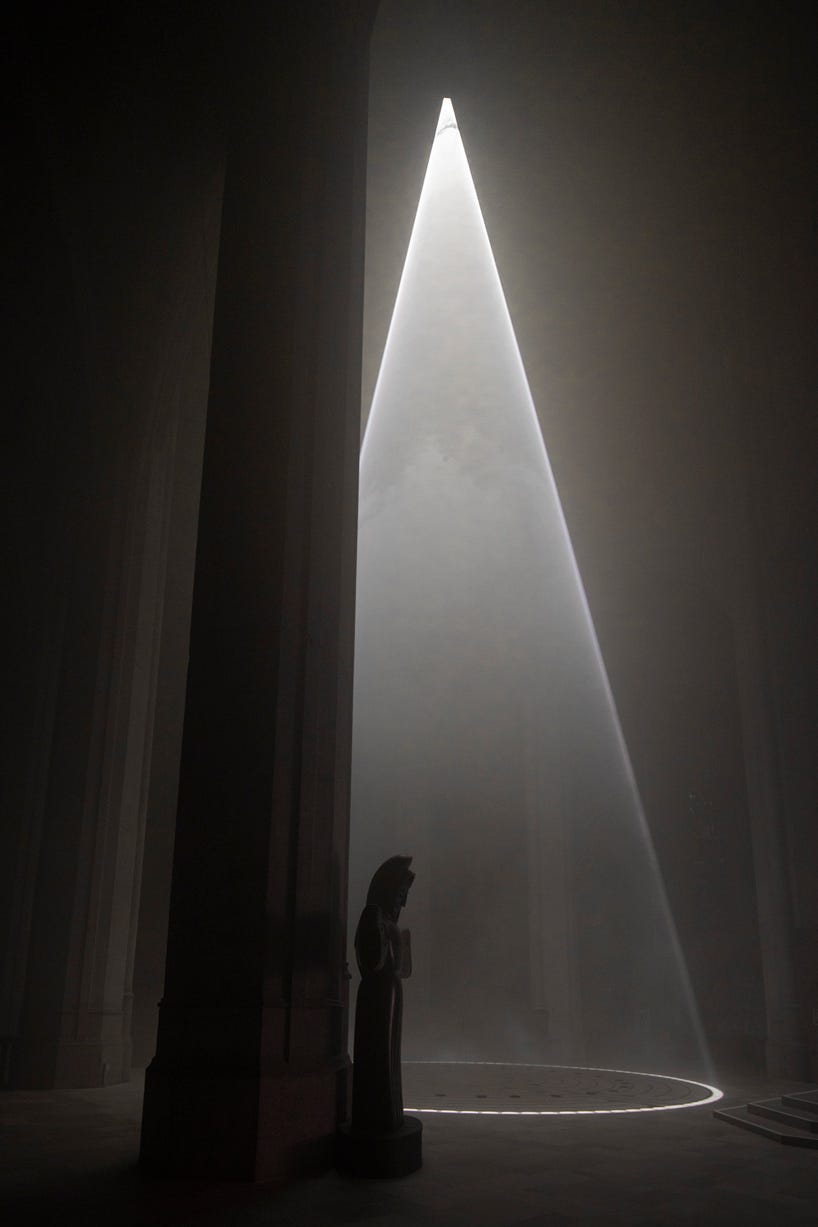
Even the first sliver of new light
is enough
to warm what has too long
remained frozen and alone.
Individual Reflection: What part of yourself have you been trying to escape rather than let resurrection heal?
Group Discussion — choose one:
- Where are you living in “the long middle” right now?
- What would it mean to thank rather than banish the parts of you standing guard at the tomb?
- Is there a difference between hope and the feeling that things are getting better?
