Universal Healing
Tuesday, October 20, 2026
Cherokee theologian Randy Woodley contrasts Western Christianity’s emphasis on salvation through doctrine with the healing work of Jesus:
People who believe themselves to be at the top of a hierarchy must find ways to maintain power. Doctrines can be a handy tool for doing so. If you can convince the masses that a reward awaits them in heaven, you’ve got a way to keep the restive crowds a bit quieter, more compliant. And if you can convince them that they’re actually sinful through and through—and that as sinners, they’ve got to keep themselves in line in order to have a chance at God’s grace—well, you’ve got it made. Your power can continue to expand.
One such doctrine was the belief that all people are born sinful. This is often called the doctrine of original sin … [which] fits nicely with the dominant church’s presumed authority to either grant or withhold salvation….
What Christian theology calls “sin” Native American understandings often describe as imbalance, or broken harmony. These different terms point toward the same spiritual reality. Salvation then, is restoring the harmony and imbalance through healing.
By reducing the idea of salvation to a series of formulas, or disciplines, or prayers, or creeds, the Western church missed the whole point. Salvation … was not something that could be bought with money, power, or obedience to words in a creed. Salvation is about one thing: healing. And not healing for later, in the by and by, but healing for right now.
Even today, many people allow doctrine to determine their idea of salvation rather than understanding salvation as the way God heals us all, including the rest of the community of creation. I would love to see people grasp this important concept: that healing is a much better way to think of God’s greatest gift than salvation is.
Woodley describes how Jesus offers collective healing rather than individual salvation:
When we look at Jesus through the lens of Indigenous and Hebrew understandings rather than imperial American and Roman frameworks, we see that his ministry was fundamentally about restoring wholeness, healing bodies, bringing outcasts back into community, challenging unjust systems, and mending broken relationships…. Healing is the bigger picture of God’s vision that Western Christianity calls “salvation,” and healing is for all of us now.
Perhaps most importantly, healing language better reflects the Creator’s heart for shalom: that comprehensive peace and abundance in which all creation coexists in harmony. Shalom, and the Indigenous visions of harmony, contains a justice and wholeness that extends far beyond individual souls to encompass whole communities, cultures, and the land itself.
The path forward must be about stripping away the imperial distortions to reveal the Jesus who heals rather than conquers, who restores rather than erases, who empowers rather than overpowers. In this understanding, salvation becomes what it was always meant to be: the healing of all things.
============
Sunday Musings
Simple, but not easy
| DIANA BUTLER BASS. OCT 17 |
TODAY IS THE TWENTY-FIRST SUNDAY AFTER PENTECOST
We are moving swiftly through these final weeks of Pentecost. Advent is coming.
The lectionary readings raise increasingly pressing questions about what it means to live in politically fraught and conflicted times — while hoping for a better world to come.
Matthew 22:15-22
The Pharisees went and plotted to entrap Jesus in what he said. So they sent their disciples to him, along with the Herodians, saying, “Teacher, we know that you are sincere, and teach the way of God in accordance with truth, and show deference to no one; for you do not regard people with partiality. Tell us, then, what you think. Is it lawful to pay taxes to the emperor, or not?”
But Jesus, aware of their malice, said, “Why are you putting me to the test, you hypocrites? Show me the coin used for the tax.”
And they brought him a denarius.
Then he said to them, “Whose head is this, and whose title?”
They answered, “The emperor’s.”
Then he said to them, “Give therefore to the emperor the things that are the emperor’s, and to God the things that are God’s.”
When they heard this, they were amazed; and they left him and went away.
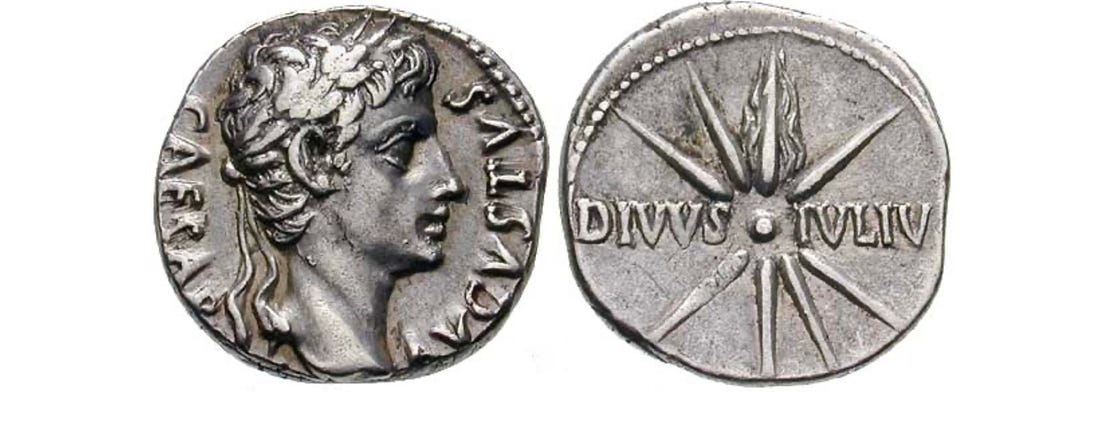
I paid taxes this week.
I know. It’s not April. This is October. But, since I’m a freelancer, it takes time to organize everything. We always ask for an extension and pay in the autumn.
While struggling through piles of receipts, I was thinking about preaching this weekend on this text: Render to Caesar the things that are Caesar’s, and to God the things that are God’s.
And so, I wrote a check and rendered.
These verses are often quoted to support “good citizen” theology. “Good citizen” theology teaches that we live in different spheres of duty, responsibility, and obligation — state and church, politics and faith, or the sphere of “Caesar” and the sphere of “God.”
It seems, on the surface at least, easy. Pay your taxes, support the government; pray and serve, love your neighbor; honor the king, worship God.
Just when we think we’ve solved the problem of politics and religion, the New Testament throws us a story like Jesus’ argument with his critics, the Pharisees.
In this passage, the Pharisees quiz Jesus, to “entrap” him. Jesus was, most likely, a fellow-traveler to the first-century Jewish movement called the “Pharisees.” He shared much of their theology, rabbinical teaching style, and practices of worship. But for all his similarities with them, there were differences, too. And those differences often emerged in sharp encounters.
The Pharisees were both a theological and political movement. They hated Caesar and Rome — seeing the Romans as unclean and barbaric pagan overlords. But they’d adopted a program of what one scholar calls, “pragmatic survival and accommodation” instead of violent resistance to Rome. As much as they detested Caesar, they really, truly wanted to stay out of trouble with the authorities, waiting out Rome and hoping for better years ahead. Instead of criticizing the political order directly, they emphasized faith and Jewish practice and kept out of Caesar’s way.
When they questioned Jesus, they wanted to pin him down on politics and religion. Getting Jesus on record would serve them well. They could figure out if Jesus sided with their survival strategy. He’d be a good ally both religiously and politically. If he didn’t agree, he might be dangerous. Perhaps he sided with the Zealots or one of the politically revolutionary groups. The Pharisees needed to know that. If he became too popular, he might draw Rome’s ire and threaten the already-tenuous survival of the struggling Jewish community.
Understanding Jesus’ position on taxes was key to defining his politics. Generally, the Pharisees paid taxes as part of their “accommodation” strategy. Better to cough up the cash than go to jail — or worse. But Jesus? What did he do?
And so their question: Is it lawful to pay taxes to the emperor?
In one of his finest no-answer answers, Jesus said: “Give therefore to the emperor the things that are the emperor’s, and to God the things that are God’s.”
His critics were “amazed.” They got it. They understood his point.
It seemed somehow clear to them. Clear enough to turn and walk away.
But it has rarely seemed that clear to us. Over the centuries Christians developed at least five interpretations of Jesus’ “render to Caesar” comment: (1) Caesar and God are separate — pay the tax; (2) Caesar and God are an enigma, an unsolvable puzzle meant as a deflection; (3) Caesar and God are a paradox and we, somehow, must serve both; (4) Caesar and God are at odds — pay your taxes but “with contempt”; or (5) Caesar is under the authority of God and give the state nothing, no matter the consequences.
Take your pick. Each one of these positions has theological oomph — and has been supported and argued over and over and over again in church history.
That makes me wonder: Have we missed the point?
When this story was first written down, sometime between 60 and 80, Roman emperors made a claim to divinity. Indeed, the imperial titles for Caesar included “Dominus et Deus” and “Dominus et Salvator.” Not “Mr. President” or “Your Honor” or even “Your Royal Highness” or “Your Majesty.” But “Lord and God” or “Lord and Savior.” Those were titles held by Caesar.
Jews hated it. This was idolatry. And Christians hated it, too. Christians hated it so much that they stole the titles and gave them to Jesus. No calling Nero their Lord and God. Instead, they proclaimed “Jesus is Lord.”
And the year 60, they were being killed for saying it.
That’s the invisible context of the Caesar tax story. In these early years, every Christian knew their creed: Jesus is Lord. Not Caesar.
The first audience of Matthew’s gospel would have known exactly how it was intended. The story undergirded their creed — Jesus is Lord. Not Caesar. They might have laughed upon hearing or reading it. Caesar thinks everything belongs to him. We don’t think that! Because nothing belongs to Caesar. Everything belongs to God!
The story was written down because it supported what Christians already believed. Not that they were trying to figure out some doctrine of church and state.
They were not worried about taxes. They were worried about Roman authorities throwing them to wild beasts.
They already knew that Caesar was a pretender. That evil was upon the throne. And God? Well, no matter what Caesar did, even if he murdered them, Caesar could never own them. Because God did. Through faith. Through baptism. Through their love of God. Through their solidarity with neighbors. Jesus is Lord!
And that’s it. The first creed was a theological statement. And it was a political statement. The first creed was theo-political. Jesus is Lord. Caesar is not.
In the case of this verse, the long historical argument of state and church in Christian theology is a complexity of our own making. It is complicated because we’ve made it complicated — trying to justify governments and practices and systems of politics that literally have nothing to do with divine intention and the sacred heartbeat of the cosmos.
Jesus is Lord. Caesar is not.
The Pharisees were amazed because it was so clear. So simple. They’d complexified Caesar and God — and Jesus cut to the chase. Give to Caesar what is Caesar’s — to God what is God’s.
It is simple. Everything belongs to God. Simple, yes. But it is very hard to live. The early Christians knew that. Simplicity doesn’t mean it is easy. And we know that, too.
But the simplicity still shines: God. Dominus et Deus. Lord and God. Dominus Mundi. Lord of the Earth. Dominus universum. Lord of the Universe.
Remember the creed — the cry — of the first followers of Jesus: Jesus is Lord!
Not Caesar. Never Caesar.
May we be brave enough to proclaim the same — and courageous enough to live it in our day.
