
Empire and Christianity
Belonging in God’s Kin-dom
Wednesday, October 21, 2026
Theologian Kat Armas celebrates how early Christians would have heard the gospel call to dignity and belonging, in contrast to the empire’s insistence on conquerors and those conquered:
In the empire’s world, belonging was a double-edged blade. To be counted, to have a name that meant anything beyond yourself, you had to be willing to shed your own skin, to carve yourself into a shape that mirrored the empire’s desires. Conformity to the empire’s will was a way of survival, a bitter peace won through the erasure of identity. There was no space for wild diversity, no room for the vast and beautiful spectrum of human existence.
But then this voice, this gospel, cuts through the air: “There is neither Greek nor Jew, circumcised nor uncircumcised, barbarian, Scythian, slave nor free …” (Colossians 3:11). These labels—Greek, Jew, slave, free—were more than words; they were walls built around souls, barriers defining who could rise, who was condemned to serve. But with Colossians’ bold proclamation, the empire’s iron categories tremble. In Christ, even the outsider is welcomed. No longer must anyone bow to belong; this new kin-dom dismantles the lie that peace requires our silence….
The way of Jesus stands in stark contrast. This gospel takes the empire’s most despised and remakes them, offering not only belonging but belovedness. The reach of Christ’s love goes to the most forsaken corners of the imagination and brings forth kin. Here, we find a love that turns the feared into family.
In this new kin-dom, there is no lower rank, no conquest hiding under the guise of unity. Jew and Greek, slave and free, barbarian and Scythian all gather at the same table, each honored as they are.
Armas emphasizes how this movement of God supported both diversity and belonging:
When Colossians speaks of putting off the old self, of shedding the garments of empire, it calls us into a transformation that is not about adornment but about a fundamental rebirth. In Roman triumphs, victors would strip away their old clothes and don the robes of victory in a ceremony that celebrated the rule of the conqueror. In the empire, proper dress symbolized civilization itself. To be Roman was to be clothed rightly, while those deemed “barbarians” were marked by their supposed lack of refinement, cast as outsiders not just by geography but by appearance, by dress, by body. This belief endured through European colonization and still lingers into our modern minds. To belong in the empire is to dress the part. But the gospel invites us to clothe ourselves instead in compassion, kindness, humility, gentleness, patience, and above all love. This love is no shallow thing—it binds us, mends us, forms a communion where there were once only categories. In this kin-dom, power falls away, and what’s left is a peace so deep that it becomes home, a place where difference can finally breathe. A place of communion, solidarity, and friendship.
==========
The Death Penalty & America’s Spiritual Crisis
The Secretary of War is not following the Prince of Peace.
| HOLY POST MEDIA OCT 21 |
By Shane Claiborne
A lot of people are talking about the death penalty right now. First, there was the recent botched execution of Christa Pike in Tennessee. She survived two lethal doses of the poison meant to kill her and is still alive, as all executions in Tennessee are halted, at least for now. Then we heard Pete Hegseth announce that the military execution by firing squad of the Fort Hood gunman would be livestreamed, an announcement initially met with enthusiastic support from President Trump. It appears the President has now canceled the livestream, but we can’t let the debate over livestreaming an execution eclipse the larger reality—not only is it wrong to livestream an execution; it’s also wrong to have an execution. The death penalty is a cruel, gruesome, failed experiment in America.

We are one of only a handful of countries still executing people on a regular basis. The United States is usually in the top five countries when it comes to the number of executions in any given year, and we are always in the top 10. The company we keep is China, Iran, Saudi Arabia, Yemen—countries not known for being champions of human rights. When I was born just over 50 years ago (1975), most of the world’s countries still executed people. In my lifetime, most of the world has stopped executing people and found better ways to administer justice. We are one of the outliers.
There is another layer of this that deeply troubles me as a Christian. More than 95 percent of executions in America happen in the “Bible belt”—where Christians are most concentrated. The Bible belt is the death belt. The death penalty has survived in America not in spite of Christians, but because of us—and that should trouble any of us who genuinely love Jesus, the Prince of Peace. It is Christians who are driving the machinery of death—Christian governors, legislators, parole board members, even up to the Supreme Court, where the most pro-death Justices are the ones who profess to be Christians. If Christians decided to abolish the death penalty in America, it would end overnight.
Now, it is also true, and worth noting, that these Bible belt states are also formerly Confederate states. The states that held on to slavery the longest are the same ones that continue to hang on to the death penalty. Where lynchings happened 100 years ago is precisely where executions happen today. That’s all massively important. While some folks insist that we need the death penalty for “the worst of the worst”—folks like the Fort Hood mass shooter set for execution in December. And yet, as you take a closer look at the death penalty, it becomes clear that we are not killing the worst of the worst, but the poorest of the poor and disproportionately people of color. What determines who gets killed is not the atrocity of the crime, but arbitrary things like the resources of the defendant (there are no rich people on death row), the race of the victim, and where the crime was committed.
Jeffrey Dahmer didn’t get the death penalty. Charles Manson died of natural causes in prison. Harvard-educated Ted Kaczynski didn’t get it. Race and resources play a major role in who dies and who lives, and even the Supreme Court recognized that when they halted executions in 1972, calling it “arbitrary and capricious.” Justice Stewart famously compared the randomness of the death penalty to being “struck by lightning.” Less than 1 percent of murders end with an execution of the perpetrator—and it is certainly true that the “lightning” hits people of color a lot more than white folks. Nevertheless, let’s dig a little deeper on why I think the death penalty is not just a moral crisis but a spiritual one.
I want to suggest that the death penalty, and Christians’ fidelity to it, is a theological and spiritual crisis.
When you look at the research and polls, when people are asked if they can quote a passage from the Bible, at the top of that list is “An eye for an eye, and a tooth for a tooth” (Exodus 21:24). Unsurprisingly, when President Trump was asked what Bible verse has shaped his character and thinking, he cited this one. (It’s also worth remembering that during his first term, Trump carried out federal executions at a rate we haven’t seen in over 100 years).
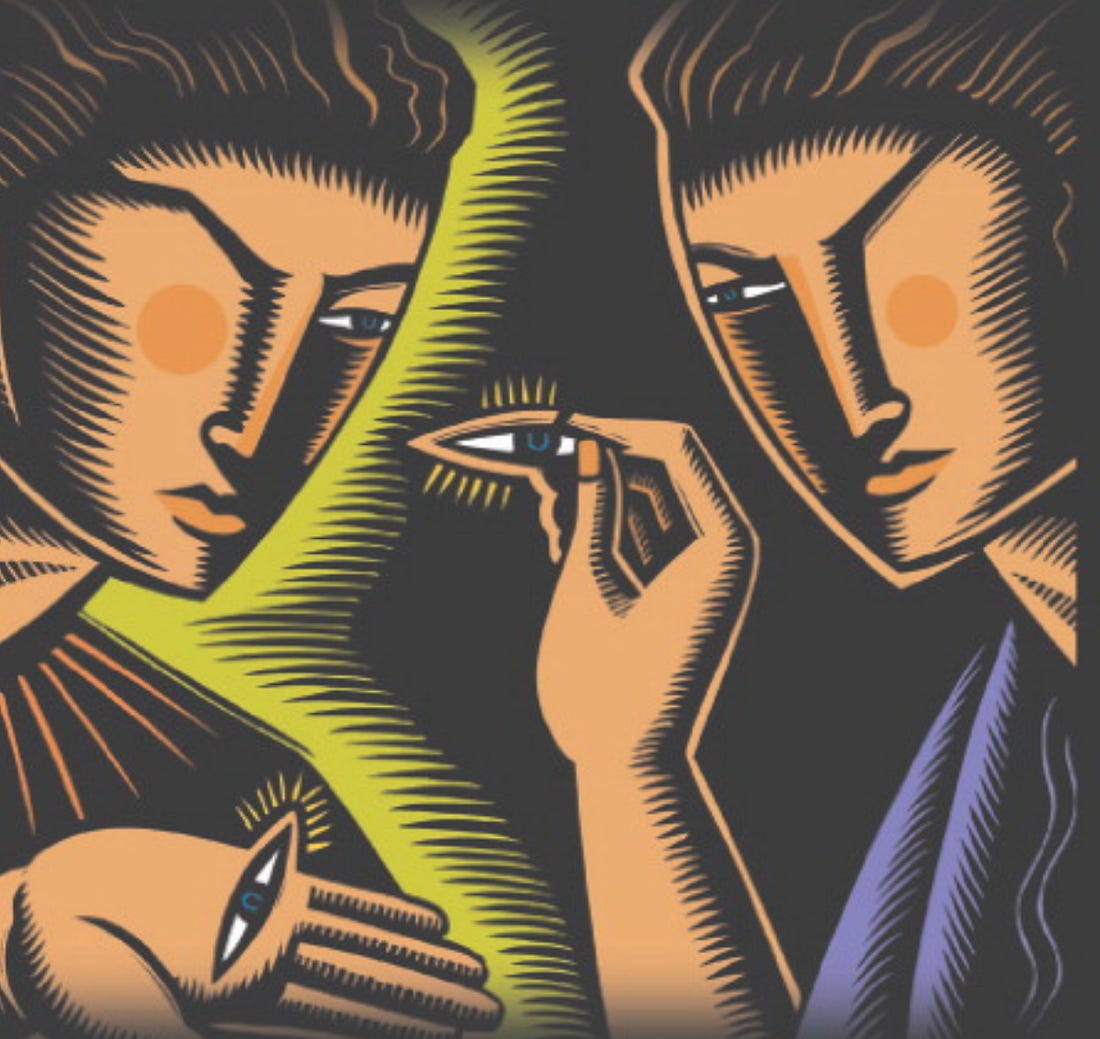
It is literally one of the most well-known Bible verses in the world—and, I believe, one of the most abused and misunderstood. The ancient law, older than Scripture itself, is known as “lex talionis.” It is where our idea of “proportional retaliation” originated. This framework for justice allowed for reciprocal harm—a victim has the right to harm the perpetrator who hurt them. But the ground rules were clear—it had to be an exact exchange. If someone broke your left arm, you could break their left arm, but not their right. If someone gouged your eye out, you could gouge out their eye, but not both eyes. And you certainly couldn’t burn down their house or do them harm in other ways. Scholars point out that the whole purpose was to stop the spiral of violence from building. We know how violence escalates. We might think of lex talionis as “an eye for an eye… but no more.” It was meant to limit violence, not license it.
Deep down, we all know we can do better. Our parents taught us, “Two wrongs don’t make a right.” If someone actually gouged your eye out, not many of us would suggest that the best version of justice is to gouge their eye out. We don’t rape people who rape to show that rape is wrong. And yet in the case of murder, we still hold out this logic—that we can kill to show that killing is wrong.
This is where Jesus shines so brightly. He challenges this version of justice head-on. “You’ve heard it said, ‘An eye for an eye’… but I tell you.” He knew the prevailing logic of his time—“Moses told you this… but I tell you.” As one who believes Jesus didn’t come to abolish the Old Testament but to fulfill it, this all makes total sense. Stopping the spiral of violence was a good place to start, but refusing to resort to violence at all is divine. Jesus makes it clear—just because something is legal doesn’t make it right. Just because we can harm someone back doesn’t mean we should. He shows us how to engage with evil without mirroring it. As Scripture says, we do not repay evil with evil, but we overcome evil with good (Romans 12, 1 Peter 3). This is why the death penalty is so problematic. It is a direct betrayal of the redemptive love we see in Christ.
At the heart of the Gospel of Jesus is the deep conviction that no one is beyond redemption. Where sin abounds, grace abounds. Mercy triumphs over judgment. That’s what the Bible says. And it is worth remembering that Moses murdered someone. David murdered Uriah to cover up his rape of Bathsheba. The apostle Paul oversaw the torturous execution of Stephen. If murderers are beyond redemption, then we can rip out most of the Bible, because it was written by them. The Bible is a love story, a grace story—one of the central themes is that God is good even when we are not.
One of the things I am quite proud of as someone who was raised Methodist is the powerful statement of the United Methodist Church on capital punishment:
“The death penalty denies the power of Christ to redeem, restore, and transform all human beings.”
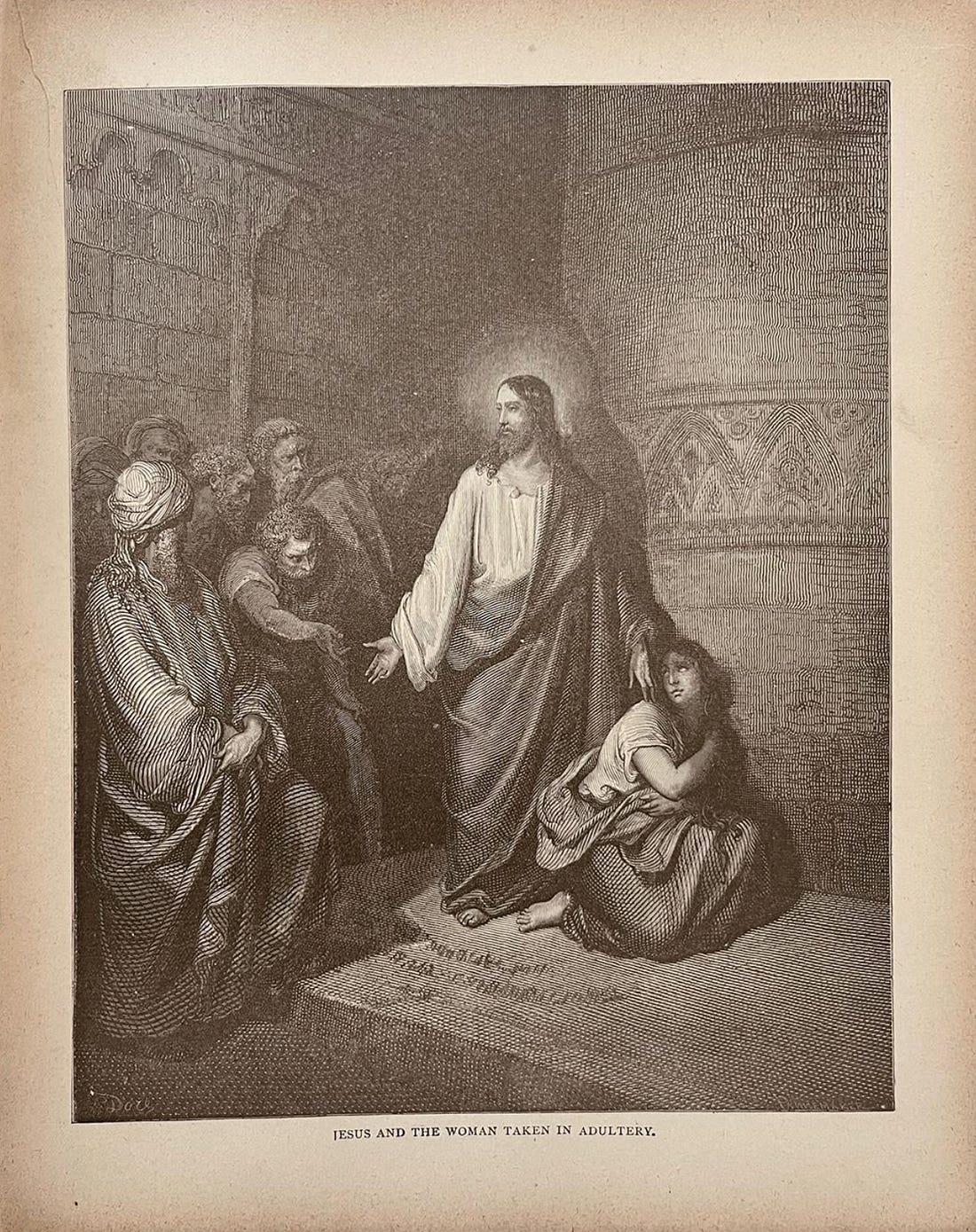
There is the iconic story of Jesus interrupting an execution of a woman caught in adultery, as he says: “Let the one who is without sin cast the first stone.” It is Jesus who blesses the merciful and promises that in as much as we forgive, we will be forgiven. And of course he didn’t just preach it—he lived it up to his last breath as he pleaded for forgiveness for the people who were killing him. If Christ refused to kill, so should we.
The early Christians got it. For the first few hundred years, they were a steady voice for life on all fronts, which included the death penalty. Cyprian, one of the third-century bishops, insisted that it is always wrong to kill, regardless of whether the person taking a life is a criminal, or a governor, or a President. His words: “… Murder, considered a crime when people commit it singly, is transformed into a virtue when they do it en masse.” He found it utterly absurd that we would denounce murder done by an individual but sanctify it when it is done by the state.
My friend Sr. Helen Prejean often says, “Sometimes the question isn’t whether someone deserves to die, but whether we deserve to kill.” After all, weren’t we all deserving of death, but given the gift of life by the love and grace of God?
Let us also make it clear—every one of the people killed by Nidal Malik Hasan, and all those injured and traumatized by his violence, are also made in the image of God, and they deserve justice. To be against the death penalty is not to be against justice. It is not to be numb to the pain of the victims and their families or to say that murder shouldn’t have consequences. But real justice, God’s justice, Biblical justice, is restorative. The best translation of the biblical concept of justice, always connected to “righteousness,” is restorative justice.
Rather than asking, “What did they do wrong, and what punishment do they deserve?” restorative justice asks a different set of questions: ”What harm was done, and how do we heal the wounds?” The death penalty does not heal the wounds of violence; it just creates new wounds. It mirrors the evil. It creates a whole new set of victims. Violence is the disease, not the cure. It is long past time to stop killing to show that killing is wrong. The death penalty raises the question not just of who Nidal Malik Hasan is, but who we are—and who we want to be.
Here’s the good news—enthusiasm around the death penalty is hitting a record low. We are finally seeing polls with a majority of Americans wanting alternatives to the death penalty. On average, a new state abolishes the death penalty every two years. And when it comes to new death sentences, one of the most important data points regarding the death penalty’s future, the numbers are the lowest they have been in decades. In 2025, only 23 people were sentenced to death. Compare that to 325 in 1986.
A generation from now, we will look back on the death penalty like we look back at slavery—with shame and horror, with many of our grandchildren asking how Christians used the Bible to defend such a thing. So this is a time for courage. It does not take courage to say slavery is wrong generations after we abolished it. But it took courage to say slavery was wrong when many people thought it was acceptable, even God-ordained. This is a time for courage. We just have to convince our fellow Christians to be a little more “pro-life.” They really are the only folks keeping this failed experiment alive.
Shane Claiborne is the author of Executing Grace, an activist, and founder of Red Letter Christians.
