Archive for the ‘Uncategorized’ category

Positive Disruption

August 27th, 2024

Things standing shall fall, / but the moving ever shall stay. —Basava 

Brian McLaren describes how Jesus often provoked disruption to move people beyond the status quo:  

[There is] a powerful story at the beginning of John’s Gospel: Jesus’s protest in the Temple [see John 2:13–22], when he drove out the merchants of sacrifice and appeasement and then made two outrageous statements. [1] First, he said that God intended the Temple to be a house of prayer for all people (no exceptions), and second, he said that the corrupted Temple would be destroyed and replaced by something new, which would be resurrected in its place….  

Jesus continues to use the imagery of disruption (John 3–4). First, he tells a man that in spite of all his learning, in spite of all his status, he needs to go back and start over, to be born again—perhaps the most apt image for disruption ever. Then he tells a woman that the location of worship doesn’t matter at all—which in their day meant that temples were irrelevant. What matters, Jesus says, is the attitude (or spirit) and authenticity (or truth) of the worshipper. Jesus was calling for a radical disruption in his religion, a great spiritual migration, and a similar disruption and migration are needed no less today in the religion that names itself after him. 

A later New Testament writer repeated and expanded upon the disruption and migration Jesus was calling for (1 Peter 2:5). The way of life centered in the Temple must be disrupted because God wanted to dwell not in buildings of bricks or stones cemented together by mortar, but rather in human beings—living stones, he called them—cemented together by mutual love, honor, and respect. 

McLaren invites us to trust the Spirit’s call to keep moving: 

This disruptive revolution, this liberation, this great spiritual migration begins with each of us presenting ourselves, with all of our doubts and imperfections, all of our failures, fears, and flaws, to the Spirit…. You. Me. Everyone. No exceptions. 

 “The moving ever shall stay,” [twelfth-century Hindu mystic and poet] Basava said. [2] Those words contradict so much of our inherited religious sensibility. “Stay the same. Don’t move. Hold on. Survival depends on resistance to change,” we were told again and again. “Foment change. Keep moving. Evolve. Survival depends on mobility,” the Spirit persistently says. That prompting tells us that the migration we seek is not merely from one static location to another. It is, rather, from one static location to a journey of endless growth.  

If you want to see the future of Christianity … don’t look at a church building. Go look in the mirror and look at your neighbor. God’s message of love is sent into the world in human envelopes. If you want to see a great spiritual migration begin, then let it start right in your body. Let your life be a foothold of liberation. 

====================

Psalm 106: A Song of Sober Self-Assessment
Click Here for Audio
Yesterday, we explored “Disney Princess theology”—the tendency to center ourselves in the biblical story. Psalm 105, however, corrects this error by retelling the Old Testament narrative with YHWH as the story’s main character and the unmistakable hero.Psalm 106 continues to recalibrate how we read the Bible by taking a sledgehammer to our consumeristic Disney Princess theology. Like Psalm 105, 106 also retells the story of Israel in the Old Testament, and like the previous psalm, it also emphasizes the story of YHWH rescuing his people from slavery in Egypt.
But the focus of Psalm 106 is not God’s salvation, but Israel’s treachery.The chapter recounts in vivid detail the many sins, rebellions, and betrayals of God’s people. Far from the heroes of the story, Psalm 106 portrays them as the villains. They are the antagonists in God’s story; they are the stiff-necked people against whom he is constantly contending. No Israelite reciting Psalm 106 can finish with their Disney Princess theology unshaken.What do we learn from this sober psalm? It reminds us of the importance of self-assessment in the life of every Christian and Christian community. It is all too easy to mythologize our stories or the stories of the groups we belong to. We conveniently blur or erase the shameful bits, and we embellish the favorable ones. We valorize what makes us appear righteous, and we minimize what reveals our weakness.
This kind of myth-making is valuable in marketing and politics, but it’s a significant barrier to emotional maturity and absolute poison to our spiritual lives.Max DuPree said, “The first responsibility of a leader is to define reality.” If we refuse to see and admit the truth about ourselves or our community, we cannot move forward. This is the function of confession in the life of the Christian. Confession simply means “to say the same thing.” It is the practice of speaking the truth about ourselves that God already knows.
We don’t confess to benefit God but ourselves. It’s how we resist the temptation to mythologize, it’s how we accurately define reality, and it’s how we begin to grow.Admitting the unsavory truth about ourselves has another benefit also displayed in Psalm 106. It magnifies God’s goodness and love. Reading the story of Israel’s continual rebellion makes the Lord’s mercy and patience even more remarkable.
When we minimize our failures we also minimize God’s faithfulness. This is why traditional Christian worship always includes a time for the confession of sin before administering the grace of Christ’s table. It’s the same reason a cinema dims the lights before the movie begins. Pausing to remember our darkness makes the light of the gospel shine that much brighter.

DAILY SCRIPTURE
PSALM 106:1-48

WEEKLY PRAYER. Origen (185 – 254). May the Lord Jesus place his hands on our eyes that we may begin to catch sight of the things that are not seen more than the things that are seen.
May he open our eyes that they will alight on the things to come more than on the things of this age.
May he unveil the vision of our heart that it may contemplate God in spirit.
We ask this through our Lord Jesus Christ to whom belong glory and power for ever.
Amen.

Order, Disorder, Reorder

August 25th, 2024

Richard Rohr shares his paradigm for the transformative process of spiritual maturity: 

It seems quite clear that we grow spiritually by passing beyond some perfect Order, through an often painful and seemingly unnecessary Disorder to an enlightened Reorder or “resurrection.” This is the “pattern that connects” and solidifies our relationship with everything around us.  

ORDER: At this first stage, if we are granted it (and not all are), we feel innocent and safe. Everything is basically good. It is our “first naïveté.” Those who try to stay in this first satisfying explanation of “how things should be” tend to refuse and avoid any confusion, conflict, inconsistencies, or suffering. Disorder or change is always to be avoided, the ego believes, so let’s just hunker down and pretend that my status quo is entirely good, should be good for everybody, and is always “true” and even the only truth.   

DISORDER: At some point in our lives, we will be deeply disappointed by what we were originally taught, by where our choices have led us, or by the seemingly random tragedies that take place in all our lives. There will be a death, a disease, a disruption to our normal way of thinking or being in the world. It is necessary if any real growth is to occur.  

This is the Disorder stage, or what we call from the Adam and Eve story the “fall.” Some people try to return to the original Order and do not accept reality, which prevents them from further growth. Others, especially today, seem to have given up and decided that “there is no universal order,” or at least no order to which they will submit. That’s the postmodern stance, which distrusts all grand narratives, including often any notions of reason, a common human nature, social progress, universal human norms, absolute truth, and objective reality. Permanent residence in this stage tends to make people rather negative and cynical, usually angry, and quite opinionated and dogmatic as they search for some solid ground. [1]  

REORDER: Only in the final Reorder stage can darkness and light coexist, can paradox be okay. We are finally at home in the only world that ever existed. This is true and contemplative knowing. Here death is a part of life, and failure is a part of victory. Opposites collide and unite, and everything belongs. [2]  

At the Reorder stage, we come to that true inner authority where I know something, and the only nature of the knowing is that it is okay because God is in every moment no matter what happens. Nothing needs to be excluded. I can live and work with all of it because apparently God can. For some unbelievable reason, contrary to logic and common sense, everything belongs. [3]  

Growing in Faith

Richard Rohr describes his own life’s journey from Order, through Disorder, to Reorder: 

Beyond rational and critical thinking, we need to be called again. To use Paul Ricœur’s phrasing, this can lead to the discovery of a “second naïveté,” which is a return to the joy of our “first naïveté” (original belief or understanding), but now with totally new, inclusive, and mature thinking. Ricœur’s language helps me understand what happened on my own spiritual and intellectual journey. I began as a very conservative, pious, and law-abiding pre-Vatican II Roman Catholic, living in 1940s and 1950s Kansas, buffered and bounded by my parents’ stable marriage and many lovely liturgical traditions that sanctified my time and space. This was my first wonderful simplicity or period of Order. I was a very happy child and young man, and all who knew me then would agree. 

Yet, I grew in my experience and was gradually educated in a much larger world of the 1960s and 1970s, with degrees in philosophy and theology, and a broad liberal arts education given to me by the Franciscans. That education was the second journey into rational complexity and critical thinking. I had to leave the garden, just as Adam and Eve had to do (Genesis 3:23–24)—even though my new Scripture awareness made it obvious that Adam and Eve were probably not historical figures, but important archetypal symbols. I was heady with knowledge and “enlightenment,” but definitely not at peace. It is sad and disconcerting for a while outside the garden, and some lovely innocence dies in this time of Disorder. Many will not go there, precisely because it is a loss of seeming “innocence”—things learned at our “mother’s knee,” as it were. 

Father Richard describes his experience of Reorder: 

As time passed, I became simultaneously very traditional and very progressive, and I have probably continued to be so to this day. I found a much larger and even happier garden (note the new garden described at the end of the Bible in Revelation 22:1–2). I fully believe in Adam and Eve now, but on about ten more levels. (Literalism is usually the lowest and least level of meaning.) I no longer fit in with either staunch liberals or strict conservatives. This was my first strong introduction to paradox, and it honed my ability to hold two seemingly opposite positions at the same time. It took most of midlife to figure out what had happened—and how and why it had to happen. 

This “pilgrim’s progress” was, for me, sequential, natural, and organic as the circles widened; as I taught in more and more countries, I was always being moved toward greater differentiation and larger viewpoints, and simultaneously toward a greater inclusivity in my ideas, a deeper understanding of people, and a more honest sense of justice. God always became bigger and led me to bigger places where everything could finally belong.  

=====================

Friday Five from John Chaffee on Monday.

1.

“Let me fall, if I must fall.  The one I will become will catch me.”

– Baal Shem Tov, Jewish Mystic and Founder of Hasidic Judaism

I think that before we “fall”, we are terrified of “falling.”  The process of becoming who we will be can feel like a death, and it is because to become someone new the person we used to be has to end.

However, there is wisdom in the fact that when everything falls away and we are left with no other resources, then we are forced to finally transform, to change, to grow.

2.

“Prophets believe that what they proclaim on any day can be transformed into real action.”

– Rev. William J. Barber II, Pastor and Founder of Repairers of the Breach

Rev. William Barber has been coming to mind recently.  I know a few people who have interacted with him and said that he is the real deal.  He seems to me as the embodiment of the prophetic tradition and a modern example of how preaching is a prophetic task.

Of course, this is all dependent on your understanding of being a prophet.  If being a prophet is merely a matter of foresight and telling what the future will be, then no, he does not fit that description.

However, if being a prophet is a matter of critiquing both the conservative and liberal ideologies and imagining a potential path forward if both sides could listen to the word of the Lord as He speaks to us today and through the Scriptures of old, then yes, William Barber just might be a prophet among us.

3.

“The birth, death, and resurrection of Jesus means that one day everything sad will come untrue.”

– JRR Tolkien, Author of The Lord of the Rings

Looks like someone else believed in the restoration, reconciliation, and renewal of all things in Christ.

No less such a figure as JRR Tolkien…  However, I guess it shouldn’t be surprising given that Tolkien’s imagination was formed through the works of George MacDonald (who in my mind is on the same par as the early Patristics)!

4.

“Do I contradict myself? Very well then… I contradict myself; I am large… I contain multitudes.”

– Walt Whitman, American Poet

We are all walking contradictions and paradoxes.  We are all struggling with what it means to exist as something between the beasts and the angels.

Perhaps spiritual maturity is not that we dissolve or resolve all contradictions and paradoxes within us, but that we learn to reconcile, accept, and embrace all of what we are.

5.

“Tenderness is the highest form of spiritual maturity.”

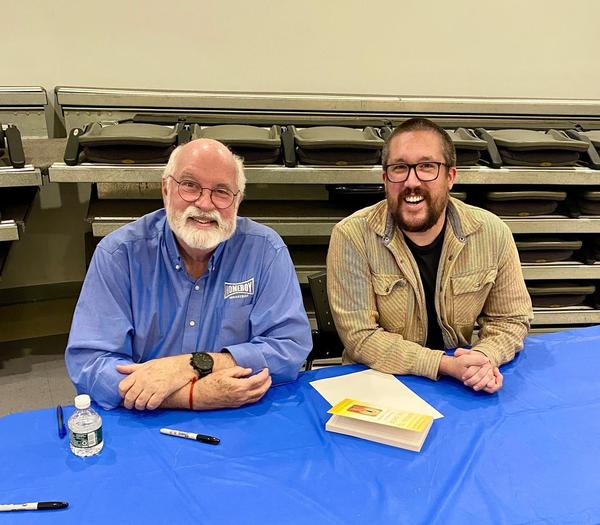
– Father Greg Boyle, Jesuit Priest and Founder of Homeboy Industries

This one rocked me when I heard it.  Father Greg said it during an interview with Rainn Wilson for the Soul Boom podcast.  It rocked me because I know I am so very far from this.

Father Greg is the founder of Homeboy Industries, the largest gang rehabilitation program in the world.  It is based in Los Angeles, California, and is to me the best example of what Christian prophetic activity looks like when it gets its feet on the ground and asks “How can I help?”

Homeboy Industries is known to have helped former gang members turn their lives around, learn to forgive and embrace their enemies, overcome addiction, attend therapy, get training, and find another source of income for their families.  It truly is a remarkable initiative.

I have long believed that spiritual maturity is that we exist in some kind of defiant joy and trust that God is in all things and all things are in God.  However, as a result of Father Greg I am confronted by the possibility that I have missed the point to some degree and must learn to embody tenderness as well.

Thanks, Father G.

August 23rd, 2024

Choctaw elder and retired Episcopal bishop Steven Charleston explains how Indigenous elders carry the wisdom of the past in service of the present and future:  

Elders are a people of the future. My culture respects the elders not only because of their wisdom, but because of their determination. The elders are tough. They have survived many struggles and many losses. Now, as they look ahead to another generation, they are determined that their sacrifices will not have been in vain, that their children’s children will not grow up in a world more broken than the one they sought to repair. The elders are voices of justice. They are champions for the earth. They defend the conscience of the community. We follow the elders because they have a passion for tomorrow. They are people of the future, not the past.  

Tradition is not about staying the same. It is not about continuing spiritual business as usual. Native American tradition is the path to the future because it is how we constantly renew what we have. Faith is about making all things new. All things—not just a few. It is about transforming life in the kiva [communal home] by reimagining it and recreating it until life emerges, just as our past reshaped to fit our future….  

The ancestors carried us. They were as troubled as we, our ancestors, those who came before us, and for the same reasons: fear of illness, a broken heart, fights in the family, the threat of another war. Corrupt politicians walked their stage and natural disasters appeared without warning. And yet they came through, carrying us within them, through the grief and struggle, through the personal pain and the public chaos, finding their way with love and faith, not giving in to despair, but walking upright until their last step was taken. My culture does not honor the ancestors as a quaint spirituality of the past, but as a living source of strength for the present. They did it and so will we. 

Charleston speaks of how the wisdom of our ancestors can still guide us:  

Our ancestors in the faith are not only still here for us, but they actively seek to help us in every way they can.  

Our eternal grandparents. They are watching over us, all those who have gone before. They are our ancestors, and they have seen enough in their own lives to know what we are going through. They have survived economic collapse, social unrest, political struggle, and great wars that raged for years. Now, from their place of peace, they seek to send their wisdom into our hearts, to guide us to reconciliation, to show us our mistakes before we make them. Their love for us is strong. Their faith in us is certain. When times get hard, sit quietly and open your spirit to the eternal grandparents, who are still a part of your spiritual world. Receive their blessing, for their light will lead you home.

=========

Following are the Friday Five. Five quotes curated by John Chaffee. Today I included his introductory remarks where he gives a bit of his background and mentions his new program offering spiritual direction to those who might be interested.


Grace and Peace, Friends!The Spiritual Direction session over Zoom finished, and I felt a sense of purpose.  Why?  Because I was the Director, not the Directee. 
Over the years, I have enjoyed deep conversations with family and friends.  This was so much the case that I found myself doing 20+ years of church work.  My approach was never so much as to tell people how to live, but more to share the wisdom of the long Christian tradition and help people figure out for themselves what they need to do next. 
I soon discovered that is essentially what Spiritual Direction is.  I found myself a Spiritual Director, read some books on the topic for my second Masters degree, and realized I wanted to do more of it. 
So, when I finished the Zoom call finished earlier this week, I felt as though I had crossed a threshold because now all the parts were in place.  And, it just felt right.  I have done Spiritual Direction before, but now I had done it enough that I felt as though I was easing into a calling rather than still testing the waters. 
Which brings me to you. If you need a Spiritual Director, someone who can help be an extra set of eyes and ears, helping to discern where Spirit is inviting you next, I would love to help.  It can be difficult to navigate what to do next when various kinds of blocks keep us from listening to God.  
When we are in transition from one phase of life to another, when we are stuck at a fork in the road, when we have accidentally put down roots where we did not mean to, it can be hard to know what to do next. If that is you, and you would like to set up a session of Spiritual Direction with me, you can sign up through this link.  Mon, Tues, and Fri are the best for me, as responsibilities take me up on the other days of the week. The link will always be available at the bottom of these newsletters, so reach out to me as you need. Here’s to getting into the thick of the world for the sake of helping it! 

Onto this week’s 5 quotes.
 1.”If you tell the truth you don’t have to remember anything.”- Mark Twain, American Author
When we begin a habit of lying, deception, and falsehood, we must keep detailed notes of what we say to various people.  Lies invariably require more lies to be sustained. Truthfulness, transparency, and sincerity require no such upkeep.  Think about it, you and I have the opportunity to never lie again for the rest of your life.

2.”You don’t give a man a weapon until you’ve taught him how to dance.”- Irish Proverb
As I contemplated this quote, the only thing I could come up with is that the violent will always find violent reasons to fight.  However, those who were first taught to love and experience the joy of life will fight in a very different way.  Not only will love and joy invite people to stand up for other things, but they may even decide that weaponry and the machines of war are not the best way of fighting for a cause anyway.

3.”Those who do not know must be taught, not punished.  We do not hit the blind.  We lead them by the hand.”- St. Dionysius the Aeropagite, Greek Bishop
The doctrine of the reconciliation, restoration, and renewal of all things (which is already present in the Hebrew Scriptures and Greek New Testament) radically transforms the way we think about correction. If nothing needs to be discarded, if no one needs to be thrown away, then we must say that anyone is redeemable.  Punishment, then, for retributive justice is unbiblical and un-Christlike.  Redemptive or restorative justice seeks to correct, curtail, redirect, and prune people long before it has any inkling of a desire to inflict pain. When I came across this quote, it was the most succinct rationalization for a pruning God over the false idea of a punitive one.

4.”For me to be a saint means to be myself.  Therefore the problem of sanctity and salvation is in fact the problem of finding out who I am and of discovering my true self.”- Thomas Merton, Trappist Monk
I had the opportunity to reread chapter 5 of New Seeds of Contemplation this week.  It speaks to me every time I read it.  Along with No Man is an Island, these two books by Thomas Merton are (I believe) the only books I have reread multiple times and return to frequently.  The only book that outpaces them in my rereading is the Bible.  All of us are on a lifelong journey of discovering who we are, and that means there is a lifelong task of choosing to not be some false self that we believe others will be more likely to love.  To be loved for being our false self is an inherently lonely experience. Better to chance being our true selves and find ourselves surrounded by other true people who want to be in true relationships.

5.”Every Christian should find for himself the imperative and incentive to become holy.  If you live without struggle and without hope of becoming holy, then you are Christians only in name and not in essence.”- St. Philaret of Moscow, Eastern Orthodox Archbishop
The German reformer Martin Luther had a similar insight.  When approached by members of his church to ease their anxieties about whether or not they were faithful Christians, he was presented with a question that even he struggled with. In Luther’s mind, no one is perfect, no one lives up to the law of Love and therefore it is incredibly difficult to formally confirm someone’s status as a Christian.  That is until he realized that the mark of a Christian is not that they live perfectly but that they “struggle” with the task of holiness.  In the German language, Luther used “Anfechtung” to describe this ache and struggle to be holy. It is only the false Christian, the person who is completely devoid of a conscience, who is the most in danger.  Anyone who does not struggle with the task of holiness needs to sit down and ask themselves with integrity whether or not they truly want to follow Christ or if they should stop pretending.   St. Philaret of Moscow, whom I never heard of before coming across this quote, and Martin Luther would likely have agreed over this point.

The Real Work of Mentoring

August 21st, 2024

Father Richard Rohr regards nondual thinking as an essential marker of a mentor. 

At every stage of the journey, we long for mentors who are believable and reliable, but Western culture tends to create more elderly people than actual mentors who have something to teach us.  

Many of us grow more rigid and opinionated as we age. We’re supposed to move from the dualistic thinking of young people to the nondual mind of experience and maturity. This is why, all things being equal, elders should be more skilled at patience, forgiveness, mercy, and compassion than teenagers. If we remain self-assured, self-righteous, self-seeking, dualistic thinkers, we cannot become bridge builders or agents of reconciliation—not even in our own families or neighborhoods.  

Presently, too many of our religious leaders seem uninterested in true interfaith dialogue. Our politicians seem incapable of seeking the common good, committing instead to win/lose models. Those at the helm of financial sectors live on extravagant bonuses while much of the world goes hungry. Instead of moving away from dualistic thinking, the people who could have become mentors have used the system to become even more entrenched and dualistic instead. [1]  

Father Richard names how mentors are called to support others in their “Real Work”: 

A mentor is someone who companions and guides us through our Real Work, which is always going to be focused on the inside, not the outside. It’s nothaving the right religion, the right salary, the right house. Real Work is second-half-of-life work. As Jesus puts it, “Don’t clean the outside of a dish. I’m concerned about the inside” (see Matthew 23:25–29).  The inside includes our attitudes, our intentions, our mind, our heart, why we’re really doing what we’re doing.  

Real Work is always about you—not others. It’s saying, “My job is not to change other people. I’ve got to change.” Many people are obsessed with the former, but it’s not our job to get rid of the “bad people” in the world. That’s first stage religion, which is preoccupied with marginalizing the unworthy elements who always happen to be “people who are not like me.” It happens in every country, culture, group, and religion, because that’s the first half of life. When we don’t have a wisdom or mentoring culture, that remains the level of focus.   

When we move to the level of soul, the externals are not as defining; roles, titles, costumes, age, and race are no longer the most important questions. Soul recognizes soul, and a mentor presents their own soul unapologetically: “I am what I am, warts and all. I’ve got some faults, but I know I’ve got some gifts too. I offer you my gifts and I hope my warts don’t get in the way of those gifts.” That’s the kind of honest mentor that we all want and that our civilizations need to lead us to the Real Work. [2]  

Psalm 102: Worship is About Presence, Not Praise
Click Here for AudioWhen I was a seminary student in the late 90s, I was required to read a book about strategic church growth. The author was a guru in the megachurch movement and utilized research to convince pastors to abandon older traditions and liturgies and adopt market-tested strategies instead. For example, he advised removing overtly religious symbols from church gathering spaces, swapping the word “sanctuary” for “worship center,” and always preaching helpful, positive “messages” rather than theology-heavy “sermons.
”Central to the book’s argument was that a church’s weekend gathering must always be a celebration. The guru’s research found most people (or at least the 1990s middle-class suburban households most likely to find a megachurch appealing) were looking for an escape from the difficulties of modern life, therefore the one hour in church should be a non-stop, cheerful, Jesus party of practical positivity.
What about the traditional confession of sins? Gone. The Christian calendar’s observance of Ash Wednesday and Lent? No way. The Lord’s Table where we remember his death on the cross? Fuggetaboutit. (At least in the large gathering. He said the bread and cup could still be administered occasionally in smaller, less central church meetings where newcomers aren’t present.) According to the book, worship was synonymous with praise so anything that wasn’t cheerful simply wasn’t honoring to God or essential to his mission.
I’m guessing the church growth guru never read Psalm 102—or many other parts of the Bible, for that matter. Like so many Psalms, this one provides an uncomfortably honest glimpse into the inner life of someone devoted to God. What we discover is far from celebratory. We see anguish, doubt, and even anger at God. Many psalms cry out to the Lord for help, and some even ask why he is slow to answer. But the writer of Psalm 102 takes it a big step further by directly blaming God for his agony. “For you have taken me up and thrown me aside” (verse 10). Speaking of God he says, “He broke my strength; he cut short my days” (verse 23).Why would such a brutal song be included in the worship book of ancient Israel?
How can these aggressively negative, unhappy expressions be considered worshipful or honoring to God? Here are two thoughts.First, unlike the American church growth guru, the God revealed in the Bible values honesty far more than marketability. The Lord is not interested in people pretending to be happy, holy, or hyped. He desires to meet us where we really are—including in our misery, anguish, grief, and anger. Presence, not praise, is the true foundation of worship. That means presenting ourselves before God as we truly are, not as we think we ought to be.Second, while Psalm 102 is full of shocking honesty, including feelings of God’s abandonment and unfaithfulness, these sentiments are interrupted by declarations of God’s compassion, power, and future vindication.
The chapter is a candid snapshot; a moment in one person’s very messy communion with God. It’s a jumble of volatile emotions and steadfast truths like shifting waves crashing on immovable rocks.I think that’s a better image for the church’s worship. Rather than a gathering of spiritual consumers looking for a boost of manufactured positivity, when we assemble on Sundays we enter like a rolling tide. People churning with fears, and failures, and gratitudes, and griefs. And together we fall upon the unshakable presence of divine love who welcomes us as we are.

DAILY SCRIPTURE
PSALM 102:1-28

WEEKLY PRAYER. Erasmus (1466 – 1536)
Lord Jesus Christ, you said that you are the Way, the Truth, and the Life; let us never stray from you, who are the Way; nor distrust you, who are the Truth; nor rest in any other but you, who are the Life, beyond whom there is nothing to be desired either in heaven or on earth. We ask it for your name’s sake.
Amen.

Psalm 102[a]
A prayer of an afflicted person who has grown weak and pours out a lament before the Lord.

Hear my prayer, Lord;
    let my cry for help come to you.
Do not hide your face from me
    when I am in distress.
Turn your ear to me;
    when I call, answer me quickly.
For my days vanish like smoke;
    my bones burn like glowing embers.
My heart is blighted and withered like grass;
    I forget to eat my food.
In my distress I groan aloud
    and am reduced to skin and bones.
I am like a desert owl,
    like an owl among the ruins.
I lie awake; I have become
    like a bird alone on a roof.
All day long my enemies taunt me;
    those who rail against me use my name as a curse.
For I eat ashes as my food
    and mingle my drink with tears
10 because of your great wrath,
    for you have taken me up and thrown me aside.
11 My days are like the evening shadow;
    I wither away like grass.
12 But you, Lord, sit enthroned forever;
    your renown endures through all generations.
13 You will arise and have compassion on Zion,
    for it is time to show favor to her;
    the appointed time has come.
14 For her stones are dear to your servants;
    her very dust moves them to pity.
15 The nations will fear the name of the Lord,
    all the kings of the earth will revere your glory.
16 For the Lord will rebuild Zion
    and appear in his glory.
17 He will respond to the prayer of the destitute;
    he will not despise their plea.
18 Let this be written for a future generation,
    that a people not yet created may praise the Lord:
19 “The Lord looked down from his sanctuary on high,
    from heaven he viewed the earth,
20 to hear the groans of the prisoners
    and release those condemned to death.”
21 So the name of the Lord will be declared in Zion
    and his praise in Jerusalem
22 when the peoples and the kingdoms
    assemble to worship the Lord.
23 In the course of my life[b] he broke my strength;
    he cut short my days.
24 So I said:
“Do not take me away, my God, in the midst of my days;
    your years go on through all generations.
25 In the beginning you laid the foundations of the earth,
    and the heavens are the work of your hands.
26 They will perish, but you remain;
    they will all wear out like a garment.
Like clothing you will change them
    and they will be discarded.
27 But you remain the same,
    and your years will never end.
28 The children of your servants will live in your presence;
    their descendants will be established before you.”

The Poetic Justice of Empathy

August 20th, 2024

Intergenerational Learning

We’re either going to flock and circle with older generations that are trying to hold on to what they have and defend what they’ve done, or we’re going to join with younger generations and with their desire to take these issues seriously because their entire future is going to unfold in a climate-changed world.
—Brian McLaren 

In a recent online gathering, CAC staff member Jennifer Tompos invited Living School affiliate faculty member Carmen Acevedo Butcher to reflect on the role of mentors in developing resilience:  

Tompos: I think one of the things that is so important when we’re … figuring out how to show up with courage and resilience is how do we talk about this with the younger generation?… I aspire to be somebody who is a part of the solution and giving willing handoffs to the next generation. Carmen, [as a teacher of undergraduates,] can you speak to what the conversation is like with younger generations? How are they exhibiting the courage to show up in the face of everything that we’re facing, [particularly with] economic and ecological overshoot?   

Acevedo Butcher: I am so glad you’re bringing up Gen-Z and Gen-Alpha because they feel grief … and I feel it with them. A few days ago, I was rereading “Appendix Five: Talking to Children About Our Current Situation” in Brian McLaren’s book Life After Doom. I began to cry because of the grief, and my students also feel it. I think it’s so important to sit with this uncomfortable conversation [with them], because many come from very difficult backgrounds: first generation students, low socioeconomic status, various disabilities. They feel anger at the older generations for our platitudes and obtuseness, and I listen. I’ve even heard myself in class say, “I just want to apologize for how we were not on this, and y’all have inherited such a mess, so many difficulties.” Then there’s this intergenerational dialogue that takes place.  

One of the things that I appreciate from my students is that they are not in denial, and they are not frozen. They are really inspirations to me. Greta Thunberg thundered, “I don’t want your hope. I don’t want you to be hopeful. I want you to panic … [and] act as if our house is on fire. Because it is.” [1] My students have taken that reality in and moved past it. They’re in the stage of asking, “What can I do?” This inspires me because they’re not just asking “What can I do in the long-term?” but “What can I do in my community right now?”… 

They’re out there doing their best to contribute in whatever way they can…. My students are very concerned about the linear economy that just sends everything to landfills as opposed to more sustainable circular recycling. They’ve taught me a lot. I had never heard of “fast fashion” [2] until a student gave a speech on it. I just try to stay open to listening to my students and letting them know I’m learning and that I’m open to learning. 

The Poetic Justice of Empathy

If you have been paying attention, you will notice that lately there has been a growing interest in certain circles about empathy. It has, thankfully, moved out of the privacy of the mental health consultation rooms and neuroscience research studies and into the classroom, the boardroom and the bedroom. In fact, there really is no human interaction that will not be better because the participants are attuned to empathy and its place in the engagement.

Empathy, at its best, involves several elements. First, and how it is most broadly understood, it is the notion that one person (the listener, in this case) is able to be receptive to and feel the (usually painful) emotion of another person (the speaker), simultaneously holding that emotion in such a way so as to move thoughtfully to reduce the speaker’s suffering or distress. To experience empathy is, as Dan Siegel has put it, to feel felt. This is the first step toward moving out of painful emotion: to share it with an attuned, compassionate listener.

In real life, it amounts to the poetic cadences and language of a host of nonverbal and verbal attunements in which one person’s body language, facial expression, tone of voice and eye contact (among other cues) align to match those of one who is afflicted and engage with his or her feeling not simply as an abstraction, but in an embodied moment in time and space. If you have had this experience, you know what I mean, and you won’t ever forget it.

Another feature of empathy is that it is a practice we necessarily must learn as human beings; we do not simply come by it naturally in the same way that we come by breathing. We learn about it by witnessing it being practiced by others or receiving it ourselves. Moreover, empathy moves us beyond compassion to kindness and human flourishing. In this sense, it is not just something that is intended to reduce pain, but also to increase hope, energizing us toward justice: we move to change our behavior on behalf of the plight of others who cannot change things themselves.

Hopefully, then, with empathy, we do not merely feel what someone else feels; we behave differently as a result. And most importantly, that behavior is more likely to be sustained on their behalf; it’s not just a one-off moment, but a lifetime moment. I am far more likely to make sustainable changes as a husband on behalf of my wife if I am truly in touch with what she is feeling than if I am doing what she asks mostly because I feel ashamed or guilty for not having done so before. As I like to tell patients, it is impossible for us to maintain sustainable behavioral change on behalf of another person in the absence of empathy. We can white-knuckle it for a certain period of time, but ultimately, unless we have made contact with the emotional state of another in such a way that our felt sense of mercy is mobilized, we will eventually regress to the mean of our previous behavioral norms.

All of this represents a posture in which one welcomes, says “yes” to the emotional state of another. So many of us have only experienced the dismissing “No!” to our afflicting emotional states, that when we encounter empathy it can feel like nothing short of a cold drink of water for a parched throat. In fact, one of our greatest problems, not least for people of faith, is our well-practiced manner of ignoring what we feel. And we’re so accomplished at this that eventually we not only are unaware of what we feel, by extension we become unable to sense what others feel. Naturally, it is virtually impossible, with this much neuroplastic reinforcement, to imagine a God who could actually feel what we feel. Don’t get me wrong. We might buy the theological idea that God can do that. But I am talking about the actual experience of feeling God feel what we feel.

The Hebrews wrote about this. They put down in words—to be kept, remembered and be re-experienced by those who followed—their encounters with a God who they believed could take it. They threw everything at him that they had. There is not one human emotional experience they refused to offer to him, be those experiences of joy or affliction. The Psalms are replete with the poetic rhythm and hum of a people who approached a God of empathy. A God who could welcome, receive, hold, and through sheer force of His own perseverance of remaining with the deepest of agonies of his people—transform their hearts, their minds, their souls.

But many of us have never met this God. Our imaginations are paltry and afraid, atrophied as they are from so much time spent waiting for the microsecond-to-microsecond distraction of the shifting of the Internet as we peer soullessly into our screens. For our imaginations to be fired into life, we must first acquaint them with embodied experiences with other embodied people to which they can further appeal in memory and in reading the stories and poetry of the scriptures and of the best literature; engage the depth and beauty of nature; receive all that art and music has to offer—and so open the portals of our souls through which we may enter into the depths of our rawest terrain to join the God who has been awaiting us all along. To whom do you run to be found? To be known? To offer your fragile, terrified self in order to have the cataracts of empathy cascade over you? If it’s not a real human, then it’s even less likely that it will be God, for we have a hard time imagining what our bone and blood do not know in real time and space. But the good news of the Gospel is that a Real human has come to find each one of us, and is looking for us still. His gaze is waiting for you to see him seeing you. Hearing you. Feeling you. The One whose empathy  can take it because he has already taken everything else.

At a time when our minds are becoming in many respects as disintegrated as ever, even as we swallow the illusion of greater connection through technology; as our social and political fabric feel like they are fraying apart at the seams, empathy that begins and ends with God’s good creation of our minds is just what we need.

God can hardly wait, and he is already feeling how good you’re going to feel in the process.

Listen for the Sound of the Genuine

August 20th, 2024

There are many of us … across the world who claim Howard Thurman as our personal spiritual mentor…. He inspired, challenged, lifted, and comforted us in a thousand ways. —Landrum Bolling 

Author and spiritual director Lerita Coleman Brown comments on Howard Thurman’s (1899–1981) gift of mentoring others:  

Howard Thurman serves as an exemplar for both the formal ministry of spiritual direction and informal spiritual friendship. Mentoring, at its best, is an exchange. Spiritual guides are vital beacons of light on the spiritual path, and once a person becomes spiritually mature, they naturally begin to serve as spiritual mentors for others. Maya Angelou instructs, “When you learn, teach.” Howard Thurman taught and mentored many, although not always in a formal classroom. Students found they could share their personal issues with Thurman and frequently sought him out for spiritual advice. His timeless sermons, public lectures, and written meditations endure because they continue to feed the hunger of the spirit. [1] 

Thurman encouraged the graduates of Spelman College to listen to and to become their unique selves:  

The burden of what I have to say to you this afternoon is, “What is your name, who are you and can you find a way to hear the sound of the genuine in yourself?” There are so many noises going on inside of you, so many echoes of all sorts, so [much] internalizing of the rumble and the traffic, the confusions, the disorders by which your environment is peopled that I wonder if you can get still enough—not quiet enough—still enough to hear rumbling up from your unique and essential idiom the sound of the genuine in you. I don’t know if you can. But this is your assignment…. 

There is something in every one of you that waits, listens for the sound of the genuine in yourself and if you cannot hear it, you will never find whatever it is for which you are searching.… You are the only you that has ever lived; your idiom is the only idiom of its kind in all the existences and if you cannot hear the sound of the genuine in you, you will all of your life, spend your days on the ends of strings that somebody else pulls…. 

Who are you? How does the sound of the genuine come through to you?… Don’t be deceived and thrown off by all the noises that are a part even of your dreams, your ambitions … that you don’t hear the sound of the genuine in you because that is the only true guide that you will ever have and if you don’t have that you don’t have a thing. You may be famous, you may be whatever the other ideals are which are a part of this generation but you know you don’t have the foggiest notion of who you are, where you are going, what you want. Cultivate the discipline of listening to the sound of the genuine in yourself. [2] 

AUGUST 20 I AM A GOD WHO HEALS.

I heal broken bodies, broken minds, broken hearts, broken lives, and broken relationships. My very Presence has immense healing powers. You cannot live close to Me without experiencing some degree of healing. However, it is also true that you have not because you ask not. You receive the healing that flows naturally from My Presence, whether you seek it or not. But there is more—much more—available to those who ask. The first step in receiving healing is to live ever so close to Me. The benefits of this practice are too numerous to list. As you grow more and more intimate with Me, I reveal My will to you more directly. When the time is right, I prompt you to ask for healing of some brokenness in you or in another person. The healing may be instantaneous, or it may be a process. That is up to Me. Your part is to trust Me fully and to thank Me for the restoration that has begun. I rarely heal all the brokenness in a person’s life. Even My servant Paul was told, “My grace is sufficient for you,” when he sought healing for the thorn in his flesh. Nonetheless, much healing is available to those whose lives are intimately interwoven with Mine.

Ask, and you will receive. Ye have not, because ye ask not. JAMES 4:2

To keep me from becoming conceited because of these surpassingly great revelations, there was given me a thorn in my flesh, a messenger of Satan, to torment me. Three times I pleaded with the Lord to take it away from me. But he said to me, “My grace is sufficient for you, for my power is made perfect in weakness.” —2 CORINTHIANS 12:7–9

“Ask and it will be given to you; seek and you will find.” —MATTHEW 7:7

A Helpful Relationship

August 19th, 2024

Father Richard Rohr first developed his understanding of mentoring while studying male initiation rites from cultures and traditions throughout the world.  

The word “mentor” comes from Greek mythology. Mentor was the name of the wise and trusted counselor of Odysseus. When Odysseus went on his long journey, he put Mentor in charge of his son, Telemachus, as his teacher and the guardian of his soul.  

We long for believable mentors on every stage of our journey. In Western culture and even in the Christian tradition, we have few guides to lead us deeply into life’s full journey. We have almost no mentors who have been there themselves and who have come back to guide us through. Of course, there are many bosses, ministers, coaches, and teachers who will happily tell younger people how to “fix” their problems, so they can be “normal” again, but a true mentor guides people into their problems and through them. It feels a bit messy and wild, but also wonderful in some way. A wise mentor leads someone to their own center and to the Center, but by circuitous paths, using their two steps backward to lead them three steps forward. It may look unproductive, but it is really the wisdom path of God. [1]  

We need someone to be in solidarity with us, so we can learn what it means to be in solidarity with ourselves, and eventually with others. Have we forgotten how Jesus formed his disciples? We can read all the words of Jesus in the Gospels in a matter of hours, but Jesus spent three long years discipling the people who followed him. What he gave them was not so much his words but his example and his energy, his time and his touch. “Where do you live?” said the first two disciples of Jesus. “Come and see,” he replied, “so they went and saw where he lived, and stayed with him the rest of that day” (John 1:39). What a telling account! In John’s Gospel, one of his disciples even laid his head on the breast of Jesus (see John 13:23–25). They knew how energy was passed: not primarily by sermons and books, but by relationships and presence.  

I have no doubt that one of the main reasons I have done some interesting things in my life is the number of men who believed in me throughout my formation. I remember one old friar who told me as a young Franciscan, “Richard, I want you always to trust your intuitions. Promise me that you will always trust them, even if they are wrong once in a while. The direction is right and I will personally fight for you in the background if it ever comes to that.” Need I say more? He was my spiritual father on that day, and one trustworthy spiritual father, mother, friend, or mentor can make up for a hundred negative ones. [2]  

What Makes a Mentor

Father Richard describes what he considers to be essential qualities of a true mentor: 

I would name the first characteristic of mentors as “magnanimity of soul.” Mentors have a generous acceptance of variety, difference, and the secret, unique character of each person and where they are on their journey. Without that inner generosity, we invariably try to fit every person inside of our own box. We expect them to think, behave, and become exactly like us, because we’re the reference point. We want them to be Catholic or educated or capitalists like we are. Without a magnanimity of soul we cannot affirm, validate, or mirror the souls and journeys of others.  

Secondly, to be a mentor we have to have a capacity for simple friendship. We have to know how to accompany someone, befriend and walk with them simply for the sake of relationship. If we’re focused on it for the sake of an ego boost, professional advancement, or money, then we’re not a mentor. Those concerns simply fall away for true mentors because they know that life is being transferred and shared. When we experience that flow of life from us to another person, we’re not concerned with whether we’re getting paid.  

Thirdly, if a mentor is not free to talk about going down just as much as going up, they aren’t a mentor. C. S. Lewis once said that for him, “Nothing was any good until it had been down in the cellar for a while.” [1] A true mentor has the patience, the authority, and the courage to share when and how they’ve been “down in the cellar for a while.” It’s not all about climbing and achievement. If someone says we can have or be anything we want to be, that’s an objective lie and it’s a non-mentor saying that. Only wealthy people in the first world would be privileged enough to believe that. A mentor doesn’t offer “entitlement training.” [2] They invite us on a journey and say, “You’ve got to go yourself.” They also say, “I’ll accompany you. I’ll walk with you on that journey. If you need me, call me.” We can only lead people as far as we ourselves have gone. If we haven’t walked our journey, how could we possibly lead or accompany anybody else on their journey?  

Even if we aren’t in a formal mentoring relationship with others, if we keep maturing, if we use all we have experienced for our own soul work, then I think we’re already giving something to the next generation. We become a generative human being, and life will flow out from us, just by being who we are. That’s precisely what they said of Jesus: “power came out from him” (Luke 6:19). He had inner authority, and when we have inner authority, we also, by our being and our bearing, offer self-confidence, grounding, and validation to those around us. 

Psalm 100: Explaining the Worship Gap
Click Here for Audio
I love Psalm 100 for its simplicity. There is a place for nuanced theology and doctrine, and I appreciate a mind that can explore the deep mysteries of faith. But sometimes we need to be brought back to the basics. Psalm 100 calls upon all people to praise and worship God for two reasons—he made us and he is good.Unlike many other psalms, this one is not Israel-specific. It does not address God’s covenant people alone, and it does not emphasize YHWH’s incredible faithfulness to the descendants of Abraham.
Instead, Psalm 100 is a universal message. The Lord is not a tribal deity responsible for only the creation of Israel and its flourishing. He has made all people and his faithfulness extends to them as well. Therefore, they also are invited to worship him even if they do not know him as intimately as Israel does.Apart from honoring him as our Creator, our worship should also be motivated by God’s goodness and love (see verse 5). Interestingly, the composer emphasizes these divine qualities rather than God’s power or holiness. Goodness and love are attractive qualities; they draw us closer to God. Power and holiness, on the other hand, may repel more than they inspire.
The inability to recognize God’s goodness may explain an odd statistic I call the worship gap.We live in a culture, according to researchers, in which seven in ten Americans hold a theistic view of God. That means they believe in a personal God actively engaged in the world. But a surprisingly small number, only about 14 percent, worship him with any regularity. Simply put, belief in God is high but praise of God is very low.
Why?I suspect the worship gap comes from a person’s difficulty seeing God’s goodness and love. Their vision of him has been warped and clouded by injustice, pain, suffering, and evil. They may believe God is real and that he is the Creator, but they’re just not sure whether he can be trusted. The emphasis of Psalm 100 serves as a reminder that in a broken and jaded world, the church’s most difficult task isn’t convincing people that God is real, but that God is good.

DAILY SCRIPTURE
PSALM 100:1-5
JAMES 1:16-18


WEEKLY PRAYER. Erasmus (1466 – 1536)
Lord Jesus Christ, you said that you are the Way, the Truth, and the Life; let us never stray from you, who are the Way; nor distrust you, who are the Truth; nor rest in any other but you, who are the Life, beyond whom there is nothing to be desired either in heaven or on earth. We ask it for your name’s sake.
Amen.

A Oneing Presence 

August 16th, 2024

On the CAC podcast Turning to the Mystics, Mirabai Starr explains what Julian means by “oneing”:  

Instead of talking about merging with God or union with God, Julian coined the term oneing. Oneing is a reflection of what already is for Julian. We already are one with God; we always have been and we ever shall be. This life is nothing if not a reawakening to that reality of our oneness, oneing with God. In some ways, life is a matter of remembering what has always been. That oneing, of course, is rooted in love. It’s not just oneing for the sake of oneing. It’s oneing for love. [1]  

James Finley also reflects on oneing

A word for me that echoes with oneing is presence. To put it poetically, there’s just one thing that’s happening. The infinite presence of God is presencing himself, is presencing herself through an act of self-donating presencing. It’s presencing herself and giving herself away whole and complete in and as the gift and miracle of our very presence in our nothingness without God. The oneness is all pervasively the reality of all that is. There is nothing but the oneness. Original sin or brokenness is falling out of, or being exiled from, the infinite oneness that alone is real…. Oneing, Julian was saying, is turning back around to the oneness that’s always there. We don’t want to become one; we become one in realizing the oneness that we never weren’t. It’s oneness in all directions. [2]  

Contemplative theologian Howard Thurman (1899–1981) describes how Jesus and we might experience the presence of God:  

Finally, there must be a matured and maturing sense of Presence. This sense of Presence must be a reality at the personal level as well as on the social, naturalistic and cosmic levels. To state it in the simplest language of religion, modern [humans] must know that [they are] a child of God and that the God of life in all its parts and the God of the human heart are one and the same. Such an assurance will vitalize the sense of self, and highlight the sense of history, with the warmth of a great confidence. Thus, we shall look out upon life with quiet eyes and work on our tasks with the conviction and detachment of Eternity….   

All of us want the assurance of not being deserted by life nor deserted in life…. When Jesus prayed, he was conscious that, in his prayer, he met the Presence, and this consciousness was far more important and significant than the answering of his prayer. It is for this reason primarily that God was for Jesus the answer to all the issues and the problems of life. When I, with all my mind and heart, truly seek God and give myself in prayer, I, too, meet [God’s] Presence, and then I know for myself that Jesus was right. [3]  

_________________________________________________

Sarah Young Jesus Calling

Meet Me in early morning splendor. I eagerly await you here. In the stillness of this holy time with Me, I renew your strength and saturate you with Peace. While others turn over for extra sleep or anxiously tune in to the latest news, you commune with the Creator of the universe. I have awakened in your heart strong desire to know Me. This longing originated in Me, though it now burns brightly in you.
     When you seek My Face in response to My Love-call, both of us are blessed. This is a deep mystery, designed more for your enjoyment than for your understanding. I am not a dour God who discourages pleasure. I delight in your enjoyment of everything that is true, noble, right, pure, lowly, admirable. Think on these things, and My Light in you will shine brighter day by day.

RELATED SCRIPTURES:

Isaiah 40:31 (NLT)
31 But those who trust in the Lord will find new strength.
    They will soar high on wings like eagles.
They will run and not grow weary.
    They will walk and not faint.

Additional insight regarding Isaiah 40:31: Even the strongest people get tired at times, but God’s power and strength never diminish. He is never too tired or too busy to help and listen. His strength is our source of strength. When you feel all of life crushing you and you cannot go another step, remember that you can call upon God to renew your strength. Trusting in the Lord is the patient expectation that God will fulfill his promises in his Word and strengthen us to rise above life’s difficulties. Though your faith may be struggling or weak, accept his provisions and care for you.

Psalm 27:4 (NLT)
4 The one thing I ask of the Lord—
    the thing I seek most—
is to live in the house of the Lord all the days of my life,
    delighting in the Lord’s perfections
    and meditating in his Temple.

Additional insight regarding Psalm 27:4: By the “House of the Lord” and “his Temple,” David could be referring to the Tabernacle in Gibeon, to the sanctuary he has built to house the Ark of the Covenant, or to the Temple that his son Solomon was to build. David probably had the Temple in mind because he had made plans for it in 1st Chronicles 22. David may also have used the word Temple to refer to the presence of the Lord. David’s greatest desire was to live in God’s presence each day of his life. Sadly, this is not the greatest desire of many who claim to be believers. What do you desire the most? Do you look forward to being in the presence of the Lord?

Philippians 4:8 (NLT)
8 And now, dear brothers and sisters, one final thing. Fix your thoughts on what is true, and honorable, and right, and pure, and lovely, and admirable. Think about things that are excellent and worthy of praise.

Additional insight regarding Philippians 4:8: What we put into our mind determines what comes out in our words and actions. Paul tells us to program our mind with thoughts that are true, honorable, right, pure, lovely, admirable, excellent, and worthy of praise. Do you have problems with impure thoughts and daydreams? Examine what you are putting into your mind through television, internet, books, conversations, movies, and magazines. Replace harmful input with wholesome material. Above all, read God’s Word and pray. Ask God to help you focus your mind on what is good and pure. It takes practice, but it can be done.

Oneing with God

August 15th, 2024

The place which Jesus takes in our soul he will nevermore vacate, for in us is his home of homes, and it is the greatest delight for him to dwell there…. And the soul who thus contemplates this is made like to [the One] who is contemplated.   
—Julian of Norwich, Showings 22 (Short text), trans. Colledge and Walsh  

On that day, you will realize that I am in my Father and you are in me and I am in you. —John 14:20  

Father Richard highlights Jesus’ teaching on union with God in the Gospel of John:  

“That day” promised in John’s Gospel has been a long time in coming, yet it has been the enduring message of every great religion in history. It is the Perennial Tradition. Divine and thus universal union is the core message and promise—the whole goal and the entire point of all religion. We cannot work up to union with God, because we’ve already received it. [1] 

Julian of Norwich uses the idea of “oneing” to describe divine union. From Revelations of Divine Love, Mirabai Starr translates:  

The human soul is the noblest being [God] has ever created. He also wants us to be aware that he knit the beloved soul of humanity into his own when he made us. The knot that connects us to [God] is subtle and powerful and endlessly holy. And he also wants us to realize that all souls are interconnected, united by this oneness, and made holy in this holiness.… When I look at myself as an individual, I see that I am nothing. It is only in unity with my fellow spiritual seekers that I am anything at all. It is this foundation of unity [this oneing] that will save humanity.… The love of God creates such a unity in us that no man or woman who understands this can possibly separate himself or herself from any other. [2]   

Richard explains:  

This is not some 21st-century leap of logic. This is not pantheism or mere “New Age” optimism. This is the whole point! Radical union is the recurring experience of the saints and mystics of all traditions. We don’t have to discover or prove it; we only have to retrieve what has been re-discovered—and enjoyed again and again—by those who desire and seek God and love. When we have “discovered” it, we become like Jacob “when he awoke from his sleep” and shouted, “You were here all the time, and I never knew it!” (Genesis 28:16).  

As John states in his first Letter, “I do not write to you because you do not know the truth, I am writing to you here because you know it already”! (1 John 2:21; Richard’s emphasis). Like John, I can only convince you of spiritual things because your soul already knows what is true, and that is why I believe and trust Julian’s showings, too. For the mystics, there is only one Knower, and we just participate in that One Spirit.

___________________________________________________

Sarah Young

I am the God of all time and all that is. Seek Me not only in morning quietness but consistently throughout the day. Do not let unexpected problems distract you from My Presence. Instead, talk with Me about everything, and watch confidently to see what I will do.
     Adversity need not interrupt your communion with Me. When things go “wrong,” you tend to react as if you’re being punished. Instead of this negative response, try to view difficulties as blessings in disguise. Make Me your Refuge by pouring out your heart to Me, trusting in Me at all times.

Psalm 55:17 (NLT)
17 Morning, noon, and night
    I cry out in my distress,
    and the Lord hears my voice.

Psalm 32:6 (NLT)
6 Therefore, let all the godly pray to you while there is still time,
    that they may not drown in the floodwaters of judgment.

Psalm 62:8 (NLT)
8 O my people, trust in him at all times.
    Pour out your heart to him

[3] 

A Focus on Love, Not Sin

August 14th, 2024

A Focus on Love, Not Sin

Julian’s revelations offer a loving alternative to the focus on sin which characterized the theology of her time. Mirabai Starr writes:  

Julian of Norwich is known for her radically optimistic theology. Nowhere is this better illumined than in her reflections on sin. When Julian asked God to teach her about this troubling issue, he opened his Divine Being, and all she could see there was love. Every lesser truth dissolved in that boundless ocean…. 

Julian confesses, 

The truth is, I did not see any sin. I believe that sin has no substance, not a particle of being, and cannot be detected at all except by the pain it causes. It is only the pain that has substance, for a while, and it serves to purify us, and make us know ourselves and ask for mercy. [1]  

Starr clarifies where Julian located the impact of sin:  

Julian informs us that the suffering we cause ourselves through our acts of greed and unconsciousness is the only punishment we endure. God, who is All-Love, is “incapable of wrath.” And so it is a complete waste of time, Julian realized, to wallow in guilt. The truly humble thing to do when we have stumbled is to hoist ourselves to our feet as swiftly as we can and rush into the arms of God where we will remember who we really are.  

For Julian, sin has no substance because it is the absence of all that is good and kind, loving and caring—all that is of God. Sin is nothing but separation from our divine source. And separation from the Holy One is nothing but illusion. We are always and forever “oned” in love with our Beloved. Therefore, sin is not real; only love is real. Julian did not require a Divinity degree to arrive at this conclusion. She simply needed to travel to the boundary-land of death where she was enfolded in the loving embrace of the Holy One, who assured her that he had loved her since before he made her and would love her till the end of time. And it is with this great love, he revealed, that he loves all beings. Our only task is to remember this and rejoice.  

In the end, Julian says, it will all be clear.  

Then none of us will be moved in any way to say, Lord, if only things had been different, all would have been well. Instead, we shall all proclaim in one voice, Beloved One, may you be blessed, because it is so: all is well. [2]  

The fact that Julian “saw no wrath in God” does not tempt her to engage in harmful behaviors with impunity. On the contrary, the freedom she finds in God’s unconditional love makes her strive even more to be worthy of his mercy and grace. Yet she does not waste energy on regret. She suggests that we, too … get on with the holy task of loving God with all our hearts and all our minds and all our strength. 

==============================>

A Battlefield Hospital
Click Here for Audio
Philo of Alexandria once said, “Be kind, because everyone you meet is fighting a great battle.” We are all fighting a terrible battle to be loved; a battle to prove we are significant and acceptable. Some of us fight by moving from one relationship to the next seeking to heal a wound that will not mend. Others fight by purchasing bigger and better tokens of success. Some seek acceptability through achievement, but by their absence at home they inadvertently wound their spouses and children and the cycle continues. Those who are most weary from the battle give up by turning to drugs, alcohol, food, sex, or any other temporary pleasure to mask their pain.
In this way, the brokenness of their souls is manifested in their bodies.But hospitality, real hospitality, can be a healing balm on these wounds. To be accepted and loved just as we are—isn’t that what we long for? And to be welcomed into another’s life without facades and falsehoods—isn’t that what we really want?
A church that directly, or indirectly, communicates who is welcomed will be an ineffective spiritual hospital. No, the kind of healing hospitality practiced by Jesus is personal, human, and beyond the powers of target-market-based church growth strategies. This is the healing that only Christ, and the community filled with his Spirit, can perform.The religious leaders criticized Jesus for sharing his table with sinners at Matthew’s house. But Jesus was not blind, and he certainly was not ignorant. He knew that his dinner companions were not moral people. He knew the depravity of their lives even better than the Pharisees did.
But he loved and welcomed them anyway. He offered these wounded souls a refuge from their battle. Such is the love of God. His love is not blind. He sees us as we truly are. He excavates the broken identity we’ve buried beneath a mountain of fashion denim and overpriced lattes, sees its filthy condition, and says, “Come, my child, sit down and eat. I have prepared a table for you.”
As our culture becomes more divided, and as the forces of politics and business sort and label us into increasingly nuanced “interest groups” and “markets,” Christians face a choice. We may either participate in this dehumanizing practice that inflates our group’s sense of righteousness at the expense of another’s rejection, or we may offer an alternative vision of community to that of our hyper-partisan consumer culture. We can either position our churches on the frontline in the culture war or become battlefield hospitals for the wounded to find rest and healing.
We can emulate the Pharisees by dividing “sinner” from “saint” and “us” from “them,” or we can affirm our shared human struggle for love, acceptance, and forgiveness. This counter-cultural vision of a healing community may seem difficult to accomplish, but it doesn’t have to be. All that’s needed is good food, good wine, and a table where Jesus Christ decides who is welcome rather than us.

DAILY SCRIPTURE
MATTHEW 9:9-13
LUKE 22:14-20


WEEKLY PRAYERFrom Symeon Metaphrastes (900 – 987)

I am communing with fire. Of myself, I am but straw but, O miracle, I feel myself suddenly blazing like Moses’ burning bush of old…. You have given me your flesh as food. You who are a fire which consumes the unworthy, do not burn me, O my Creator, but rather slip into my members, into all my joints, into my loins and into my heart. Consume the thorns of all my sins, purify my soul, sanctify my heart, strengthen the tendons of my knees and my bones, illumine my five senses, and establish my wholly in your love.
Amen.