Archive for September, 2026

A Discipleship of Equals

September 2nd, 2026

Wednesday, September 2, 2026

If I am a child of God, a sister-in-Christ, and belong with all of you to the priesthood of all believers, then my job is to love, not hate, to be creative, not destructive, to follow Christ’s cross.
—Pauli Murray, To Speak a Defiant Word

Speaking to the network Women’s Ordination Worldwide, Sister Joan Chittister evokes a vision of Christian discipleship that requires great courage: 

Christian discipleship is by nature a very dangerous thing. It has put every person who ever accepted it at risk. It made every follower who ever took it seriously on alert for rejection, from Martin of Tours to John Henry Newman, from Mary Ward to Dorothy Day. Discipleship casts every fragile new Christian community in tension with the times in which it grows. In the early church to be a Christian community meant to defy Roman imperialism, to stretch Judaism itself, to counter pagan values with Christian ones. It demanded very concrete presence; it took great courage, unending fortitude and clear public posture. Real discipleship meant the rejection of real things…. It was not easy then and it will not be easy now.

The problem with Christian discipleship is that instead of simply requiring a kind of academic or ascetic exercise … Christian discipleship requires a kind of living that is sure, eventually, to tumble a person from the banquet tables … to the most suspect margins of both church and society. To follow Jesus, in other words, is to follow the one who turns the world upside down, even the religious world. Real discipleship is a tipsy arrangement at the very least. People with high need for approval, social status, and public respectability need not apply.

Following Jesus is a circuitous route that leads always and everywhere to places where a ‘nice’ person would not go, to moments of integrity we would so much rather do without.

Chittister counts the cost of discipleship for those who choose to follow Jesus:

Christian discipleship is about living in this world the way that Jesus the Christ lived in his—touching lepers, raising donkeys from ditches on Sabbath days, questioning the unquestionable and—consorting with women! Discipleship implies a commitment to leave nets and homes, positions and securities, lordship and legalities to be now—in our own world—what the Christ was for his….

Discipleship is prepared to fly in the face of a world bent only on maintaining its own ends whatever the cost. If discipleship is what you’re here for, be not fooled! The price is a high one and history has recorded it faithfully….

True discipleship is … a way of living that is not political but which has serious political implications…. The disciple takes public issue with the values of a world that advantages only those who are already advantaged…. It takes umbrage at systems that are more bent on keeping improper people out of them than they are in welcoming all people into them. True discipleship takes the side always, always, always of the poor, the minority, the outcast, the reviled, the rejected, the other, despite the power of the rich and powerful.

====================

Hello!

According to Gallup research, there has been a steady decline in our society’s trust in many institutions over the last 25 years. You may have had your own experience of doubt about the trustworthiness of one or more of these systems.

Of significance, one sector of society in which public trust has not declined is in that of small businesses. I am not personally familiar with the details of this research, but I do wonder about the relative degree of embodied, personal connection that exists in such entities—and therefore the greater potential for being more deeply known in those settings compared to those in which people are generally more disconnected personally.
 
What does any of this have to do with interpersonal neurobiology and being formed in the image of Jesus? As it turns out, a great deal.
 
Part of everyone’s growth in all aspects of their life includes the fact that we are each shaped in systems.We are born into and reared in particular families. We are shaped by worshipping communities and schools and eventually are formed by communities in which we live out our work, be that as stay at home parents, in an office, on a farm or drive a delivery truck. These systems are crucial for our development.

We are made to flourish as part of systems, and will find ourselves organizing ourselves into them—no matter what we report to Mr. Gallup’s poll. But the small business context stands out, and it draws my attention to what the biblical narrative and interpersonal neurobiology point to: that we are more likely to be formed in systems in which there is a greater chance—think, relatively small in number—for us to be more deeply known, such that the system itself can create a structure that more likely leads to integration and wholeness. Yes, we can think we are part of social media systems, and to a degree we are; but by definition, not ones that are primarily embodied, and usually only those with whom we have a great deal in common and very few people are ruffling our feathers. In other words, not the kind of system that God was envisioning in Genesis 2, nor the system that St. Paul is describing in 1 Corinthians 12.
 
This does not mean that large institutions cannot form us well, nor that they cannot be trusted. Quite the opposite can be true. But to create and maintain that trustworthiness requires a great deal of work that our current world of cell phone addiction makes more challenging.  
 
The crucial question is not, therefore, “Do I trust institutions?” Rather, the crucial question is “What institutions am I becoming part of and creating who will form me into the person God is calling all of us to be?” Which brings me to Tabor College’s Master of Education in Neuroscience and Trauma.
 
I have been privileged to work with this program and its director, Dr. David Stevens, over the past several years, and it is providing outstanding training for people who work with and are interested in developing awareness and skills to respond to those with a history of trauma. I am particularly struck by breadth of people who find a place to study here, including pastors, teachers, first-responders, those who work in the foster and adoption settings and more.
 
But beyond what any one individual might gain from studying at Tabor, what is also significant is the role it plays as an institution. Individuals do not merely study there to obtain information. They are also being formed by the institution itself. Moreover, I am persuaded that no small part of why Tabor’s academic community trusts the College is because of the intentionality and attunement with which Dr. Stevens and his colleagues approach each student and the community as a whole, even and especially in the online context of the program. Students report a felt sense of connection, even in a virtual setting.

All of this points to how the benefits of this program are not just about the information that people are acquiring; it is about the durable connections that are being made. And given the trend in our cultural distrust in systems, it is a hopeful sign that there are those like Tabor College that are moving the needle in the other direction.
 
What institutions do you occupy that you trust?
What systems are you creating that are providing trusted places for others?


Given that these systems are no small part of God’s plan for human flourishing, let us, just like Tabor College’s program, be about the business of being known deeply in order to become stewards of systems of deep hospitality to others on the way to creating outposts of beauty and goodness in our world. 

Warmly,
Curt

To Think About:

What kind of community or system am I helping to create—and who is becoming more whole, more known, and more welcomed because I am part of it?
The Cross of Self-Sufficiency

September 1st, 2026

Tuesday, September 1, 2026

READ ON CAC.ORG

In a homily on Matthew 16, public theologian Nadia Bolz-Weber highlights how Jesus’s teaching on “carrying your cross” was not intended to increase the suffering of those on the margins: 

In our Gospel text for today, Jesus says that those who wish to follow him must deny themselves, and take up their cross, and those who wish to save their life must lose it.

Not to put too fine a point on it, but these are just the kinds of messages that would never make Jesus an influencer today. He’d never get more than twelve followers these days with that kind of branding….

Maybe like you, I struggle with how this denying ourselves thing is good news.  And not just because of how that verse about picking up your cross has been perverted into messages like deny your Queerness, pick up your cross of heterosexuality and follow him. Or deny your dignity and pick up your cross of continued domestic abuse and follow him. 

Bolz-Weber understands the cross as that which keeps us from relying on God and one another: 

Recently I’ve been wondering: if, when Jesus says deny yourself and follow me, that maybe it’s not about ensuring his followers are doormats. Maybe he’s inviting us to deny the part of us that wants to see itself as separate from God and others. 

Deny the self that believes that spirituality should be a suffering avoidance program.

Deny the self that always creates a list of demands.

Deny the self that is so turned in on itself that it cannot see much of anything beyond itself.

Deny the self that says really horrible things to you about you.

Deny the self that pretends you never need help….

Because in the end, one aspect of the whole death and resurrection thing that Jesus promised us, is the death of the false self.

But the death of the false self doesn’t feel good. In fact, Richard Rohr once wrote that “holiness never feels like holiness, it just feels like you’re dying.”…

But no matter how painful, when the unhealthy ideas and habits and identities we rely on are taken away from us, it just makes space for that which is actually real and actually holy….

We offer no me-based solutions here. Then you know what we have to offer instead? Divine foolishness. The kind that says that if you want to save your life you must lose it and if you lose your life you will find it….

The cross is foolishness to those whose own solutions are still working for them, but to the weak and the cynical and the socially awkward and the exhausted … to the divorced and the unemployed and the alcoholics … in other words, to all who are in need of help and rest, Christ crucified (the foolishness of God) is life in a way that our own solutions can never be—in a way that more status, and more degrees and more financial security can never be. 

After Losing Every Battle

Christian Thoughts on Winning, Greatness, and Glory

BRIAN ZAHND SEP 1

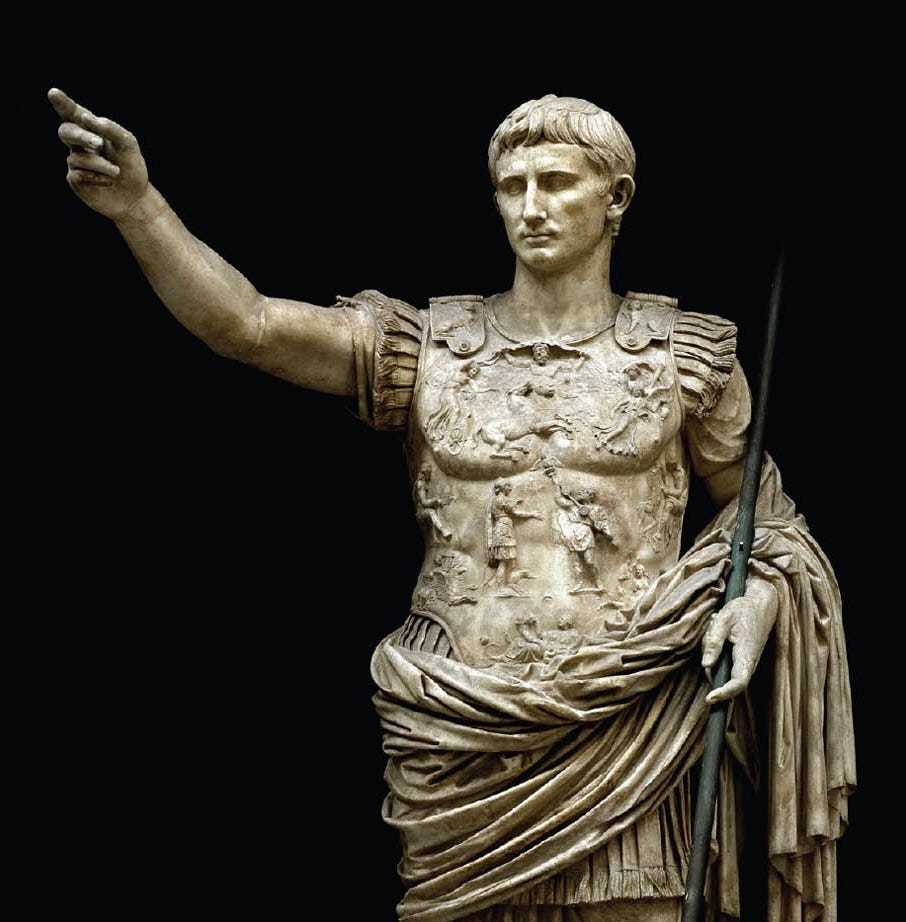
Emperor Augustus Caesar

There’s a lone soldier on the cross
Smoke pouring out of a boxcar door
You didn’t know it, you didn’t think it could be done
In the final end he won the war
After losing every battle
–Bob Dylan, “Idiot Wind”

As the early Christianity of the Jesus Way morphed into the Christendom of the Imperial Way in the long centuries after Constantine, theological vernacular became increasingly characterized by the language of empire with its emphasis on triumph, greatness, and glory. The writers of the New Testament had themselves used this kind of language in speaking of the triumph and glory of Christ, but they had done so in a way that was deliberately provocative and intentionally subversive. They daringly spoke of the glory of the cross as a mockery of the glory of Rome. They proclaimed a kingdom whose King won by losing, triumphed by dying—a King who conquered death only by first surrendering to it. The greatness of the Galilean King was the antithesis of Alexander the Great. The one the New Testament writers called the Son of God was nothing like the so-called Son of God who was the first and august emperor of Rome. Winning now had to be reevaluated, greatness reinterpreted, glory re-imagined.

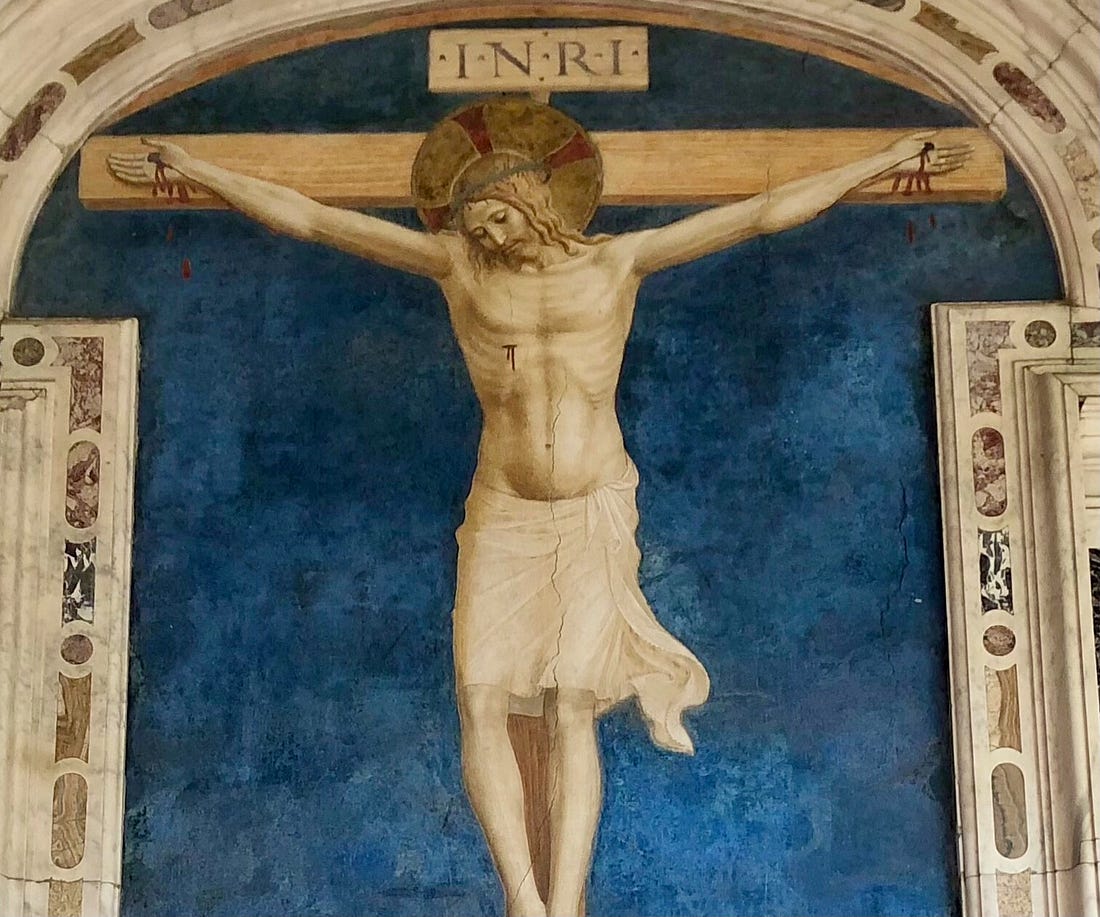
In the gospel story, Christ’s coronation is by crucifixion, his crown is made of thorns, and his throne is the cross itself. John the Revelator pushes this comic subversion to its ludicrous limits by depicting the powerful and dreadful beasts of empire as conquered, not by a Homeric hero, but by a little lamb who is slain in the battle yet somehow emerges victorious. In the final end he won the war, after losing every battle.

When Jesus’ lifeless body was taken down from the cross and laid to rest in a cold, dark tomb, he had lost. The corrupt priests had won. King Herod had won. Pontius Pilate had won. The Roman Empire had won…as it always did. The twelve apostles Jesus had chosen, trained, and taught all failed him. His chief apostle denied him, another betrayed him, and the rest abandoned him. Mark is unsparing in his report: “All of them deserted him and fled.” (Mark 14:50) What had begun with such promise in Galilee had gone down in bitter defeat at Golgotha. It is finished.

Of course Easter changed everything. Ingolf Dalferth says Christianity “is the awareness and acknowledgment that Christ’s cross and resurrection mark the end of the old world, and the beginning of the new.” And it also changed how those who confess Christ are to think about things like winning, greatness, and glory. In the light of Easter these concepts are radically redefined. We don’t win like Romans. We don’t aspire to be great like Caesar. Our glory is not that of Palatine Hill. We win by losing—losing our lives for the sake of the gospel. We triumph by humility—an imitation of the King who rode a donkey instead of a warhorse. Our glory is in the cross—not in the glittering gold and stately marble of imperial palaces or presidential ballrooms.

A fresco by Fra Angelico in the Convent of San Marco, Florence Italy, c. 1440.

In his wonderful foreword to Postcards From Babylon, Walter Brueggemann writes,

As long ago as the sixteenth century, Martin Luther boldly voiced a vigorous either/or for Christian faith in terms of a “Theology of Glory” and a “Theology of the Cross.” By the former Luther referred to an articulation of Gospel faith that smacked of a triumphalism that was allied with worldly power that specialized in winning, control, being first, and being best. For Luther, that theology was all tied up with the European imperial of his time. By the contrast of a “Theology of the Cross,” Luther referred to the risky way of Jesus that is marked by humility, obedience, and vulnerability that stands in sharp contrast to and in opposition to the hunger for “Glory.” The “way of the cross,” for Luther, is demanding and costly because it contradicts the dominant way of the world.

Much of the Christian engagement in the culture wars and partisan politics of our present moment is an attempt to win a game we were never meant to play. When I hear Christians banging on about how “we must win Congress, we must win the White House,” I want to ask, “who is we and what are we winning?” That’s the kind of winning upon which the cross casts a long shadow of suspicion. A truly Christian way of winning will more often than not look like losing in the context of a superpower. If we are not regularly dismissed as naïve and foolish by the powers that be, it’s probably because we too are playing their game. And that game is a devil’s bargain where winning the world comes at the price of losing your soul.

We who confess the sacred mystery—Christ has died, Christ has risen, Christ will come again—can afford to be patient. Caesars and their modern successors cannot afford to be patient; Christians can. We don’t have to win. We don’t have to be greater than others. We don’t have to make a deal with the devil for the kingdoms of the world and their glory. We are a patient people. As James the brother of Jesus said, “Be patient, therefore, beloved, until the coming of the Lord.” (James 5:7) And in this time of patient waiting we are not condemned to a disengaged quietism, instead we can achieve justice in our own immediacy—especially in the kingdom immediacy of our local congregations. This is mostly what James’ pithy epistle is about.

The wisdom from above is first pure, then peaceable, gentle, willing to yield, full of mercy and good fruits, without a trace of partiality or hypocrisy. And a harvest of justice is sown in peace by those who make peace. (James 3:17–18)

Our witness to the world is not in winning a contest in scorched-earth political combat, but in being a quiet yet real anticipation of kingdom come. We don’t have to win. It’s enough to be faithful. We don’t have to be great. The pursuit of greatness leads us away from the true, the good, and the beautiful. The grace of humility is the way of Christ. We don’t have to boast of our accomplishments. That’s vanity. The apostle with the brand-marks of Jesus on his body said it best: “May I never boast of anything except the cross of our Lord Jesus Christ, by which the world was crucified to me, and I to the world.” (Galatians 6:14)

Amen.

BZ

P.S. Shortly after finishing this article I learned of the death of Wendell Berry at his home in Port Royal, Kentucky at the age of 92. Berry was a farmer, scholar, poet, essayist, novelist, and one of America’s greatest prophets. I once wrote-in his name on a Presidential ballot. His work has had an enormous influence on my thinking. Earlier this year I re-read Life Is A Miracleand What Are People For? If I had to choose one of his books as my favorite, I suppose it would be his 2001 novel Jayber Crow. Now it’s time to read it again.

“To treat life as less than a miracle is to give up on it. We are alive within a mystery, by miracle.” -Wendell Berry, Life Is A Miracle