Tuesday, August 4, 2026
Before Job’s friends launch into their lengthy speeches trying to justify Job’s suffering, Old Testament scholar Ellen Davis points out that their most compassionate action is to simply sit with him in his grief and suffering.
The most important thing about Job’s silence is that he does not remain alone in it. He is joined by three friends—Eliphaz, Bildad, and Zophar—who hear of Job’s affliction and come from far off to comfort him.
And they lifted up their eyes from a distance but could hardly recognize him. And they lifted up their voices and wept, and each one tore his robe and they threw dust over their heads into the air. And they sat with him on the ground seven days and seven nights without speaking a word to him, for they saw how great was his pain. (Job 2:12–13)
Those seven days of silence are surely one of the most influential acts of pastoral care ever performed. The Jewish practice of “sitting shiva” (literally “sitting seven,” when friends come to sit with mourners at home over the period of a week) memorializes the friends’ wise compassion in this long moment of shared grief. More than twenty-five hundred years after the book of Job was written, this one act of Job’s companions is imitated on a daily basis by comforters all over the world. Silence kept with others has a special quality. It is like a fine veil, preserving separateness, yet strangely heightening mutual awareness. Silence requires us to be present to the unexpressed needs of others, needs of which they may themselves not yet know. It is a powerful means of fostering mutual encouragement among us, whom God has entrusted to one another in this wilderness of pain and doubt.
That week of shared silence is a period of transition for Job. In it he finds the words to speak his whole mind, to admit the pain of all that he has suffered…. Silence allows pain to penetrate our heart, “deep calling to deep” (Psalm 42:8). Silence comes to us in grief as the comforter of whom we are afraid, for it invites us more deeply into ourselves, into the dark places in which doubts emerge and pain becomes fully perceptible, where loss can no longer be denied. Silence is the friend who challenges us to be healed when we wish simply to be soothed. It heals us first by making us more empty, carving a space within our hearts…. Silence pushes Job to challenge God. When Job finds words at last, he demands steadily that God enter the abyss of loss and be revealed to him there.
====================
I Didn’t Know How to Ask
Back to Maturity, Part One
AUG 03, 2026
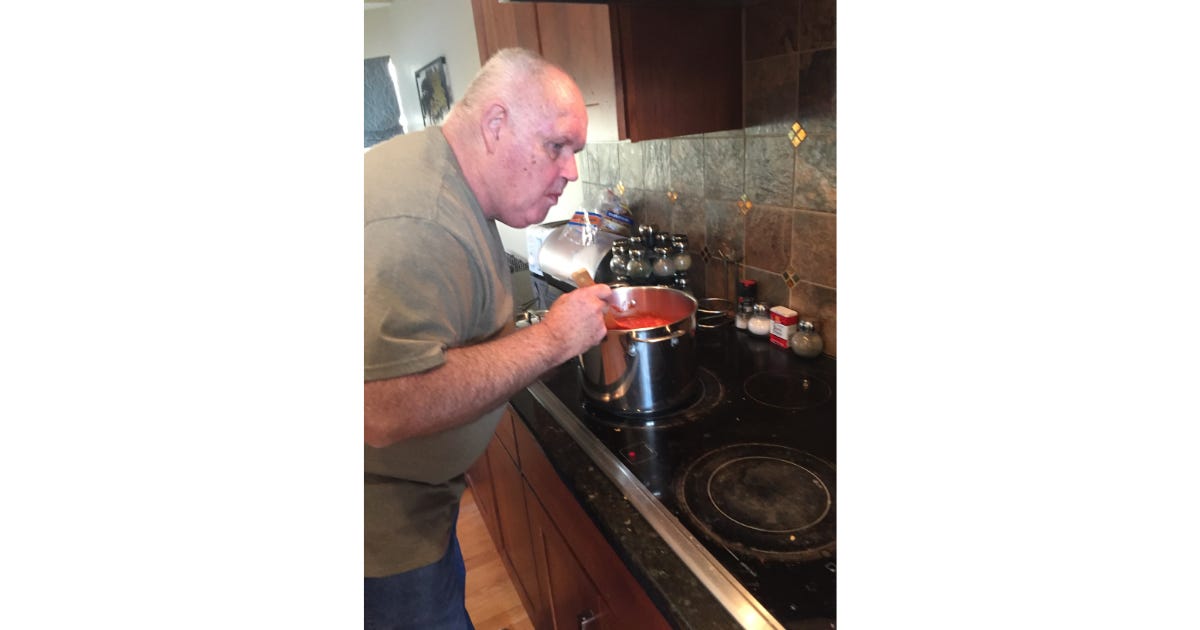
There’s a skill most men never learn, because nobody tells you it’s a skill. You just find out, one missed year at a time, that you never picked it up.
The skill is asking.
I grew up in a town on Long Island called Massapequa, half Jewish, half Italian, the kind of place people jokingly nicknamed “Matzah Pizza.” We weren’t Italian. Didn’t matter. My dad made a spaghetti sauce that was, honestly, incredible, his own recipe, guarded like a secret, good enough that my friends would ask about it. That sauce was legendary in our house.
Years passed. I was in my late thirties, a single dad raising three kids after my wife passed away, and in the kitchen I felt like I was bumbling through it, figuring out dinner the way I’d figured out most things in my life: alone, by trial and error, telling no one I didn’t know what I was doing.
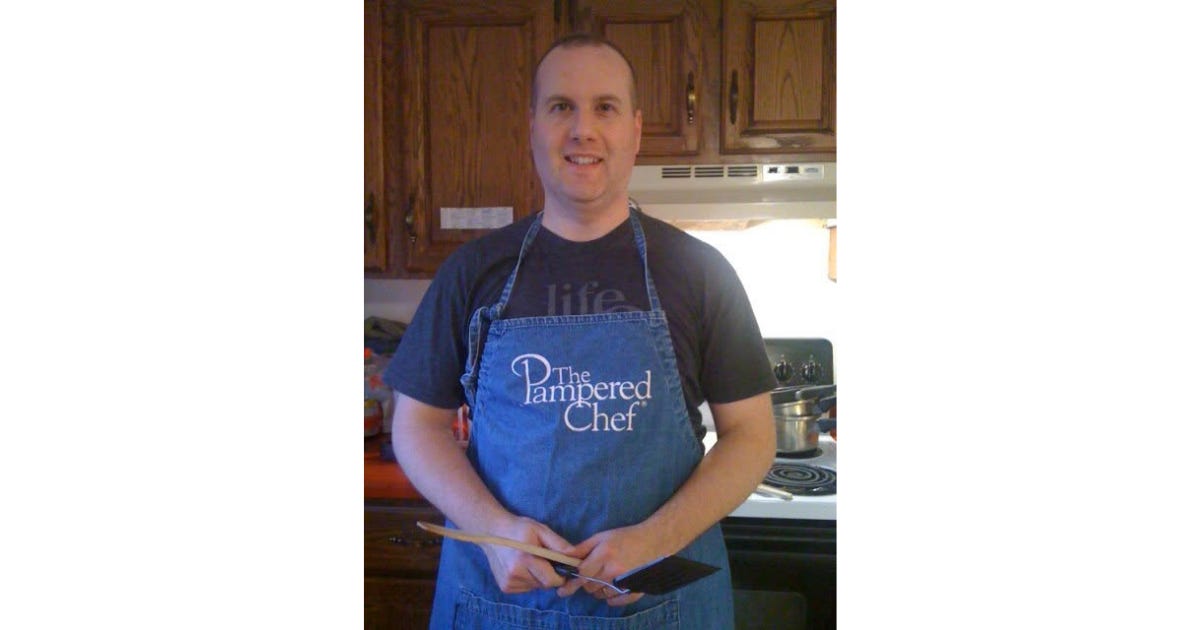
My dad lived a mile down the road. One day he was over, and I asked him: Dad, can you show me how you make that sauce?
His face lit up. “Yes.” We went to the store together. He was particular about every ingredient, this brand, not that one, this cut, not the other. He showed me the whole thing, start to finish. It was delicious. It was more than delicious.
Years later, I found myself back in that kitchen, not standing in it, but telling it, at a recent LK10 conference. I’m grateful for how that experience was built: no expert on a stage lecturing at us, just trained facilitators making space for something deeper than left-brain teaching could reach. We were practicing what we call “Back to Maturity” stories, going looking for a moment we didn’t know was formative until we looked back at it. When my turn came, I hadn’t planned what would surface. But there I was, back in that kitchen. I could smell the sauce. I could see his face when I asked, how much he’d wanted to pass this down, how long he’d been holding it, waiting for someone to reach for it.
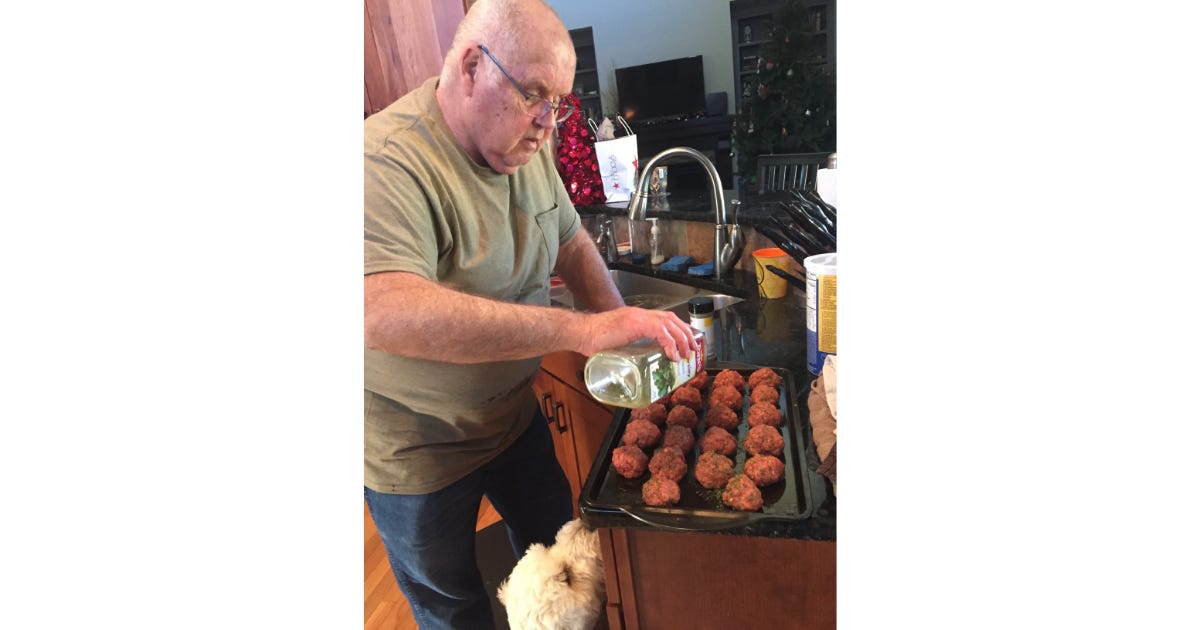
And underneath the warmth of that memory was something else: a quiet grief. Because I realized how rarely I’d asked my dad for anything, growing up. He wasn’t naturally gifted at teaching, showing us how to do things before requiring we already know them. So somewhere along the way I stopped asking and started figuring everything out on my own. That became the whole shape of my life. Self-taught. Independent. Alone more than I ever needed to be.
That one afternoon with the sauce wasn’t just about sauce. It was one of the only times I let myself need something from my father and let him give it.
I didn’t know how to ask. Not with my dad. Not, later, with my wife, in the ways that mattered most. I’d built a whole identity out of not needing to.
Here’s what I’ve learned since: a man who never learns to ask doesn’t just miss out on sauce recipes. He spends the rest of his life either silently resenting people for not reading his mind, or white-knuckling everything alone and calling it independence. Both are the same wound wearing different clothes.
If any of that sounds familiar, the pride in figuring it out alone, the thing you’ve never asked for because asking doesn’t feel like something a man does, I’d gently say: that’s not strength holding you back. That’s just a skill nobody taught you, and it’s not too late to learn it.
This is the first in a short series I’m calling Back to Maturity stories, moments that quietly show us where we stopped growing, and what it looks like to pick it back up. More coming soon.
The Heartsmith Coach is a reader-supported publication. To receive new posts and support my work, consider becoming a free or paid subscriber.Subscribe
