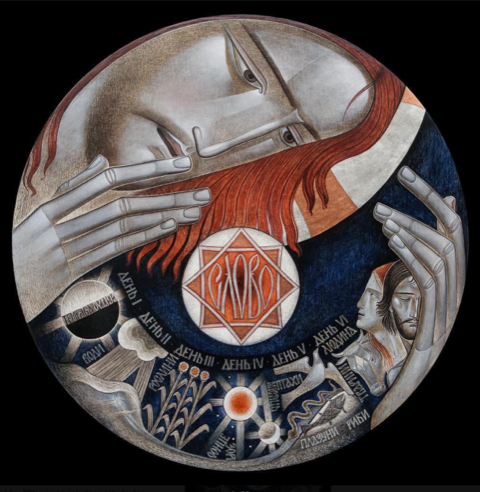
A Painful Pattern 

March 25th, 2024 by Dave No comments »

As Holy Week begins, Richard Rohr reflects on how quickly we tend to transmit our pain to others:  

Human nature, when seeking power, wants either to play the victim or to create victims of others. In fact, the second follows from the first. Once we start feeling sorry for ourselves, we will soon find someone else to blame, accuse, or attack—and with impunity! It settles the dust quickly, and takes away any immediate shame, guilt, or anxiety. In other words, it works—at least for a while. 

When we read today’s news, we realize the pattern hasn’t changed much in all of history. Hating, fearing, or diminishing someone else holds us together for some reason. Scapegoating, or the creating of victims, is in our hard wiring. Philosopher René Girard called “the scapegoat mechanism” the central pattern for the creation and maintenance of cultures worldwide since the beginning. [1] 

The sequence, without being too clever, goes something like this: we compare, we copy, we compete, we conflict, we conspire, we condemn, and we crucify. If we don’t recognize some variation of this pattern within ourselves and put an end to it early on, it’s almost inevitable. That’s why spiritual teachers of any depth will always teach simplicity of lifestyle and freedom from the competitive power game, which is where it all begins. It is probably the only way out of the cycle of violence. 

It’s hard for us religious people to hear, but the most persistent violence in human history has been “sacralized violence”—violence that we treated as sacred, but which was, in fact, not. Human beings have found a most effective way to legitimate their instinct toward fear and hatred. They imagine they are fearing and hating on behalf of something holy and noble: God, religion, truth, morality, their children, or love of country. It takes away all guilt, and one can even think of oneself as representing the moral high ground or being responsible and prudent as a result. It never occurs to most people that they are becoming what they fear and hate. [2]  

Therapist Matthias Roberts describes how Jesus defied the scapegoating pattern:  

Jesus walked willingly into a human world defined—as it still is today—by violence and dependence on scapegoats…. He was murdered not because God wanted or needed his sacrificial death but because as humans, when the stakes are high, we determine who is in and who is out through violence and death.  

But Jesus … broke the system because what was supposed to happen didn’t.  

The scapegoat didn’t stay dead. And the victors, in this case, didn’t get to write the only version of the story.  

The scapegoat came back to life and told a different story, a truer story, a story about life and love. And through his story, Jesus revealed our ideas about God had been wrong all along.  

God and Jesus are nothing like the violent and vengeful world we live in. [3] 

A Gospel According to Scapegoats

Theologian Jennifer Garcia Bashaw describes how the Gospels are liberating for the excluded and scapegoated:  

From the inception of the Gospel narratives, we can see that they were not just stories written about a scapegoat—they were stories written by scapegoats…. When the [New Testament] authors told the stories of Jesus’s life or of the early church, they wrote and interpreted from this fringe position. The Gospel writers also focused on the stories of the marginalized…. These were the people Jesus taught, healed, and befriended in his life—the societal victims and outcast people who lived not only on the periphery of the empire but on the periphery of their own culture. The gospel story, then, is a story about a victim, written by victims, and featuring victims. It is good news for victims; it is a scapegoat’s gospel. [1]  

Jesus’ death on the cross reveals the violence of scapegoating.  

Jesus willingly becomes a scapegoat to draw attention to the scapegoaters; he submits to death on a cross to draw attention away from the scapegoats.… In his life, Jesus championed women, befriended and healed the poor and the disabled, and welcomed in the outsiders. In his death, Jesus becomes the woman, the infirmed, and the outsider. The Jesus who saved women from society’s shaming was himself publicly shamed, stripped naked, and despised. The Jesus who healed sick and disabled bodies became disabled himself, flesh pierced and torn, weakened and held captive by nails and his failing body.… If Jesus’s life reversed the fate of victims he had met, then his death reverses the fate of future victims. He becomes the scapegoat to end all scapegoats—and exposes the truth that could end human blame and violence once and for all.  

As they tell the Jesus story, the Gospel writers ensure that followers of Jesus see his scapegoat death for what it is…. They show us the innocence of Jesus so that we might recognize the innocence of all scapegoat victims before it is too late…. After Jesus became a victim on the cross, exposing the scapegoat mechanism and its fatal effects, the story is carried forward by the scapegoats of Jesus’s society. It is the women disciples who discover the tomb (Mark 16:1–8; Matthew 28:1–10; Luke 24:1–11; John 20:1–18) and become the first witnesses to the resurrection and the first evangelists to carry the news to other Jesus-followers. [2] 

 Jesus’ death compels us to join in solidarity with the scapegoated. Bashaw continues:  

Without a clear comprehension of Jesus’s pattern of life and death, those of us who follow Jesus can unknowingly become the ones who scapegoat rather than the ones who follow the scapegoat. When we enter the story of Jesus with an eye on society’s victims, however, we can grasp more fully the life, ministry, and death of the scapegoat that was supposed to end all scapegoats—Jesus. Maybe then we can stop creating scapegoats and work on their behalf instead. [3] 

Finding Jesus in Meekness
Note: For Holy Week, we are taking a short break from the “Lessons from Naaman” series to reflect on the events leading up to Jesus’ death. We will return to the Naaman series on April 1.

The great power and authority that Jesus had revealed day after day was not on display after his arrest in the Garden of Gethsemane. Miraculously healing the severed ear of the guard in the garden was the final miracle Jesus would perform. The mighty prophet from Nazareth who had healed the blind and raised the dead appeared powerless by the time of his trial in the courtyard of the high priest. With a word he had silenced the sea, but he did nothing to silence the false witnesses and evil accusers that night. Frustrated by his lack of cooperation, the high priest finally came to the heart of the matter: “Are you the Messiah, the Son of God, or not?” he demanded. “I am,” Jesus said. His words were chosen deliberately to invoke the proper Hebrew name of God. “And you will see the Son of Man seated at the right hand of the Power and coming with the clouds of heaven.” He was quoting a familiar image of the Messiah from the prophetic words of the Old Testament, but the vision of power and authority stood in sharp contrast to the man in chains before them. His claim sounded as ridiculous as it was blasphemous. Here was a mouse claiming to be a lion.It was too much for them to take. This passive, uncooperative carpenter could not be the mighty Messiah, the Savior of Israel, and God himself in human form. The priests tore their robes at Jesus’ blasphemy and unanimously condemned him to death. They slapped him, spit on his face, and mocked him. To these men, Jesus was worse than a liar and more embarrassing than a blasphemer. He was a joke.Amazingly, these men were the most educated scholars in Israel. They had memorized the Scriptures from childhood and had parsed their meaning all of their lives—and yet they could not recognize the God of Scripture when he stood before them clearly declaring his identity. It is easy to stand in judgment of these elders and priests, just as they stood in judgment of Jesus. But we dare not because their blindness could easily be our own. Instead, humility should lead us to learn from their example so we do not repeat their mistake. They possessed the scriptures, acquired knowledge, studied their theological traditions, and occupied important religious offices. But these things did not give them the ability to see the truth or to discern the presence of God. Likewise, we must be careful that our knowledge, traditions, and ministries do not cause us to miss the true presence of God. While we search for him in the powerful, the spectacular, and the impressive, the Lord may pass us by in the faces of those we deem worthless.

DAILY SCRIPTURE
MARK 14:60–65 
JOHN 5:39–40


WEEKLY PRAYER. Karl Barth (1886–1968)

O Lord God, our Father.
You are the light that can never be put out;
and now you give us a light that shall drive away all darkness.
You are love without coldness,
and you have given us such warmth in our hearts that we can love all when we meet.
You are the life that defies death,
and you have opened for us the way that leads to eternal life.
None of us is a great Christian;
we are all humble and ordinary.
But your grace is enough for us.
Arouse in us that small degree of joy and thankfulness of which we are capable,
to the timid faith which we can muster,
to the cautious obedience which we cannot refuse,
and thus to the wholeness of life which you have prepared for all of us
through the death and resurrection of your Son.
Do not allow any of us to remain apathetic or indifferent to the wondrous glory of Easter,
but let the light of our risen Lord reach every corner of our dull hearts.
Amen.

Ordinary Lives Transformed

March 22nd, 2024 by JDVaughn No comments »

Father Richard writes about encountering the Risen Christ in our ordinariness and woundedness.

I’ve noticed in the Gospels that even after two appearances of the Risen Christ, the apostles return to their old job of fishing (John 21:3). They don’t join the priesthood, try to get a job at the Temple, go on more retreats, take vows, leave their wives, or get special titles. Nor is there any mention of them baptizing each other or wearing special clothing beyond that of a wayfarer or “workman” (Matthew 10:9–10). When the inner is utterly transformed, we don’t need symbolic outer validations, special hats, or flashy insignia. 

We can also note that the Risen Christ is never apparent as a supernatural figure, but is mistaken in one case for a gardener, another time for a fellow traveler on the road, and then for a fisherman offering advice. He seems to look just like everybody else after the Resurrection (John 20:15; Luke 24:13–35; John 21:4–6), even with his wounds on full display! In the Gospels it appears we can all go back to “fishing” after any authentic God encounter, consciously carrying our humiliating wounds, only now more humbly. That is our only badge of honor. In fact, it is exactly our woundedness that gives us any interest in healing itself, and the very power to heal others. As Henri Nouwen rightly said, the only authentic healers are always wounded healers. Good therapists will often say the same.  

True mysticism just allows us to “fish” from a different side of the boat and with different expectations of what success might mean. All the while, we are totally assured that we are already and always floating on a big, deep, life-filled pond. The mystical heart knows there is a fellow Fisherman nearby who is always available for good advice. He stands and beckons from the shores, at the edges of every ordinary life, every unreligious moment, every “secular” occupation, and he is still talking to working people who, like the first disciples, are not important, influential, especially “holy,” trained in theology, or even educated. This is the mystical doorway, which is not narrow but wide and welcoming. [1]

Matthew Fox affirms mystical experience as a gift:

Deep down, each one of us is a mystic. When we tap into that energy we become alive again and we give birth. From the creativity that we release is born the prophetic vision and work that we all aspire to realize as our gift to the world. We want to serve in whatever capacity we can. Getting in touch with the mystic inside is the beginning of our deep service…. 

Mysticism is about the awe and the gratitude, the letting go and the letting be, the birthing and the creativity, and the compassion—including healing and celebration and justice making—that our world so sorely needs…. Every mystic is a healer. We are healers all. [2]

_______________________________________________

Sarah Young

 Rest in My Presence, allowing Me to take charge of this day. Do not bolt into the day like a racehorse suddenly released. Instead, walk purposefully with Me, letting Me direct your course one step at a time. Thank Me for each blessing along the way; this brings Joy to both you and Me. A grateful heart protects you from negative thinking. Thankfulness enables you to see the abundance I shower upon you daily. Your prayers and petitions are winged into heaven’s throne room when they are permeated with thanksgiving. In everything give thanks, for this is My will for you. 

RELATED SCRIPTURE: 

Colossians 4:2 NLT

An Encouragement for Prayer

2 Devote yourselves to prayer with an alert mind and a thankful heart.

1st Thessalonians 5:18 NLT

18 Be thankful in all circumstances, for this is God’s will for you who belong to Christ Jesus.

Waking Up to God 

March 21st, 2024 by JDVaughn No comments »

When Jacob awoke from his sleep, he thought, “Surely the Lord is in this place, and I did not know it!” —Genesis 28:16

Author Barbara Brown Taylor considers how God shows up in all things:

The Bible I set out to learn and love rewarded me with another way of approaching God, a way that trusts the union of spirit and flesh as much as it trusts the world to be a place of encounter with God…. People encounter God under shady oak trees, on riverbanks, at the tops of mountains, and in long stretches of barren wilderness. God shows up in whirlwinds, starry skies, burning bushes, and perfect strangers. When people want to know more about God, the son of God tells them to pay attention to the lilies of the field and the birds of the air, to women kneading bread and workers lining up for their pay.

Taylor admits how easy it is to miss these ever-available encounters with God:

According to the Talmud, every blade of grass has its own angel bending over it, whispering, “Grow, grow.”

How does one learn to see and hear such angels?

If there is a switch to flip, I have never found it. As with Jacob, most of my visions of the divine have happened while I was busy doing something else. I did nothing to make them happen…. I play no apparent part in their genesis. My only part is to decide how I will respond, since there is plenty I can do to make them go away, namely: 1) I can figure that I have had too much caffeine again; 2) I can remind myself that visions are not true in the same way that taxes and the evening news are true; or 3) I can return my attention to everything I need to get done today. These are only a few of the things I can do to talk myself out of living in the House of God.

Or I can set a little altar, in the world or in my heart. I can stop what I am doing long enough to see where I am, who I am there with, and how awesome the place is. I can flag one more gate to heaven—one more patch of ordinary earth with ladder marks on it—where the divine traffic is heavy when I notice it and even when I do not. I can see it for once, instead of walking right past it, maybe even setting a stone or saying a blessing before I move on to wherever I am due next.

Human beings may separate things into as many piles as we wish—separating spirit from flesh, sacred from secular, church from world. But we should not be surprised when God does not recognize the distinctions we make between the two. Earth is so thick with divine possibility that it is a wonder we can walk anywhere without cracking our shins on altars.

________________________________________________________

Sarah Young, Jesus Calling

Jesus Calling: March 21

    Trust Me and don’t be afraid, for I am your Strength and Song. Think what it means to have Me as your Strength. I spoke the universe into existence; My power is absolutely unlimited! Human weakness, consecrated to Me, is like a magnet, drawing My Power into your neediness. However, fear can block the flow of My Strength into you. Instead of trying to fight your fears, concentrate on trusting Me. When you relate to Me in confident trust, there is no limit to how much I can strengthen you.
    Remember that I am also your Song. I want you to share My Joy, living in conscious awareness of My Presence. Rejoice as we journey together toward heaven; join Me in singing My Song.

RELATED SCRIPTURE:

Isaiah 12:2-3 (NLT)
2 See, God has come to save me.
    I will trust in him and not be afraid.
The Lord God is my strength and my song;
    he has given me victory.”
3 With joy you will drink deeply
    from the fountain of salvation!
Psalm 21:6 (NLT)
6 You have endowed him with eternal blessings
    and given him the joy of your presence.

Alive for a Reason

March 20th, 2024 by Dave No comments »

Theologian Howard Thurman (1899–1981) believed that cultivating inner stillness allows us to experience the divine. Lerita Coleman Brown writes:

As a seminary student walking home late one night, Thurman noticed the sound of water. He had taken this route many times, and he had never heard even a drip. The next day Thurman discussed his observations with one of his professors, who told him that a canal ran underneath the street. Because the noises of streetcars, automobiles, and passersby were absent late at night, Howard could discern the sound of water.

Thurman equates these sounds… to the inner chatter within our minds that prevents us from being aware of God’s presence. Quieting the surface noise in our minds is what Thurman urges us to do when he instructs us, as he does throughout his writings, to “center down.”

What attracts and holds our attention determines how and when we will experience God. “In the total religious experience we learn how to wait; we learn how to ready the mind and the spirit,” he writes. “It is in the waiting, brooding, lingering, tarrying timeless moments that the essence of the religious experience becomes most fruitful. It is here that I learn to listen, to swing wide the very doors of my being, to clean out the corners and the crevices of my life—so that when His Presence invades, I am free to enjoy His coming to Himself in me.” [1] Thurman believed this activity may also require letting go of hatred and bitterness so that in coming into your center, you are coming into God as the Creator of existence because “God bottoms existence.”

Brown finds in Thurman’s writings an invitation to be open to the possibility of everyday mysticism for all. 

Thurman demystified mysticism by framing it simply. Mystics are people who have a personal religious experience or an encounter with God. This description has freed me and many others from thinking that God appears to people only after years of prayer and living an ascetic, isolated life. Thurman believed anyone can be a mystic if they are open to the experience. He opened a door to a world where mystics move freely among us and live ordinary lives. Mystics are the ones who can hear the water flowing beneath the street. They know how to quiet the surface noise enough to hear the meaning of all things coursing below daily life.

Everyday mystics are people who commune with the presence of God, receive guidance through prophetic visions, voices, and dreams, and commit themselves to living for God rather than solely for themselves. Their vision for life is larger and more expansive, knowing that they are alive for a reason, a purpose that will benefit human spirits they may never meet…. Thurman lived out an identity grounded in mysticism, as he regularly felt oneness with God and on occasion experienced visions. He also believed that mystical moments should stir people toward love, community, and social action.

=================

Transformed by God’s Goodness
One by one, all of Naaman’s pagan assumptions about Israel’s God were dismantled. By refusing to even meet Naaman, Elisha was showing that Israel’s God did not depend upon human mediators or experts. By not giving Naaman any elaborate healing ritual to perform, Elisha was revealing that Israel’s God could not be controlled by magic or incantations. And by rejecting any gift or payment for his healing, Elisha was telling Naaman that Israel’s God was self-sufficient. He needed nothing from the hands of mere mortals.The independence of Israel’s God stood in sharp contrast with the deities of Naaman’s country. Despite their ferocious reputations, pagan gods were dependent upon their human subjects for food (offered through sacrifices), and shelter (provided through building temples), and their blessings could only be cajoled from their hands (usually through the sorcery of priests). The entire premise of pagan worship was that gods could be manipulated because they had needs. But how do you control a God that has no needs?That was Naaman’s shocking discovery in Israel. What kind of God needs no sacrifices, no temples, no priests, and no offerings? What kind of God cannot be managed with rituals and spells? At some point, an even more marvelous thought must have entered Naaman’s mind. This God of Israel who needs nothing and cannot be controlled chose to heal his leprosy anyway. What kind of God freely loves and blesses a foreigner; the enemy of his people?

A casual reading of the story may lead us to conclude that Naaman’s amazement and eventual devotion to Israel’s God was the result of his cleansing from leprosy. We may assume it was God’s miraculous power to heal that transformed Naaman’s life. But it wasn’t. Other gods were known to heal, and lesser deities could manifest miracles—as we see in the story of Moses and the Egyptian sorcerers (see Exodus 7:8-13).

The real turning point for Naaman was not his healing, as amazing as that was. Rather, it was Elisha’s refusal to accept Naaman’s gifts. That is when the great man from Syria was confronted with the shocking fact that Israel’s God had healed him expecting nothing in return. What transformed Naaman was not God’s power, but God’s goodness. In a word, it was grace.

DAILY SCRIPTURE
ROMANS 5:6-8 
2 KINGS 5:1-27


WEEKLY PRAYER Ignatius of Loyola (1491 – 1556)

Take, Lord, and receive all my freedom, my memory, my intelligence and my will—all that i have and possess. You, Lord, have given those things to me. I now give them back to you, Lord. All belongs to you. Dispose of these gifts according to your will. I ask only for your love and your grace, for they are enough for me.
Amen.

The Mystics Who Surround Us

March 19th, 2024 by Dave No comments »

Dr. Barbara Holmes continues to share her experiences with everyday mysticism.

What was it like growing up as an ordinary mystic? Dreams and visions were shared, discussed, and interpreted. Ancestors and elders communicated with us from the life after life. They issued warnings, blessings, and updates. It took a while for me to realize that what I considered normal was considered weird by everybody else.

Despite this history and my acquaintance with biblical mystery, I tried to subdue the mysticism in me as I entered the academic world. I remember creating the longest, most boring PowerPoint ever on the subject of mysticism when I first started teaching. I used words like “noetic” and “ineffable.” Of course, my students went into an academic stupor, and I wondered why they didn’t get it. Instead, I should have wondered why I was hiding in plain sight. The students already knew that something was different about my process and background, and they sought me out to tell me their stories.…

I know about everyday mystics because they were in my house, in my family, at the corner store, and hugging me at church.… They mediated the realms of life and the life after life. They were amazing, and they were a little bit scary, too.

The everyday mystics I grew up with had knapsacks full of spiritual gifts. They could conjure in the kitchen, offer blessed assurance, and braid hair. An aunt or a grandma could shake the dirt from a bunch of beets and transform it into a dish that took you to heaven, even when you don’t like beets. The elders knew how to cure you of your ailments…. The mystics I knew could get a prayer through. They could birth babies and they could bring you messages from the other side.

Holmes looks for the Divine Presence in all of life. 

I hear mystery in drumming, in singing bowls, rattles, and in basic hymns, but that’s not the only place mysticism is found. Sacred texts of all faiths contain stories of wondrous happenings. In the Christian tradition we’ve got virgin births, burning bushes not consumed, waters parting, healing, and prophetic leadership. Yet some Christians are nervous as to whether miracles are tied to faith! Miracles and mysteries can be extraordinary. They can be experienced by the entire community or as a vision or a dream for an individual. Today, we are not looking for colossal mysteries like the parting of the seas. We just want to tap into, or at least recognize, everyday mysticism. Our ancestors hosted this type of mysticism for ages, and we didn’t lose our connection to those many sources of wisdom until more recent generations when we decided that scientific verification and proof would be the only criteria by which we decide between reality and delusion. But we can make better decisions now. We can acknowledge the continued value of science as we explore our worlds and while we continue our dance with the mysteries of life.

Transactional vs. Devotional
After being miraculously healed of his leprosy, Naaman offers Elisha a lavish gift of gold, silver, and expensive clothing which the prophet utterly rejects despite Naaman’s urging. When we read these verses with our modern, Western eyes, we assume Naaman was offering a generous gift out of gratitude, and that Elisha was refusing it out of humble piety. It all appears very polite and gentlemanly. Read these verses through ancient Near Eastern eyes, however, and a different story emerges.Once again, it’s important to understand how idolatry and pagan religion worked in the ancient world.

Only then can we see what religious assumptions Naaman practiced in Syria and carried with him as he sought healing from the God of Israel. Having been deeply shaped by Christian religious values for 2,000 years, even non-Christians in our culture think of religion in terms of devotion to God and expressive worship. Simply put, for many modern people religion is deeply emotional. That was not the case for pre-Christian, non-Israelite pagan cultures. Bible scholar Nijay Gupta describes ancient pagan religion this way: “Religion was not about love or friendship with the gods; it was about maintaining a healthy circle of reciprocity… The gods didn’t want devotion…They wanted compliance and homage rendered in ways that were orderly and ritualized, practical and predictable.”Gupta also compares pagan religion to the mafia. Just as a mob boss expected the neighborhood to pay him both money and respect in exchange for his protection, pagan deities were appeased in a similar fashion.

No one liked the gods, and they certainly did not love them. The gods were to be feared and respected, and if you honored them correctly hopefully they’d keep their side of the agreement. Consider a vending machine. Receiving your Doritos has nothing to do with your feelings toward the machine. All that matters is inserting enough money and pushing the right buttons in the correct order. It’s mechanical, not emotional. Likewise, paganism was fundamentally transactional rather than devotional.

Contrast this with Israel’s God who describes himself as “compassionate and gracious, slow to anger, abounding in love and faithfulness” (Exodus 34:7), and whose greatest commandment to his people was to, “Love the Lord your God with all your heart and with all your soul and with all your strength” (Deuteronomy 6:5). For the God of Israel, worship was not about appeasement, mechanics, or payment. It was about the heart. The very different values that animated pagan and Israelite worship help us see the subtext of Naaman’s interaction with Elisha.Naaman’s extravagant offering of gold, silver, and clothing was intended as a payment to Israel’s God for his healing. As God’s representative, Naaman assumed Elisha would accept it as the proper and necessary reciprocity. Therefore, it was not genuinely a free gift offered by a heart overflowing with gratitude, but a payment understood to be obligatory for God’s blessing. I’m not saying Naaman was not thankful for his healing, only that his offering was not given for that reason. Just like we are thankful when a doctor heals our chronic back pain, but gratitude is not why we pay the bill. That part is simply expected.And this explains Elisha’s refusal to accept Naaman’s gift. If he had taken the money, Naaman would have returned to Syria assuming Israel’s God was just like all the others—more powerful perhaps, but essentially the same; a divine vending machine or a malcontent mob boss demanding cash and respect. By rejecting any payment, Elisha forced Naaman into a religious crisis. He was provoking a revolution in Naaman’s thinking as he grappled with what it meant to encounter a God who operated like no other; a God who graciously healed foreigners without expecting or demanding anything in return.

DAILY SCRIPTURE
ACTS 8:14-23 
2 KINGS 5:1-27


WEEKLY PRAYER Ignatius of Loyola (1491 – 1556)

Take, Lord, and receive all my freedom, my memory, my intelligence and my will—all that i have and possess. You, Lord, have given those things to me. I now give them back to you, Lord. All belongs to you. Dispose of these gifts according to your will. I ask only for your love and your grace, for they are enough for me.
Amen.

Sidewalk Spirituality

March 18th, 2024 by Dave No comments »

Richard Rohr identifies mysticism as a way of knowing accessible to all: 

While most Christians consider themselves disciples of Jesus and try to follow his teachings, a smaller number move toward practical acts of service or solidarity. But I’m afraid even fewer Christians have the courage to go on the much deeper mystical path. The most unfortunate thing about the concept of mysticism is that the word itself has become mystified—relegated to a “misty” and distant realm that implies it is only available to a very few. For me, the word “mysticism” simply means experiential knowledge of spiritual things, in contrast to book knowledge, secondhand knowledge, or even church knowledge.  

Much of organized religion, without meaning to, has actually discouraged us from taking the mystical path by telling us almost exclusively to trust outer authority, Scripture, various kinds of experts, or tradition (what I call the “containers”), instead of telling us the value and importance of inner experience itself (which is the “content”). In fact, most of us were strongly warned against ever trusting ourselves. Roman Catholics were told to trust the church hierarchy implicitly, while mainline Protestants were often warned that inner experience was dangerous, unscriptural, or even unnecessary.  

Both were ways of discouraging actual experience of God and often created passive (and passive aggressive) people and, more sadly, a lot of people who concluded there was no God to be experienced. We were taught to mistrust our own souls—and thus the Holy Spirit! Contrast that with Jesus’ common phrase, “Go in peace, your faith has made you whole” (see Matthew 8:13; Mark 5:34; Luke 17:19). He said this to people who had made no dogmatic affirmations, did not think he was “God,” and often did not belong to the “correct” group! They were people who affirmed, with open hearts, the grace of their own hungry experience—in that moment—and that God could care about it! 

Pentecostals and charismatics are significant modern-era exceptions to this avoidance of experience; I believe their “baptism in the Spirit” is a true and valid example of initial mystical encounter. 

Richard praises the Franciscan approach to mysticism:  

In my experience, Franciscan mysticism is a trustworthy and simple path precisely because it refuses to be “mystified” by, or beholden to, doctrinal abstractions, moralism, or false asceticism (although some Franciscans have gone this route). The Franciscan way is truly a sidewalk spirituality for the streets of the world, a path highly possible and attractive for all would-be seekers. It doesn’t insist every person must be celibate, isolated from others, highly educated, or in any way superior to our neighbors. In fact, those kinds of paths might well get in the way of the experience itself. A celibate monk or nun may have a totally dualistic mind and live a tortured inner life—and thus torture others too. Everyday workers and caregivers with mystical hearts and minds can enlighten other individuals, their families, and all they touch, without talking “religiously” at all.  

A Life Steeped in Mystery

CAC teacher Barbara Holmes shares her experience with everyday mysticism. 

Every person has had some mystical experience. Maybe the seas have not parted, and maybe they haven’t walked on water, but there have nevertheless been amazing miracles in our lives. We just haven’t shared them in community, so we don’t feel comfortable sharing them as individuals. I will tell you the basis of my personal mysticism so that you will consider yours…. 

I’m an ordinary, everyday mystic. I’m not claiming special powers, just a life steeped in mystery. My family was comfortable with mysticism, spiritual discernment, and the use of spiritual gifts such as healing and words of knowledge. My Aunt Lee, a Gullah shaman Catholic, was my biggest influence. She saw dead people and mediated mystery for our family. She could tell you who was coming and going and how they were when they got to the other side!… She relayed messages from ancestors on the other side back to us. Once a relative transitioned to the other side, she would tell us the age they had chosen to represent their physicality.  

It seems that at least in her understanding, you could choose your age in the life after life. So when you saw people in dreams, you would see them embodied as the age that best reflected their spiritual joy. My dad chose his 50s, and when I see him in dreams, that’s what he looks like. My mom chose her late 30s. I’m not familiar with that look for my mom, so I always hesitate, because at this point on the spiritual side, she’s younger than I am. There were all kinds of rules about dreams and encounters. My aunt’s messages always included what they called “verification.” She would seal the deal with the information that no one would know except the loved ones who had gone on. She’d tell you where a piece of lost jewelry could be found, or the content of a few last words spoken in private.  

Those were the mystics of my dad’s side of the family. And wouldn’t you know it, we have a bunch of them on my mom’s side too.… We’ve traced our DNA linkages, and my mom is from the Tikar people of Cameroon with surprising interconnections with China. As an everyday mystic, DNA testing helped me with the spiritual healing of cultural and historical loss.  

The weird part is that all of this seemed normal to me. Despite the fact that schooling and further education tried to invalidate my experience, I knew that everyday mysticism was real. I could not be persuaded or taught otherwise. I’m describing mysticism as a natural part of everyday life and all of the things that I’m describing happened in ordinary time. There was no weird music, sweeping cloaks, or spooky incantations … just a deep understanding of the sacred and a willingness to allow the gifts to lead.  

==============

Gratuity ≠ Gratitude
Tipping has long been customary at full-service restaurants and bars, for taxis, and in hotels. Coffee or ice cream shops often had a tip jar where a customer might drop their change, but most fast food and counter-service restaurants never asked for a gratuity. When Starbucks added a tip screen to their credit card transactions in 2022, however, it signaled a change. Suddenly it seemed like every business in America started asking for tips.A few weeks ago, while purchasing a protein bar and bottled water from one of those airport terminal snack shops, the self-checkout screen asked me if I wanted to add a 20 percent tip. For who? I thought. That’s when I realized our tipping culture is getting out of control. It also provoked me to research the trend.When traveling in Europe, some Americans are surprised to discover that other Western democracies do not share our habit of tipping.

That’s because America’s gratuity culture germinated from its unique history. Following the Civil War, when millions of formerly enslaved African Americans were seeking jobs, few white business owners were inclined to hire them. Eventually, some were allowed to work in service positions without pay. Instead, they relied entirely on tips from customers. Most famously, black workers on Pullman train cars “shined shoes, made beds, woke up passengers and so on. They worked long hours and relied heavily on tips for pay.” In time, African Americans filled more gratuity-funded service jobs as doormen, elevator operators, and drivers.Eventually, as more business owners realized tips were an easy way to reduce their expenses and shift labor costs directly to customers, the practice expanded throughout the country. So, what began as a racist policy to avoid paying African Americans a fair wage became a widespread, and uniquely American practice.
Even today, 160 years after the Civil War, more businesses are adopting the custom—even ones that have replaced their employees with a self-checkout screen!

Why am I sharing this history lesson? Because it illustrates that gratuity isn’t necessarily about gratitude. Strictly speaking, a tip or gratuity is supposed to be a gift offered in thankfulness. It is neither expected nor demanded. But in reality that’s not how it’s practiced. In many places, failing to leave a tip is deeply offensive and the moral equivalent of stealing. The worker feels cheated out of their well-earned pay. I know this snub well having worked for tips at a car wash in high school. At least as it’s done in America, tipping is not a free act of appreciation; it’s an obligatory act to finalize a transaction.Which finally brings us back to Naaman’s story. After following Elisha’s instructions and bathing in the Jordan River, Naaman’s leprosy disappears. After this miraculous healing, Naaman returns to Elisha and presents him with “a gift.” Remember, he had traveled from Syria with an astronomical amount of wealth—approximately 750 pounds of silver and 6,000 pieces of gold. To the casual reader, this looks like a very generous tip—an act of gratuity flowing from Naaman’s thankfulness.But despite urging him to accept the money, Elisha refused. “As surely as the Lord lives, whom I serve, I will not accept a thing.” Why did the prophet reject Naaman’s gift? Because Elisha recognized when a gift was not a gift. He understood that not all gratuities are about gratitude. In the coming days, we will examine what was really behind Naaman’s gift, and why Elisha’s refusal to accept it is what ultimately caused Naaman to give his allegiance to Israel’s God.

DAILY SCRIPTURE
PSALM 50:7-13 
2 KINGS 5:1-27


WEEKLY PRAYERIgnatius of Loyola (1491 – 1556)

Take, Lord, and receive all my freedom, my memory, my intelligence and my will—all that i have and possess. You, Lord, have given those things to me. I now give them back to you, Lord. All belongs to you. Dispose of these gifts according to your will. I ask only for your love and your grace, for they are enough for me.
Amen.

Facing Reality

March 15th, 2024 by JDVaughn No comments »

Father Richard reminds us of our deepest Reality in God, which we cannot access except by facing our lived realities.

Both God’s truest identity and our own True Self are Love. So why isn’t it obvious? How do we find what is supposedly already there? Why should we need to awaken our deepest and most profound selves? How do we do it? By praying and meditating? By more silence, solitude, and sacraments? Yes to all of the above, but the most important way is to live and fully acknowledge our present reality. This solution sounds so simple that most of us fabricate all kinds of religious trappings to avoid taking up our own inglorious, mundane, and ever-present cross of the present moment.

As James Finley says, “The greatest teacher of God’s presence in our life is our life.For some reason, it is easier to attend church services than quite simply to reverence the Real—the “practice of the presence of God,” as some saints have called it. Making this commitment doesn’t demand a lot of dogmatic wrangling or managerial support, just vigilance, desire, and willingness to begin again and again. Living and accepting our reality will not feel very spiritual. It will feel like we are on the edges rather than dealing with the essence. That’s why many run toward more esoteric and dramatic postures instead of bearing the mystery of God’s suffering and God’s joy inside themselves. But the edges of our lives—fully experienced, suffered, and enjoyed—lead us back to the center and the essence, which is Love.

We do not find our own center; it finds us. Our own mind will not be able to figure it out. We collapse back into the Truth only when we are spiritually naked and free—which is probably not very often. We do not think ourselves into new ways of living. We live ourselves into new ways of thinking. In other words, our journeys around and through our realities lead us to the core Reality, where we meet both our truest self and our truest God. We do not really know what it means to be human unless we know God. And, in turn, we do not really know God except through our own broken and rejoicing humanity.

In Jesus, God reveals to us that God is not different from humanity. Thus, Jesus’ most common and almost exclusive self-name is “The Human One” or “Son of Humanity.” He uses the term dozens of times in the four Gospels. Jesus’ reality, his cross, is to say a free “yes” to what his humanity daily asks of him. It seems we Christians have been worshiping Jesus’ journey instead of doing his journey. The worshiping feels very religious; the latter just feels human and ordinary. We are not human beings on a journey toward Spirit; we are already spiritual beings on a journey toward becoming fully human, which for some reason seems harder—precisely because it is so ordinary.

_________________________________________________________

Five for Friday John Chaffee

1.
“Lovers are the ones who know the most about God; the theologians must listen to them.”

  • Hans Urs von Balthasar, Swiss Theologian
     
    There are two ways of coming to a knowledge of God.  One way is by studying and the other is by loving.  The curious and wonderful thing is that since God IS love, then any love being given or received can become our lesson about God.

In Western, post-Enlightenment, northern hemisphere culture, the study of God has been overemphasized to the detriment of the whole tradition.

Fortunately, it is an extremely short distance to get back to the occasion of love (and experience of the Divine) that is possible in every moment.

2.
“That is part of the beauty of all literature. You discover that your longings are universal longings, that you’re not lonely and isolated from anyone. You belong.”

  • F. Scott Fitzgerald, American Writer
     
    I mean, we call these things “the Humanities”, don’t we?  It is all well and good to make progress within and to learn STEM (Science, Technology, Engineering, and Math), however, we should not be surprised that those topics allow us to forget what it means to be human.

If the modern world has something against it, it’s that the endless pursuit of money, property, assets, business, etc. can shape us to see others more as obstacles to our agenda rather than people with whom to live and to love.

In response to that, the Humanities (and I would argue spirituality) offer a necessary correction to help round us all out.

3.
Imaginary evil is romantic and varied; real evil is gloomy, monotonous, barren, boring. Imaginary good is boring; real good is always new, marvelous, intoxicating.”

  • Simone Weil, French Philosopher
     
    I don’t think I can or should comment on this.  It is so succinct and to the point.

4.
“You can measure an organization (church, denomination, government, business, etc) by the number of lies you need to tell to be a part of it.”

  • Parker Palmer, American Poet and Activist
     
    The degree to which truth or untruth reigns, is the degree to which an organization is healthy.

If an organization has robust, open, and unrestricted dialogue about things in the organization, then it is bending toward health.

If an organization has restrained, behind closed doors, and whispered dialogue about things in the organization, then it is already bending toward unhealth.

Truth is not merely a philosophical ideal, it is a symptom of health and an inoculation against unhealth.

5.
“Do not [take on the same schema/form] of this [eon], but be [meta-morphed/transformed] by the [ever-newing/maturing] of your mind.”

  • Romans 12:2
     
    You have likely heard or read this verse translated into English as, “Do not be conformed to the pattern of this world, but be transformed by the renewing of your mind.”  Although the above may read clunky, at least it carries with it some of the original ideas or nuances Saul of Tarsus intended!

This past week I was driving and became curious about what the word “renewing” was in the original Koine Greek…

I found out that it was a variant of ανακαινοωσις (anakainoosis), which breaks down as ana- meaning “again”, kaino- meaning “new”, and sis- meaning “process.”

IN ADDITION TO THAT…

Anakainoosis also means “to cause to grow up.”

This means that the transformation that many of us are looking for may not be found in simply learning new things, or going back to having what our Buddhist brothers and sisters call the “beginner’s mind,” but taking the initiative to “mature” the way we think about everything.

This blew me away because, for more than a few years, I have been shifting my theological paradigm concerning faith away from being focused on perfection and more toward maturity.  It was astounding to see that the idea of maturity was right here in a Bible verse I had to memorize during my Freshman year of college.

After all these years of being a student of the Bible, it still surprises me.

We Can’t Bypass Reality

March 14th, 2024 by JDVaughn No comments »

Therapist and author Aundi Kolber names the paradox of experiencing difficult realities while honoring our God-given dignity.

We must begin with honoring—respecting the inherent dignity and value that we and our fellow image bearers share. We honor our stories, our pain, and the actual flesh-and-blood realities we live with. There is no bypassing reality, and there is no bypassing the bodies that have carried us in and through this reality. This is where we must begin. Not because all truth is found here, but because without our whole selves there can be no true healing. When we experience difficulty through the lens of respect and dignity, we are more likely to be able to move through what comes our way.

Most healing occurs as we move toward wholeness and integration, which gives us access to fullness of life. Sometimes I think about this when I read Jesus’ words that He came that we may “have life, and have it to the full” (John 10:10, author’s emphasis). How can we honor our pain and yet know we are created for fullness?

Kolber names some of the painful experiences of our shared reality:

The death, the loss of freedom, the fear, the sickness, the anger, the polarization, the scarcity, the pain. It feels hard because it is hard and has been hard.… Those who had experienced a certain level of healing before the [COVID-19] pandemic may have found themselves either triggered again or retraumatized. Folks who were already carrying the burden of chronic trauma, poverty, racism, discrimination, or other hardships may have felt those experiences intensified or worsened. Certainly, we do not want to make our home inside grief, but let us be clear: Unless we make room for the reality of our entire human experience, grief will insist on taking over the whole house.

But as we are able, God invites us to see what is so we can unlearn all the untrue narratives, keep our eyes open for safety and goodness, and enter the deeper and truer story. Dear ones, we don’t have to pretend that simply existing doesn’t hurt sometimes. It does and it has. Instead, without bypassing this reality, we are invited to move toward the resources that will allow us to soften into hope.

Kolber offers this prayer to ask God’s help as we honor our experiences:

God, here in this moment, empower me to honor everything that arises in my body, mind, and soul today; even if it means I have to return to it at another time.

Creator of all things, remind me that in honoring my experiences, You help me affirm dignity to the parts of myself that have at times felt stripped of it.

God, help me know that my desire for safety and connection is valid. In Your wisdom You designed me to need both.

But as I’m able, grant me the ability to open up to the possibilities of healing and newness while staying connected to the reality of Your love.

________________________________________________

Sarah Young; Jesus Calling

Do not hesitate to receive Joy from Me, for I bestow it on you abundantly. The more you rest in My Presence, the more freely My blessings flow into you. In the Light of My Love, you are gradually transformed from glory to glory. It is through spending time with Me that you realize how wide and long and high and deep is My Love for you.
    Sometimes the relationship I offer you seems too good to be true. I pour My very Life into you, and all you have to do is receive Me. In a world characterized by working and taking, the admonition to rest and receive seems too easy. There is an intricate connection between receiving and believing: As you trust Me more and more, you are able to receive Me and My blessings abundantly. Be still, and know that I am God.

RELATED SCRIPTURE:

2nd Corinthians 3:18 (NLT)
18 So all of us who have had that veil removed can see and reflect the glory of the Lord. And the Lord—who is the Spirit—makes us more and more like him as we are changed into his glorious image.

Ephesians 3:17-19 (NLT)
17 Then Christ will make his home in your hearts as you trust in him. Your roots will grow down into God’s love and keep you strong. 18 And may you have the power to understand, as all God’s people should, how wide, how long, how high, and how deep his love is. 19 May you experience the love of Christ, though it is too great to understand fully. Then you will be made complete with all the fullness of life and power that comes from God.

Psalm 46:10n (NLT)
10 “Be still, and know that I am God!
    I will be honored by every nation.
    I will be honored throughout the world.”

March 13th, 2024 by Dave No comments »

The Age of Breath

The Jesuit author Patrick Saint-Jean writes of the reality of racism that violates the desire of God: 

In Ignatian spirituality, breath symbolizes both God’s Spirit and the continuous gift of life. The breath embodies our ability to connect body and spirit. When breath departs from the body, so does the spirit. In that sense, breath is both universal and utterly unique to the individual….

Breathing testifies to the Divine Presence within each human. This means that when someone robs another human being of breath, they are denying that person’s most essential dignity. Furthermore, they are usurping God’s place. They are claiming a privilege that is not theirs to claim. To deny breath severs the living connections that are meant to unite us with God and one another….

Every breath is a reminder of God’s presence; every breath affirms the God-given value of each person’s spirit. In other words, the struggle for breath is a sacred struggle. It is an expression of the Holy Breath seeking to find freedom in our world.

During the summer of 2020, as I turned more deeply to the faith tradition I love so much, I learned to breathe as a person who is seeking Christ. I realized that racism’s ongoing refusal to acknowledge Black people as fellow human beings expressed not only disrespect for the Black community but also a disrespect for God and creation…. At the same time, I began to sense that, despite the ugliness of racism that has marred the Age of Breath, God continues to breathe through all things. I believe it was the Divine Breath that fanned the fires of racial protest, calling us around the world to speak out for justice.

Saint-Jean believes the pandemic and racial justice reckonings of 2020 compel us to pay attention to who can breathe, and who cannot.

Until the COVID-19 pandemic, breathing was something most white people took for granted. They may have never before realized the breathlessness that so many of us in the Black community experience daily. For centuries, people of color have had to constantly beg for oxygen, even though this is a gift that God grants freely to everyone. But now, in that breathless summer of 2020, whites were also called on to come face to face with the deeper significance of breathing….

Whatever the color of our skin, all of us have experienced the consequences of living in a world that has historically chosen to be unaware of some of its children. For centuries, people of color have been invisibly bleeding on the floor of systemic oppression, gasping for breath, dying from the thirst of repression, and starving from the lack of recognition and dignity. They have been the “least of these” of whom Jesus spoke (Matthew 25:40), those who surprise us by revealing the presence of the suffering Christ in our midst. They challenge us all to be aware of their dignity. They demand that we face what we have become.

====================

From “How?” to “Who?”
Our modern consumer culture is obsessed with the question “How?” How do I find success? How do I lose weight? How do I raise healthy kids? How do I overcome my anxiety? How do I live my best life now?Many of our best-selling products and books are predicated on answering the question “How?” And this question dominates American pulpits with sermons designed to attract religious consumers looking for practical help. Ours is a society fixated on techniques, formulas, and processes.In this regard, we share a lot in common with pre-Christian societies. Pagan religions—like the sort practiced in Naaman’s homeland—were a spirituality of technique. They were interested in securing desired outcomes through the appeasement, manipulation, and control of deities and spiritual forces.

Idolatry and pagan worship were all about “How?” How do I defeat my enemy? How do I know the future? How do I ensure a good harvest? How do I make it rain? How do I cure my disease?The answer to “How?” required employing the right techniques or processes in the form of incantations, witchcraft, divination, sacrifices, astrology, or other superstitious practices. If done precisely and correctly, the gods would give you what you sought. Deviate from the correct process, however, and you’d be denied. It was very mechanical, transactional, and fearful—like ordering lunch from Seinfeld’s “Soup Nazi.”

Naaman carried these pagan assumptions when he sought healing from Israel’s God. He expected Elisha to give him elaborate instructions and detailed rituals to cure his leprosy. And, we must assume that Naaman had already tried every kind of spell and sorcery available in Syria without success. So, when Elisha told him to simply bathe in the Jordan River—the most ordinary activity imaginable—Naaman was furious.Was Elisha mocking him? Was he deliberately treating him with disrespect because he was a foreigner? Was the prophet of Israel hiding his knowledge about how to control his God because Naaman was his Syrian enemy? Was he holding out on Naaman hoping to get paid before giving up his secret knowledge?

No. Elisha was not being cruel. And unlike the pagan priests in Syria, he was not being transactional. He was being transformational. Elisha knew that Naaman’s idolatry and paganism were fixated on detailed techniques, so he didn’t give him any. He wanted to shift Naaman’s focus from the question “How?” to the question “Who?” The most important thing was not how to heal his leprosy, but who would heal his leprosy.

Elisha wanted Naaman to discover the living God of Israel who was beyond the control of any priest or prophet.Be wary of ministries or Christian leaders offering endless techniques with guaranteed outcomes. And be cautious of those always selling solutions about how to do something God’s way, but who display very little of his character themselves. It is entirely possible to run our lives with biblical principles or Christian values, and still miss the only thing that ultimately matters—Jesus Christ himself. The real question of our faith, and of life itself, is not “How?” but “Who?”

DAILY SCRIPTURE
MATTHEW 7:18-23 
2 KINGS 5:1-27


WEEKLY PRAYER Benedict of Nursia (480 – 543)

Almighty God, give us wisdom to perceive you, intellect to understand you, diligence to seek you, patience to wait for you, eyes to behold you, a heart to meditate upon you, and life to proclaim you, through the power of the Spirit of our Lord Jesus Christ.
Amen.

A World of Beauty

March 12th, 2024 by Dave No comments »

In her letter “Earth Hope,” Ghanaian theologian Mercy Oduyoye calls on future generations to encounter the reality of the earth and our place in it.

The long and short of all this is that if we want to live long, and have a healthy earth with healthy waters, we have to stop being self-centered. Life is stronger than us but life is also fragile and vulnerable in human hands. We are greedy and inconsiderate and so degrade the earth, the waters, and other human beings. If we are to leave a beautiful world for you and your grandchildren, we have to take seriously the fact that creation does not belong to us; we are part of creation. We cannot do what we like with earth, water, and other human beings. God expects us to keep the earth in good condition. The earth takes care of us and we have to take care of the earth and of each other.…

The spirit of God the Creator has been with us and we are all fired up like the disciples at Pentecost. We shall go out to tell others that another world is possible. I hope you will also tell all your playmates, classmates, and schoolmates that a possible world of beauty is in sight. [1]

Theologian Larry Rasmussen writes letters to his grandchildren, reflecting upon wonder, beauty, and our planet’s future: 

Did you know that before your generation, no humans of any stripe ever lived on a planet as hot as this one?…

Still, the world has not stopped being beautiful. You will remember our days on the red rock mesas of New Mexico, “this beautiful broken country of erosional beauty where rocks tell time differently and the wing beats of ravens come to us as prayers.” [2] You’ll remember our adobe-style house, too, and many patio hours sketching with colored chalk or doing a puzzle together. You may also remember dark skies of bright stars, even here in town, and the blue and pink stripes on the horizon at dawn.

I guess the Greeks had it right. Their word cosmos means “order”—those stars in their courses—and it also means “beauty,” as in cosmetics, though cosmetics is a bit trivial for the life and death of a hundred billion galaxies! Or for a striped dawn.

Cosmos as beauty and order belongs to life, [grandson], so go Greek and claim the beauty that exists. Let it guide you. Beauty is its own resistance, contending with all that is ugly and chaotic.…

If the tumultuous world has not stopped being beautiful, neither has love stopped being love: “Even a wounded world is feeding us. Even a wounded world holds us, giving us moments of wonder and joy.” [3] That’s my latest most favorite author, Robin Wall Kimmerer, and she’s right: if we choose joy over despair and love over hate, it’s because Earth offers love and joy daily. [4]

The Problem with Experiences
After arriving at Elisha’s house, Naaman was furious for two reasons. First, the prophet had shamed Naaman by not personally greeting him. Instead, Elisha sent one of his servants to greet the “great man” from Syria and give him the instructions for healing his leprosy. And that was the second reason for Naaman’s anger.Elisha’s messenger told Naaman to wash himself in the Jordan River seven times. It was a shockingly simple procedure; nothing like the elaborate healing rituals demanded by the pagan gods of Naaman’s homeland. And there was nothing particularly special about the Jordan either. As Naaman noted, the rivers back in Syria were much more impressive. Therefore “he turned and went off in a rage” (2 Kings 5:12).Naaman’s pagan religion had taught him that asking a deity for an extraordinary request required an extraordinary ritual. He believed that the power of the gods was only accessed through sacred experiences, in sacred locations, and mediated by sacred priests.

But Elisha was deliberately challenging Naaman’s pagan expectations. First, by refusing to even meet with him, the prophet was ensuring Naaman did not think Elisha possessed any control over Israel’s God. Now, with these uncomplicated instructions, he was showing that Israel’s God would not be manipulated by human rituals. Naaman was having his trust in both religious experts and religious experiences deconstructed.It’s remarkable how little has changed over 3,000 years. Every time we expect to encounter God at a massive, highly-produced worship event, or by traveling to some sacred retreat or conference, we are showing that Naaman’s pagan proclivities are still prevalent today.

Many of us carry the assumption that to really know God’s presence and power, we must escape from our ordinary circumstances. We must metaphorically—and sometimes literally—climb a mountain. We need to surround ourselves with hundreds or thousands of others in a space made sacred through amplified music, theater lighting, and projected graphics. And when that “mountaintop” experience no longer gives us the spiritual high we seek, we’ll find another even louder and higher experience.Of course, even when these experiences do meet our emotional expectations we are still left wondering—We’re my feelings really the result of encountering God and his Spirit, or were they just the neurological byproduct of a meticulously controlled environment?Elisha wanted Naaman to have no doubts about who and what was responsible for his healing. So, rather than finding God’s power through elaborate religious experiences, he told Naaman to seek God in the mundane. Perhaps we should too.

DAILY SCRIPTURE
JOHN 4:19-24 
2 KINGS 5:1-27


WEEKLY PRAYER
Benedict of Nursia (480 – 543)Almighty God, give us wisdom to perceive you, intellect to understand you, diligence to seek you, patience to wait for you, eyes to behold you, a heart to meditate upon you, and life to proclaim you, through the power of the Spirit of our Lord Jesus Christ.
Amen.