A New Framing Story
January 11th, 2021 by JDVaughn No comments »When Things Are Unveiled
January 8th, 2021 by JDVaughn No comments »I have read the scriptures since childhood and preached on them continually over the last fifty years in my role as a priest; but over the last year, I’ve found myself drawn to them in a different way. I have been looking, if not for answers, then for wisdom, solidarity, and always for needed inspiration. Perhaps it’s not surprising that this past year I have frequently returned to what we might call the “apocalyptic” readings found in the synoptic gospels (Matthew 24, Luke 21, Mark 13) and also in the entire Book of Revelation. Don’t be nervous! I’m not looking for signs of the “end times” or trying to predict anything. I’m simply trying to understand what is being “revealed” in all that is happening. Remember, the word “apocalyptic” simply means to “unveil.” It was never meant to be a synonym for bad news!
Apocalyptic literature “pulls back the curtain” to reveal what is real, what is true, and what is lasting. It’s never what we think it is! That is the gift of this literature and a time like the one we’re living through. It shocks us out of what we take for granted as normal so that we can redefine normal. It uses hyperbolic language and images, such as stars falling from the sky and the metaphor of the moon turning to blood to help us recognize that we’re not in my home state of Kansas anymore. It’s not that it’s the end of the world, but it helps us imagine the end of “our world” as we know it. That doesn’t mean life doesn’t go on, but that our lives won’t go on the way we thought they would, could, and even should. It allows us to see that what we thought was necessary and inevitable, simply isn’t, and that everything is eventually “Gone, gone, utterly gone!” as many Buddhists chant daily in the Diamond Sutra (scripture).
When things are “unveiled,” we stop taking things for granted. That’s what major events like the COVID-19 pandemic do for us. They reframe reality in a radical way and offer us an invitation to greater depth and breadth. If we trust the universal pattern, the wisdom of all times and all places, including the creation and evolution of the cosmos itself, we know that an ending is also the place for a new beginning. Death is followed by a new kind of life.
I invite you to continue practicing some form of contemplative prayer this year. Our problems begin when we fight reality, push it away, or insist that the way I “see” reality, from my own limited perspective, is the only valid reality. Any contemplative practice that serves to welcome life as it is will change us. We will dive into this “unveiled”—and even unpleasant—reality positively and preemptively, saying, “Come God, and teach me your good lessons.” We need such a practice to lessen our resistance to change and our tight grasp around things. Let us seek to pray this way for as long as it takes us to arrive at a full “Yes” to Reality. Only then can its lessons come through to us.

The True Patterns of the Universe
January 7th, 2021 by Dave No comments »Truth is One. If something is spiritually true, then all disciplines and religions will somehow be looking at this “one truth” from different angles, goals, assumptions, and vocabulary. If it is the truth, it is true all the time and everywhere, and sincere lovers of truth will receive it from wherever it comes. CAC teacher Brian McLaren suggests how we might find truth revealed in the patterns of the universe. He writes:
It becomes more obvious the longer you live that all life is full of patterns. Reality is trying to tell us something. Life is speaking to us. There’s lots of mystery out there, to be sure, and no shortage of chaos and unpredictability. But there’s also lots of meaning . . . messages trying to find expression, music inviting us to listen and sing, patterns attracting our attention and interpretation. The chaos becomes a backdrop for the patterns, and the mysteries seem to beckon us to try to understand. . . .
But above and behind and beyond the sometimes confusing randomness of life, something is going on here. From a single molecule to a strand of DNA, from a bird in flight to an ocean current to a dancing galaxy, there’s a logic, a meaning, an unfolding pattern to it all.
Like wood, reality has a grain. Like a river, it has a current. Like a story, it has characters and setting and conflict and resolution. . . . Creation reveals wisdom through its patterns. It reveals wisdom about its source and purpose and about our quest to be alive . . . if we are paying attention.
Of course, we often struggle to know how to interpret those patterns. For example, if a tornado destroys our house, an enemy army drops bombs on our village, a disease takes away someone we love, we lose our job, someone we love breaks our heart, or our best friends betray us, what does that mean? Is the logic of the universe chaos or cruelty? Does might make right? Do violence and chaos rule? Is the Creator capricious, heartless, and evil? If we had only our worst experiences in life to guide us, that might be our conclusion.
We must honestly admit that we don’t always understand the seemingly random forces at play, but if we believe that the Risen Jesus is the full and trustworthy unveiling of the nature of God, then we live in a safe and love-filled universe. Brian continues:
[Genesis and the Gospel of John] dare us to believe that the universe runs by the logic of creativity, goodness, and love. The universe is God’s creative project, filled with beauty, opportunity, challenge, and meaning. It runs on the meaning or pattern we see embodied in the life of Jesus. In this story, pregnancy abounds. Newness multiplies. Freedom grows. Meaning expands. Wisdom flows. Healing happens. Goodness runs wild.
A Foundational Sense of Awe
January 6th, 2021 by JDVaughn No comments »Abandon hidden things, / Take up what is revealed!
—Ephrem the Syrian, Hymn 81
Healthy religion gives us a foundational sense of awe. It re-enchants an otherwise empty universe. It gives people a universal reverence toward all things. Only with such reverence do we find confidence and coherence. Only then does the world become a safe home. Then we can see the reflection of the divine image in the human, in the animal, in the entire natural world—which has now become inherently “supernatural.” CAC teacher Barbara Holmes describes this awakening so well and poetically:
When we are fully alert in spirit, mind, and body, we are more than we imagine and can accomplish more than we suppose. Moments of awareness occur as a dawning of meaning, when the familiar suddenly becomes infused with new insights or unfamiliar ideas merge with the wellspring of experiences and beliefs that pervade human consciousness. Such occasions feel like personal discoveries. While in the midst of an epiphany, folks inevitably apply the term “discovery” to lands, people, and ideas that have always been present. We use the language of strange and alien sightings when the more accurate statement would be, “Eureka! I have just awakened to a long-standing reality that an inner unveiling has finally allowed me to see.” . . .
An awakening is necessary to reconnect us to our origins and one another. [1]
Instead of nurturing awe, reconnection, and awakening, I’m sorry to say that today we have a lot of ideological hysteria and junk religion—on both the left and the right. Junk religion is similar to junk food because it only satisfies enough to gratify the momentary desire but does not really feed the intellect or the heart. Junk religion is usually characterized by fear of the present and fear of the future. What we experience when people have really met God is that there is no fear of the present because it is always full. There’s no fear of the future because a loving God is in charge. There’s no fear of the past because it has been healed and forgiven. Then people do not use God to avoid reality or to fabricate a private, self-serving reality. They let God lead them into the fullness of Reality; not away from dilemmas and paradoxes, but right onto the horns of the human dilemma!
Whatever reconstruction we’re going to do cannot be based on fear or on reaction. It has to be based on a positive and fully human experience of God as a loving Presence. True religion is ready to let God be God, and to let God lead us into a new future that we do not yet understand—and no longer even need to understand.
Unveiling Christianity
January 5th, 2021 by Dave No comments »Another way to look at “unveiling” is as a sort of “recognition event,” where something we thought we knew reveals itself to be radically different than our long-held assumptions. Our friend and CAC teacher Reverend Cynthia Bourgeault explores how this is a gospel phenomenon, one that takes place repeatedly, especially for Jesus. When people are attuned and awake, reality is often “unveiled” for them. Cynthia suggests that this might be a necessary step for all Christians in the twenty-first century. We’ve become so used to the “story” of our faith that a veil has been pulled over our eyes and we no longer experience its power to change our lives. She writes:
Perhaps the most deadening aspect of our Christianity . . . is that we live it with twenty-twenty hindsight. We know the story. We know how the plot comes out. We know who the winners are. . . . The Bible contains the complete and divinely authorized biography of Jesus and furnishes the complete guide to what [we] should do to become his disciple. Everything needed for [our] personal salvation is right there. . . .
We’re living in an era right now which some would call a major paradigm shift, where there’s an opportunity as perhaps there hasn’t been before to really open up the core questions again and ask, “What is it that we mean by ‘Christianity’? What is this filter [or veil] that we’re looking through? Who is this Master that we profess and confess in our life as we call ourselves Christian?” . . .
When we approach the [Jesus] story with the attitude, “I’ve heard that already, I know what that means,” we fall asleep rather than allowing ourselves to be shocked awake. . . . For all such spiritual sleepwalking bypasses that crucial first step, that moment when the heart has to find its way not though external conditioning but through a raw immediacy of presence. Only there—in “the cave of the heart,” as the mystics are fond of calling it—does a person come in contact with his or her own direct knowingness. And only out of this direct knowingness is sovereignty born, one’s own inner authority.
Richard here: This is what Jesus offers people through his ministry—an experience of inner authority, powerful enough to heal them and set them free from whatever was keeping them trapped. Often it seems as if Jesus is simply “parting the veil” between them and God. Cynthia offers this quote from Father Bruno Barnhart:
As we accompany Jesus through the gospels, we are present at one dramatic meeting after another. One person after another experiences a mysterious power in Jesus that, from this moment, changes the course of his or her life. If we are fully present at the moment when we read such a narrative, we ourselves experience the liberating power of this awakening. [1]

The Prayer of Unveiling
January 4th, 2021 by JDVaughn No comments »Week One: A Time of Unveiling
For now we see through a glass, darkly, but then face to face. Now I know in part, but then I shall know fully, as I am fully known. —1 Corinthians 13:12
When we celebrate the beginning of a new year, we celebrate the rebirth of time. We wait for God to do new things. We wait for who we are. We wait for the coming of grace, for the revelation of God. We wait for the truth. We wait for the vision of the whole. But we cannot just wait. We must pray. We say that prayer is not primarily words. Yet prayer can be words, and if the words come out of that empty contemplative place, then we can trust that we really mean them.
Contemplative prayer is a form of unveiling, because it reveals what is going on beneath the polished and busy surfaces of our minds, our hearts, and our bodies. When we finally get still enough, contemplation can live within us in pure, open moments of right here, right now. This is enough, this is fullness. If it is not right here, right now, it doesn’t exist. If we don’t know God now, how would we know God later? The mystics say we won’t. We will not recognize God later if we cannot recognize God now. It is a matter of seeing God now through the shadow and the disguise.
Contemplative prayer lives in a spacious place, free of personal needs or meanings or even interpretations. Life does not care what I like or don’t like. It doesn’t matter a bit. If we stay in the world of preference, we keep ourselves as the reference point. Does it really matter what color I like best or what my current favorite movie is? It changes from moment to moment. No wonder people have identity crises. No wonder people have a fragile self-image; they have nothing solid to build on beyond changing opinions and feelings. If formerly we said, “I think therefore I am,” now it might be “I choose therefore I am.” That’s not a solid foundation to build on.
The real question is “What does this have to say to me?” Those who are totally converted come to every experience and ask not whether or not they liked it, but what does it have to teach them. “What’s the message or gift in this for me? How is God in this event? Where is God in this suffering?” This is a prayer of unveiling, asking that the cruciform shape of reality be revealed to us within the very shape and circumstances of our own lives.
Pulling Back the Veil
The future, however, is finer than any past. —Pierre Teilhard de Chardin, The Making of a Mind
If you are anything like me, there is some part of you that was relieved to turn the calendar over to 2021. The new year puts at least some symbolic distance between ourselves and 2020, a year that brought so much chaos, heartbreak, and uncertainty to so many people throughout the world. I dare say that no one lived through the past year without experiencing some level of disruption and loss of freedom, of health, of loved ones, and especially our cherished notions of how things “ought” to be.
The Daily Meditations theme for 2021 is “A Time of Unveiling.” I’m convinced we are living in such a time—when reality is being revealed as it is. Systems of evil have become both more brazen and banal, our sense of “normal” has been upended, and yet in the midst of it, God continues to invite us to deeper transformation. A few weeks into the pandemic, some people even began to use the word “apocalyptic” to describe what was taking place. Often, this word is used to scare people into some kind of fearful, exclusive, or reactionary behavior, all in expectation of the “end times.” But the word “apocalyptic,” from the Greek apokálupsis, really just means “unveiling.”
The beginning of the new year seems like a good time to pause, “pull back the veil,” and ask, “Where is this all going? What is the end goal for all of us, and—for that matter—for the cosmos itself?” Is our “late, great planet Earth” really headed toward Armageddon? In these fractious, unmoored, and disillusioned times, I can hardly think of more relevant concerns.
No matter what is going on around us, it’s important to remember that God keeps transforming creation into something both good and new. Instead of hurtling us towards catastrophe, God always wants to bring us somewhere even better. A helpful word here is “evolution.” God keeps creating things from the inside out, so they are forever yearning, developing, growing, and changing for the good. That might be hard to see sometimes in the moment, but it’s nevertheless true.
While more and more people seem to believe that that the universe has no form, direction, or final purpose, as Christians, we can be confident that the final goal does have shape and meaning. The biblical symbol of the Universal and Eternal Christ (Alpha and Omega) stands at both ends of cosmic time. This assures us that the clear and full trajectory of the world we know is an unfolding of consciousness with “all creation groaning in this one great act of giving birth” (Romans 8:22). Why do I think this is such an important image to remember? Frankly, because without it we become very impatient with ourselves and others, particularly when we encounter setbacks (both personal and communal). Humans and history both grow slowly.
The Second Gaze
January 1st, 2021 by JDVaughn No comments »Contemplation and Action
Summary
The
Second Gaze
Friday, January 1, 2021
New Year’s Day
Contemplation happens to everyone. It happens in moments when we are open, undefended, and immediately present. —Gerald May
Even after fifty years of practicing contemplation, my immediate response to most situations includes attachment, defensiveness, judgment, control, and analysis. I am better at calculating than contemplating. A good New Year’s practice for us would be to admit that that most of us start there. The false self seems to have the “first gaze” at almost everything.
On my better days, when I am “open, undefended, and immediately present,” [1] I can sometimes begin with a contemplative mind and heart. Most of the time I can get there later and even end there, but it is usually a second gaze. The True Self seems to always be ridden and blinded by the defensive needs of the separate self. It is an hour-by-hour battle, at least for me. I can see why all spiritual traditions insist on some form of daily prayer; in fact, morning, midday, evening, and before-we-go-to-bed prayer would be a good idea too! Otherwise, we can assume that we will fall right back in the cruise control of small and personal self-interest, the pitiable and fragile smaller self.
The first gaze is seldom compassionate. It is too busy weighing and feeling itself: “How will this affect me?” or “How does my self-image demand that I react to this?” or “How can I get back in control of this situation?” This leads to an implosion of self-preoccupation that cannot enter into communion with the other or the moment. In other words, we first feel our feelings before we can relate to the situation and emotion of the other. Only after God has taught us how to live “undefended” can we immediately (or at least more quickly) stand with and for the other, and for the moment.
It has taken me much of my life to begin to get to the second gaze. By nature, I have a critical mind and a demanding heart, and I am impatient. (I’m a One on the Enneagram!) These are both my gifts and my curses, as you might expect. Yet I cannot have one without the other, it seems. I cannot risk losing touch with either my angels or my demons. They are both good teachers. The practice of solitude and silence allows them both, and leads to the second gaze. The gaze of compassion, looking out at life from the place of divine intimacy is really all I have, and all I have to give, even though I don’t always do it.
In the second gaze, critical thinking and compassion are finally coming together. It is well worth waiting for, because only the second gaze sees fully and truthfully. It sees itself, the other, and even God with God’s own eyes, the eyes of compassion, which always move us to act for peace and justice. But it does not reject the necessary clarity of critical thinking, either. Normally, we start with dualistic thinking, and then move toward nondual for an enlightened response. As always, both/and!


Jesus Calling Introduction
I FIRST EXPERIENCED THE PRESENCE OF GOD in a setting of exquisite beauty. I was studying at a Christian community in a tiny Alpine village in France. This was a branch of L’Abri, an international ministry that began in Switzerland through Francis and Edith Schaeffer’s work. During my stay at L’Abri, I often explored the fairyland-like environment all around me. It was late winter, and the noonday sun was warm enough for sunbathing, but the depth of the snow kept it from melting. Brilliant sunlight reflecting from pure white snow was cleansing my mind of the darkness that had held it captive for years. Every day I climbed up a steep hill to attain a view that delighted my soul. As I stood at the top, I would lose myself in a panorama of unbroken beauty. Below me was the village that had become my home. Viewed from this height, the village was dominated by a high-steepled church. Turning 180 degrees, I could see Lake Geneva far below me, shouting greetings in refracted sunbeams. When I looked up, I saw icy tips of Alpine mountains encircling me. I would turn round and round, absorbing as much as I could with two eyes and a finite mind. The daughter of a college professor, I had been encouraged to read widely and think for myself. I had majored in philosophy at Wellesley College and had almost completed my master’s degree in child development at Tufts University. A few months earlier, my brother had asked me to read Francis Schaeffer’s Escape from Reason. To my great surprise and delight, that small book had answered questions I’d long before dismissed as unanswerable. It was the intellectual integrity of Schaeffer’s books that had drawn me to this pristine place. I was searching for absolute, unchanging truth—a foundation on which to build my life. Shortly after I settled into the home I shared with other students, I met a gifted counselor who had come from the Swiss branch of L’Abri to talk with some of us. I went into the room where she was waiting, and she told me to close the door. Before I even had time to sit down, she asked her first question: “Are you a Christian?” I answered that I wasn’t sure; I wanted to be a Christian, but I didn’t really understand why I needed Jesus. I thought that knowing God might be enough. Her second question was: “What can you not forgive yourself for?” This question brought me face to face with my sinfulness, and immediately I understood my need for Jesus—to save me from my many sins. Later, when I was alone, I asked Him to forgive all my sins and to be my Savior-God. One night I found myself leaving the warmth of our cozy chalet to walk alone in the snowy mountains. I went into a deeply wooded area, feeling vulnerable and awed by cold, moonlit beauty. The air was crisp and dry, piercing to inhale. After a while, I came into an open area and I stopped walking. Time seemed to stand still as I gazed around me in wonder—soaking in the beauty of this place. Suddenly I became aware of a lovely Presence with me, and my involuntary response was to whisper, “Sweet Jesus.” This experience of Jesus’ Presence was far more personal than the intellectual answers for which I’d been searching. This was a relationship with the Creator of the universe—the One who is the way, the truth, and the life (John 14:6 NKJV). The following year, back in the United States, I had another encounter with the Presence of Jesus. I was grieving the loss of a serious dating relationship and wondering whether being a Christian made much difference in the quality of my life. At that time I was working as a technical writer in Virginia. My boss sent me to Atlanta to attend a conference. I accepted this assignment dutifully and checked into the hotel without enthusiasm. Alone in my room, I felt waves of desolation wash over me. So I began walking the streets of Atlanta aimlessly, trying to escape my solitude. I glanced at some books in an outdoor stall and was drawn to Beyond Our Selves by Catherine Marshall. That night, as I read the book, I no longer felt alone. I knelt beside the bed in that sterile room and felt an overwhelming Presence of peace and love come over me. I knew that Jesus was with me and that He sympathized with my heartache. This was unquestionably the same “Sweet Jesus” I had encountered in the snowy splendor of the Alps. During the next sixteen years, I lived what many people might consider an exemplary Christian life. I went to Covenant Theological Seminary in St. Louis, where I earned a master’s degree in counseling and biblical studies. While there, I met my husband, Steve, a third-generation missionary to Japan. After graduation, we spent two four-year terms in Japan doing church-planting ministry. We had a baby girl during our first term and a baby boy during our furlough in the United States. After our second term, we returned to the US for three years. We lived in Atlanta, where Steve worked with a local Japanese church and I earned a further degree in counseling at Georgia State University. As part of my training, I worked at a Christian counseling center in the Atlanta area. I cherished my experiences of helping deeply wounded women find healing in Christ. I was also thankful for my kind, loving husband and our two delightful children, who were the main joys of my life. However, not once during those sixteen years did I vividly experience the Presence of Jesus. So I was ready to begin a new spiritual quest. It started with delving into a devotional book, The Secret of the Abiding Presence by Andrew Murray. The theme of this book is that God’s Presence is meant to be the continual experience of Christians. Murray emphasizes the importance of spending time alone with God in quiet, uninterrupted communion. I began reading the book at a very unstructured time in my life. We were waiting for our Australian visas to be approved so that we could begin a church among Japanese people living in Melbourne. I had quit my counseling job to prepare for the move overseas, so I was adjusting to the loss of this fulfilling work. In the midst of those momentous changes, I began seeking God’s Presence in earnest. My days started alone with God, equipped with Bible, devotional book, prayer journal, pen, and coffee. An hour or two alone with Him seemed too brief. The uncertainties I faced at that time deepened my increasing closeness to God. My husband and I had no idea how long it would take to receive permanent residency visas, so the waiting period seemed to stretch indefinitely into the future. During that period, I had four surgeries, including two for melanoma. A Bible verse that comforted me during this difficult time of waiting also accompanied me on the seemingly endless flight to Australia: “You will go out in joy and be led forth in peace” (Isaiah 55:12). We settled in Australia and began our dual ministries. I supported Steve in planting the first-ever Japanese church in Melbourne, but my main ministry focus was counseling Australian women, some of whom were coming out of terrible abuse and spiritual bondage. Our combined ministries subjected our family to intense spiritual warfare, and I prayed for protection every morning. One morning as I prayed, I visualized God protecting each of us. I pictured first our daughter, then our son, and then Steve encircled by God’s protective Presence. When I prayed for myself, I was suddenly enveloped in brilliant light and profound peace. I had not sought this powerful experience of God’s Presence, but I received it gratefully and was strengthened by it. Only two or three days later, a counseling client who was an incest survivor began remembering experiences of satanic ritual abuse. This form of Satan worship involves subjecting victims (who are often young children) to incredibly evil, degrading tortures. My courageous client and I walked together into the darkness of her memories. But God had prepared me for stepping into deep darkness by first bathing me in His glorious light. I realized that experiences of God’s Presence were not only for my benefit but were also preparation for helping others. The following year, I began to wonder if I could change my prayer times from monologue to dialogue. I had been writing in prayer journals for many years, but this was one-way communication: I did all the talking. Increasingly, I wanted to hear what God might want to communicate to me on a given day. I decided to “listen” with pen in hand, writing down whatever I “heard” in my mind. As J. I. Packer wrote in his book Your Father Loves You: “God . . . guides our minds as we think things out in his presence.” This is how I was listening to Him—by focusing on Jesus and His Word, while asking Him to guide my thoughts. I was not listening for an audible voice; I was spending time seeking God’s Face (Psalm 27:8 NKJV). My journaling thus changed from monologue to dialogue. This new way of communicating with God became the high point of my day. Of course, I knew my writings were not inspired—as only Scripture is—but they were helping me grow closer to God. This became a delightful way to encourage myself in the Lord (1 Samuel 30:6 KJV). As I was learning to seek God’s Face, “Be still, and know that I am God” (Psalm 46:10) became a life-changing verse. Alternate readings for “Be still” are “Relax,” “Let go,” and “Cease striving” (NASB). This is an enticing invitation from God to lay down our cares and seek His Presence. Among other resources, Praying: Finding Our Way Through Duty to Delight has been helpful. This book, written by J. I. Packer and Carolyn Nystrom, contains a wonderful quote from Martin Luther—“If the Holy Spirit should come and begin to preach to your heart, giving you rich and enlightened thoughts, . . . be quiet and listen to him who can talk better than you; and note what he proclaims and write it down; so will you experience miracles as David says: ‘Open my eyes that I may behold wondrous things out of thy law’ (Psalm 119:18).” During the years that I’ve been waiting in God’s Presence and listening with pen in hand, I have found themes of His Peace becoming more prominent in my writing. I’m sure this tendency reflects, in part, my personal need. However, when people open up to me, I find that most of them also desire the balm of Jesus’ Peace. This practice of being still in God’s Presence has increased my intimacy with Him more than any other spiritual discipline, so I want to share some of the writings I have gleaned from these quiet moments. In many parts of the world, Christians seem to be searching for a deeper experience of Jesus’ Presence and Peace. The devotions that follow address that felt need. The Bible is the only infallible, inerrant Word of God, and I endeavor to keep my writings consistent with that unchanging standard. I have written from the perspective of Jesus speaking, to help readers feel more personally connected with Him. So the first person singular (“I,” “Me,” “My,” “Mine”) always refers to Christ; “you” refers to you, the reader. I have included Scripture references after each daily reading. As I waited in God’s Presence, Bible verses or fragments of verses often came to mind. So I interwove these into the devotions. Words from the Scriptures (some paraphrased, some quoted) are indicated in italics. Certain Bible verses figure rather heavily in my writing. That is because God often uses these passages to strengthen and encourage me, raising my sights from my “light and momentary troubles” (2 Corinthians 4:17) to His eternal perspective. Themes of thankfulness and trust recurred often during my listening times. These themes are quite prevalent in the Bible, and they are essential for a close relationship with the Lord. The devotions in this book are meant to be read slowly, preferably in a quiet place—with your Bible open. Remember that Jesus is Immanuel, God with us. May you enjoy His Presence and His Peace in ever-increasing measure. —Sarah Young
ABOUT THE AUTHOR Sarah Young’s devotional writings are personal reflections from her daily quiet time of Bible reading, praying, and writing in prayer journals. With sales of more than 15 million books worldwide, Jesus Calling® has appeared on all major bestseller lists. Sarah’s writings include Jesus Calling®, Jesus Today®, Jesus Lives™, Dear Jesus, Jesus Calling® for Little Ones, Jesus Calling® Bible Storybook, Jesus Calling®: 365 Devotions for Kids, and Peace in His Presence—each encouraging readers in their journey toward intimacy with Christ. Sarah and her husband were missionaries in Japan and Australia for many years. They currently live in the United States. Jesus Calling® was written to help people connect not only with Jesus, the living Word, but also with the Bible—the only infallible, inerrant Word of God. Sarah endeavors to keep her devotional writing consistent with that unchanging standard. Many readers have shared that Sarah’s books have helped them grow to love God’s Word. As Sarah states in the introduction to Jesus Calling®, “The devotions . . . are meant to be read slowly, preferably in a quiet place—with your Bible open.” Sarah is biblically conservative in her faith and reformed in her doctrine. She earned a master’s degree in biblical studies and counseling from Covenant Theological Seminary in St. Louis. She is a member of the Presbyterian Church in America (PCA), where her husband, Stephen, is an ordained minister. Stephen and Sarah continue to be missionaries with Mission to the World, the PCA mission board. Sarah spends a great deal of time in prayer, reading the Bible, and memorizing Scripture. She especially enjoys praying daily for readers of all her books.
Young, Sarah. Jesus Calling – Deluxe Edition Pink Cover: Enjoying Peace in His Presence (Jesus Calling®) (pp. 382-384). Thomas Nelson. Kindle Edition.
Changing Ourselves, Not the Other
December 31st, 2020 by Dave No comments »Thursday, December 31, 2020
New Year’s Eve
In 1998, I spent three days immersed in the life, spirit, and ministries of Mother (now Saint) Teresa’s (1910‒1997) community at the motherhouse in Calcutta—a year after her death. Our work together ended on October 1, the feast day of her patron, St. Thérèse of Lisieux (1873–1897). (Who is, as many of you know, one of my top five favorite mystics!) All 400+ community members return for this day of teaching, praying, and celebrating in the manner of the poor.
Through that experience, I finally met a “conservative” yet fully contemporary form of religious life that I could trust. The sisters were not rigid; rather, they were simply devoted women. They did not need security, answers, and order, as we see in most traditionalist movements in the West. In fact, they were willing to live without security, with very few answers to their questions of mind and heart, and amid almost total disorder. All in union—hour by hour—with God. They lived that amazing and rare combination of utter groundedness and constant risk-taking that always characterizes the true Gospel.
The sisters didn’t waste time fixing, controlling, or even needing to understand what is wrong with others. Instead, they put all of their time and energy into letting God change them. From that transformed place, they serve and carry the pain of the world, which they are convinced is the pain of God. This is the synthesis on a communal level that I am always seeking. I have encountered it in many individuals, but hardly ever in public and social form.
I do not believe that the lifestyle of the Missionaries of Charity answers all questions or that they are holier than many other Christians I have met. Yet there is a radical and utterly clear gift of God that is revealed through them. I even dared to ask one of the leaders about one of the most common criticisms of Mother Teresa: “Why did Mother not speak out against social injustice? Why did she not point out the evil systems and evil people that are chewing up the poor? Why did she not risk some of her moral ‘capital’ to call the world, and even the church, to much-needed reform?”
The answer was calm, immediate, and firsthand. Mother Teresa felt that if she took sides, or played the firebrand, that she could not be what Jesus had told her to be—love to and for all. She said that if she started correcting and pointing out “sinners” she could no longer be an instrument of love and reconciliation for them. Humiliated and defensive people do not change. Like her patron Thérèse of Lisieux, “her vocation in the church was to be love.” She knew that her primary message had to be her life itself, not words or arguments or accusations. She had found that “third something” that is always beyond the calculating and dualistic mind.
From Wikipedia re today’s song and how it can have two messages… speaking to both the right and left wing… as we see thru different lenses.
I Have Decided to Follow Jesus” is a Christian hymn that originated in Assam, India.
According to P. Job, the lyrics are based on the last words of Nokseng, a Garo man, a tribe from Meghalaya which then was in Assamthat day, who converted to Christianity in the middle of the 19th century through the efforts of an American Baptist missionary. He is said to have recited verses from the twelfth chapter of the book of John as he and his family were killed. An alternative tradition attributes the hymn to Simon K Marak, a Garo Man, Who Was from Jorhat, Assam.[citation needed]
The formation of these words into a hymn is attributed to the Indian missionary Sadhu Sundar Singh.[1] The melody is also Indian, and entitled “Assam” after the region where the text originated.[2]
An American hymn editor, William Jensen Reynolds, composed an arrangement which was included in the 1959 Assembly Songbook. His version became a regular feature of Billy Graham‘s evangelistic meetings in America and elsewhere, spreading its popularity.[3]
Due to the lyrics’ explicit focus on the believer’s own commitment, the hymn is cited as a prime example of decision theology, emphasizing the human response rather than the action of God in giving faith.[4] This has led to its exclusion from some hymnals.[4] A Lutheran writer noted, “It definitely has a different meaning when we sing it than it did for the person who composed it.”[5]

December 30th, 2020 by JDVaughn No comments »
Models
of Integration
Wednesday, December 30,
2020
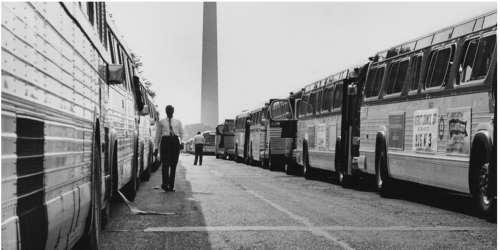
Sister Simone Campbell, SSS is someone who truly lives out her commitment to the contemplative path by her actions in the world. She has served as the executive director of NETWORK, the Lobby for Catholic Social Justice, since 2004. You may know her as one of the Nuns on the Bus. Here’s a glimpse of what powers her:
Over the past thirty-five years or more, it [my contemplative practice] has become the foundation of who I am and impacts every aspect of my existence. Rather than being about hiding out in the chapel for hours on end, my contemplative practice has led me to an activism that is expansively grounded in compassion and care for others. . . .
Our call to do our part is at the heart of the gospel message. We need to pitch in, listen to others, and stay open to the Spirit. We are the ones who have been sent out. The gospel of love will not be experienced unless we live the deeply contemplative truth that our prayer leads to community, which leads to action to heal this fractured world. . . .
It is those whom we encounter and who break open our hearts who keep us faithful. Together we know our existence as one vibrant organism created at every moment by the Divine. This is the source of a hope beyond our wildest understanding. [1]
Thomas Keating (1923–2018), whose teachings are foundational to our modern understanding of contemplation in the Christian tradition, speaks of a similar movement from inner prayer to action on behalf of the world. He writes:
The power of the stars is nothing compared to the energy of a person whose will has been freed . . . and who is thus enabled to co-create the cosmos together with God. God’s top priority is the creation of a world in which the goods of the earth are equitably distributed, where no one is forgotten or left out, and where no one can rest until everyone has enough to eat, the oppressed have been liberated, and justice and peace are the norm among the nations and religions of the world. Until then, even the joy of transforming union is incomplete. The commitment to the spiritual journey is not a commitment to pure joy, but to taking responsibility for the whole human family, its needs and destiny. We are not our own; we belong to everyone else. [2]
My teachings have always emphasized the middle ground—the balanced need for both contemplation and action. Sister Simone and Father Thomas have operated primarily on opposite sides of the spectrum—but I hope you can see how they ultimately come to the same conclusion! It is not a dualistic choice between contemplation and action, but a natural outflowing of God’s love in all directions.
Contemplation and Action Summary
December 29th, 2020 by Dave No comments »
Standing Still, Moving the World
Tuesday, December 29, 2020
Give me a place to stand, and I will move the whole earth with a lever. —Archimedes
Archimedes (c. 287–c. 212 BCE), a Greek philosopher and mathematician, noticed that if a lever was balanced in the correct place, on the correct fulcrum, it could move proportionally much greater weights than the force actually applied. He calculated that if the lever stretched far enough and the fulcrum point remained fixed close to Earth, even a small weight at one end would be able to move the world at the other.
The fixed point is our place to stand. It is a contemplative stance: steady, centered, poised, and rooted. To be contemplative, we have to have a slight distance from the world to allow time for withdrawal from business as usual, for contemplation, for going into what Jesus calls our “private room” (Matthew 6:6). However, in order for this not to become escapism, we have to remain quite close to the world at the same time, loving it, feeling its pain and its joy as our pain and our joy. The fulcrum, that balancing point, must be in the real world.
True contemplation, the great teachers say, is really quite down to earth and practical, and doesn’t require life in a monastery. It is, however, an utterly different way of receiving the moment, and therefore all of life. In order to have the capacity to “move the world,” we need some distancing and detachment from the diversionary nature and delusions of mass culture and the false self. Contemplation builds on the hard bottom of reality—as it is—without ideology, denial, or fantasy.
Unfortunately, many of us don’t have a fixed place to stand, a fulcrum of critical distance, and thus we cannot find our levers, or true “delivery systems,” as Bill Plotkin calls them, by which to move our world. [1] We do not have the steadiness of spiritual practice to keep our sight keen and alive. Those who have plenty of opportunities for spiritual practice—for example, those in monasteries—often don’t have an access point beyond religion itself from which to speak or to serve much of our world. We need a delivery system in the world to provide the capacity for building bridges and connecting the dots of life.
Some degree of inner experience is necessary for true spiritual authority, but we need some form of outer validation, too. We need to be taken seriously as competent and committed individuals and not just “inner” people. Could this perhaps be what Jesus means by being both “wise as serpents and innocent as doves” (Matthew 10:16)? God offers us quiet, contemplative eyes; and God also calls us to prophetic and critical involvement in the pain and sufferings of our world—both at the same time. This is so obvious in the life and ministry of Jesus that I wonder why it has not been taught as an essential part of Christianity.

Story from Our Community:
In the late 1980s, [I became] a volunteer at Mother Teresa’s Gift of Love [hospice] in Manhattan’s Greenwich Village. The twenty men being cared for there were suffering from AIDS. . . Always feeling like an outsider myself, with no medical experience I was now living among men who had been rejected by society. This difficult confrontation with illness, dying and death gave me a totally new perspective on the value of life. —Harvey V.