Archive for December, 2024

A Gift and Guarantee

December 17th, 2024

God said, “Let us make humans in our image, according to our likeness.” 
—Genesis 1:26 

Father Richard locates our essential goodness in being created in the image and likeness of God.  

Centuries of Christian theology confirm that the “image” described in Genesis refers to our eternal essence in God which cannot be increased or decreased. It is the soul’s objective union with God. We (and every other created thing) begin with a divine DNA, an inner destiny as it were, a blueprint tucked away in the cellar of our being, that begs to be allowed, to be fulfilled, and to show itself. It is the Holy Spirit poured into your heart, and it has been given to you” (Romans 5:5).  

My “I am” is merely a further breathing forth of the eternal and perfect “I Am Who Am” of the Creator (Exodus 3:14). This “beingness” precedes all doing. I am loved—or better, I am love—before I do anything right or wrong, worthy or unworthy. To put it philosophically, ontology precedes morality. The divine indwelling is a gratuitous gift, standing presence, and guarantee. We are the containers, temples, and recipients of this gift. In a certain sense, it had nothing to do with us. Yet it is our own inherent and irrevocable dignity. I call it the True Self, an immortal, imperishable diamond. Without doubt, this is our “original blessing.”  

The indwelling divine image moves toward fulfillment in each of us throughout our lifetimes. “Likeness” refers to our personal and unique embodiment of that inner divine image. It is our gradual realization of this gift. We all have the same objective gift, but different ways of saying yes and consenting to it. There are as many ways to manifest God as there are beings in the universe. Our personal and collective embodiments reveal aspects of the sacred through our personhood, relationships, fields of work and study, culture, economy, politics, and justice. Though we differ in likeness, the image of God (imago Dei) persists and shines through all created things. [1] 

The clear goal and direction of biblical revelation is toward a full mutual indwelling. We see the movement toward union as God walks in the garden with naked Adam and Eve and “all the array” of creation (Genesis 2:1). The theme finds its climax in the realization that “the mystery is Christ within you, your hope of glory” (Colossians 1:27). As John excitedly puts it, “You know him because he is with you and he is in you!” (John 14:17). The eternal mystery of incarnation will have finally met its mark, and “the marriage feast of the Lamb will begin” (Revelation 19:7–9). As in the beginning, so in the end. Amen. Let it be so. 

===================

Learning from the Mystics:

Meister Eckhart, OP
Quote of the Week:The eye through which I see God is the same eye through which God sees me; my eye and God’s eye are one eye, one seeing, one knowing, one love.”-Meister Eckhart

Reflection: Meister Eckhart was a master of paradox.  This quote above is a prime example of that, and, is likely his most well known quote. Our brains are designed to understand the world in polarities.  This means we that only understand “up” in reference to “down.”  We only know “good” in reference to “evil.”  “Lost” in distinction from “found.” Meister Eckhart, though, wanted to hold the opposites alongside one another.  God and mankind are to be understood in distinction, sure, but also through their unity or intimacy.  Since God became Man, then perhaps this should impact the way by which we understand our own humanity… God sees the world through us, knows the world through us, and loves the world through us.  This is an intimacy that many misunderstood as going too far.  However, for Meister Eckhart, there are two Incarnations. There is the Incarnation of God in Jesus of Nazareth and there is the indwelling of the Christ through YOU. Sometimes Meister Eckhart would talk about this as another Christmas.  Sometimes he would ask the question, “Why does it matter if Christ was born in Bethlehem if he is not also born within you?” It is in this very real sense that we are truly the presence of God himself to one another… so may we live and love accordingly.

Prayer  Heavenly Father, we are grateful for the Incarnation.  We recognize its importance and vitality, all the while recognizing Your desire to see, know and love the world through us.  Strip away every part of us that is an obstacle to that end and help each of us to be little christs to one another.  In the name of the Father, the Son and the Holy Spirit.  Amen and amen.

Life Overview of Meister Eckhart: 

Who Were They: Eckhart von Hochheim, later to be known as Meister Eckhart, OP (Order of Preachers aka Dominicans).
Where: Born near Gotha, Landgraviate of Thuringia (now Germany).  Died in Avignon, Kingdom of Arles (now France).

 When: 1260-1328AD
 
Why He is Important: Without a doubt, Meister Eckhart was misunderstood in his day and age.  He was almost excommunicated but that was largely due to the Inquisition not being able to understand the complexity and paradox of his teaching.  Over time, he has come to be known as an impressive figure of theology and spirituality.

 What Was Their Main Contribution: Meister Eckhart is most known for being a Dominican monk who understood the Christian faith with “an eastern mind.”  He often taught through paradox and what has come to be known as “non-dual” thinking (rising above either/or conceptualizations).

Books to Check Out:
Meister Eckhart’s Book of the Heart: Meditations of the Restless SoulDangerous Mystic: Meister Eckhart’s Path to the God Within by Joel HarringtonMeister Eckhart, from Whom God Hid Nothing: Sermons, Writings and Sayings

Hidden with Christ

December 16th, 2024

Father Richard Rohr describes how we can discover our true identity in God: 

There is only one question we must definitely answer: “Who am I?” Or, restated, “Where do I abide?” If we can get that right, the rest largely takes care of itself. Paul answers the questions directly: “You are hidden with Christ in God, and Christ is your life” (Colossians 3:3–4). Every time we start judging ourselves, we can ask, “Who am I?” The answer will come: “I am hidden with Christ in God in every part of my life. I am bearing both the mystery of suffering humanity and the mystery of God’s glory, which is precisely the mystery of Christ.” (Relish the universality of Scriptures like 1 Corinthians 3:21–23, 15:22–28, or Colossians 1:15–20.) 

God looks at us and always sees Christ, and God thus finds us always and entirely lovable. God fixes God’s gaze intently where we refuse to look, on our shared, divine nature as God’s children (1 John 3:2). Hopefully, one day our gaze will match God’s gaze. We will find God entirely lovable and ourselves fully lovable in the same moment. Why? Because it’s the same set of eyes that is doing the looking: “All of us, gazing with unveiled face on the glory of the Lord, are being transformed into the same image from glory to glory, as from the Lord who is the Spirit” (2 Corinthians 3:18). 

All we have to do is receive God’s gaze and then return what we have received. We simply complete the divine circuit, “love returning love” as my father St. Francis of Assisi showed so well. This is our spiritual agenda for our whole life. 

We are saved by standing consciously and confidently inside the force field that is Christ, not by getting it right in our private selves. This is too big a truth for the small self to even imagine. We’re too tiny, too insecure, too ready to beat ourselves up. We don’t need to be correct, but we can always try to remain connected to our Source. The great and, for some, disappointing surprise is that many people who are not at all correct are the most connected by reason of their intense need and desire

All we can do is fall into the Eternal Mercy—into Love—which we can never really fall out of because “we belong to Christ and Christ belongs to God,” as Paul so beautifully stated (1 Corinthians 3:23). Eventually, we know that we are all saved by mercy in spite of ourselves. That must be the final humiliation to the ego. 

Our holiness is really only God’s holiness, and that’s why it’s certain and secure. It is a participation in love, a mutual indwelling, not an achievement or performance on our part. “If anyone wants to boast, let them boast in the Lord,” Paul shouts (1 Corinthians 1:31).  

Born Anew

Anglican hermit Maggie Ross describes an experience of God’s indwelling presence: 

December is the season of Advent, the time of expectancy, of hushed hearts and quiet waiting. And though many Christians don’t make too much of her, it is the season of Mary.… One day I had my own annunciation. The raked winter sun was streaming through the east window of the hermitage, illuminating various items stuck on the rough sawn wall, including a little icon of our Lady of Guadalupe….

As the angled shaft of light set the icon on fire … I realized that the angel was greeting not only her but also me; that the intimacy of bread made God and God made Bread was possible only because of her obedience; that sacrament is the earthly and tangible culmination of her yes and our yes to participate in the fact of the Incarnation.  

Annunciations are events of infinite and immense silence, for all that the Gospel records of conversation. The walls or scenery push back, become transparent to reveal all that is, was, will be, and then converge within.  

That morning I came to understand that it is by baptism that we say, “Be it unto me according to your Word,” to bear that Word by the power of the Holy Spirit, and to bring it to fruition in our lives. It’s difficult to describe the impact of sunlight on a piece of printed paper stuck to fiberboard, and the insight may seem obvious, but it shook me to the heart.  

Inspired by a Gospel passage about being “born again” (John 3:1–21), Ross recognizes how she is born anew through her yes to God’s invitation:  

I took another step when the story of Nicodemus was read at the Eucharist the morning I was to leave for retreat at a Cistercian abbey. His question, “How shall this be?” awoke the echoing voices of Mary and Zechariah, of Abraham and Sarah’s laughter over God’s preposterous proposal that he at a hundred years, and she in her nineties would bear a son.… 

To bear the Word, to enter the kingdom, we must indeed be born from the Spirit, not for the second time in the womb of our natural mothers, but continually in the love of the Mother of God that brought forth her son, and like her, in the same movement, to bear Christ as well. Mary, then, is my mother in this second birth, just as she is for Nicodemus.  

That my heart is still not big enough to encompass this paradox I readily admit. I still feel unease about Mary sometimes…. But if nothing else, Mary has taught me to say yes: as Abraham and Sarah said yes, as Elizabeth and Zechariah said yes, as Jesus said yes to the cup that did not pass from him.  

And each time that cup is passed to me at the Eucharist, I look into its depths beyond the dark wine shimmering gold and, trembling, I say, “yes.” 

FRIDAY FIVE. John Chaffee

1.

“My idea of God is not a divine idea. It has to be shattered time after time. And God will do the shattering.

– CS Lewis, English Author and Apologist

We are beholden to our ideas about God.  We build them and craft them together.  We preach, teach, and defend them.  All of this makes sense because we are only human and organize our lives around our concepts of God.

What Lewis touches on here, then, is vitally important.

Our concepts of God can become obstacles to experiencing, knowing, loving, and being loved by God.  Throughout our lives, it is not that we ever “outgrow” God.  I question if that is even possible.  What is true is that we can outgrow our concept or model of God and, therefore, must do the work to find a decent upgrade.

Years ago, as a youth pastor, I taught that it was a good idea to smash one’s idols before God must do it for us…

And this includes our occasionally idolatrous ideas about God.

2.

“Concepts create idols. Only wonder comprehends anything.

– Gregory of Nyssa, 4th Century Cappadocian Theologian

Certainty and logic are helpful tools for navigating the world and dealing with problems within the realm of human comprehension.

However, when we approach the infinite, not so much.

At the microscopic and macroscopic views of the universe, we butt up against the limits of human comprehension and stand upon the cliff’s edge of what we can imagine.

This is where wonder comes in.  This is where awe takes over.

The older I get, the more I am convinced that faith has little to do with certainty or logic and everything to do with wonder.

3.

“I pray God rid me of God.”

– Meister Eckhart, 13th Century German Preacher

This hearkens back to the first quote today from CS Lewis.  Eckhart is not praying that God makes anyone into an atheist.

Meister Eckhart is a “master” theologian of apophatic theology.  Apophatic is an adjective that means “away from what can be said” or “defining something by what it is not.”  Apophatic theology is a healthy counter to all the other approaches of theology, which can rely too much on certainty and logic.

Another way of thinking about it is that some approaches to theology seek to explain away the mystery of God. In contrast, apophatic theology aims explicitly to protect this mystery.

What if this Christmas season, the gift that God offers you is the permission to let go of every small, limited, safe, predictable, controllable understanding of God?

4.

Si comprehendus, non est Deus [If you comprehend it, it is not God].

– Augustine of Hippo, 4th Century Church Father

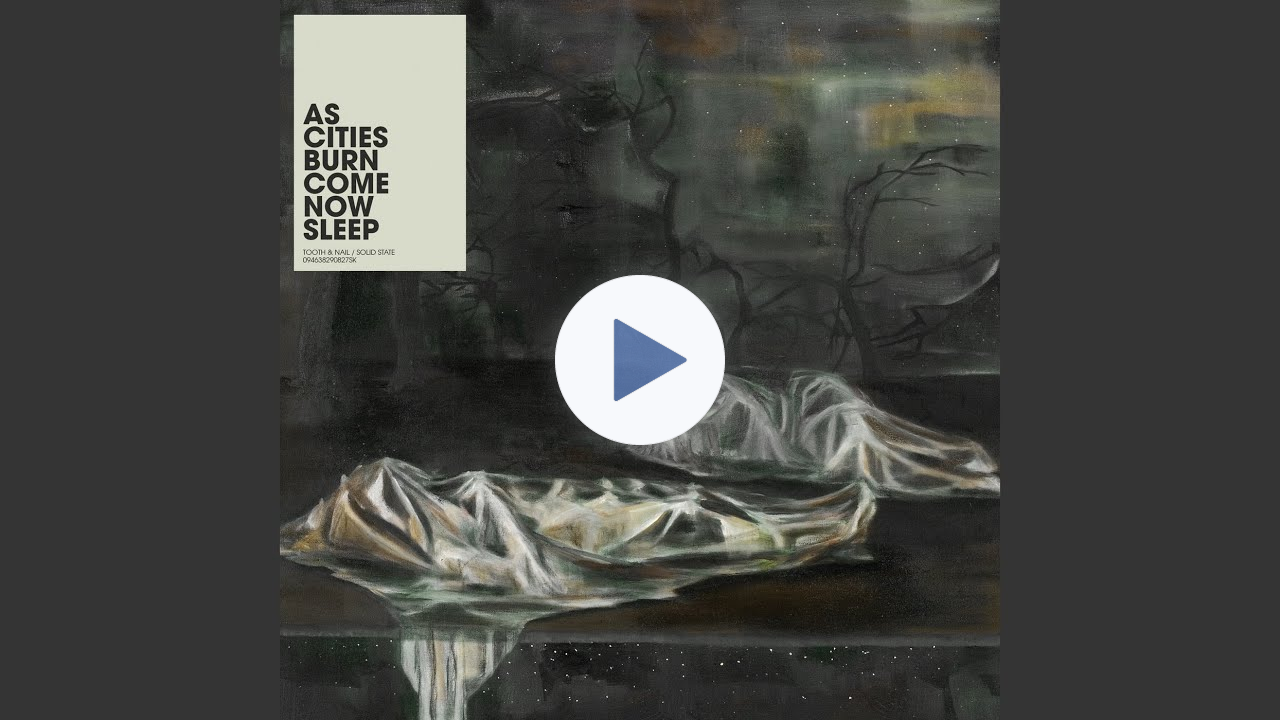
Here is a video of the song Clouds by As Cities Burn, which takes lyrical inspiration from this quote by Augustine.

I hope you enjoy it.

Clouds

5.

“Our idea of God tells us more about ourselves than about Him.

– Thomas Merton, Trappist Monk

Modern psychologists are not wrong when they say we sometimes project our issues or hopes onto others.  They are equally onto something when they say we can project those same issues or hopes onto our concept of God.

In our modern technological world, it is easy to come across good and bad snippets of preachers mid-sermon.  Within a minute, I can usually tell what worldview/value system the preacher is coming from.  It is hidden in the vocabulary used, how those words are used, and how they are used in delivering their sermon…

We will inevitably preach and teach in a way informed by our view of God.

All the more reason to chase after speaking about God from a mature, second-half-of-life posture!

What is fascinating is that when we speak of God, we are tangentially talking about what it means to be human.  The theologian-pastor Karl Barth said that we only ever are doing “theo-anthropology” since Jesus was both 100% God and 100% man.

This means whatever we are struggling with about God is also connected to whatever we are struggling with about what it means to be human.

Fortunately, the season of Christmas is all about “theo-anthropology.”  If our understanding of God is that God is proud and keeps a record of wrongs, vengeful, retributive, dominating, and exclusive, then we should not be surprised if we start to resemble that.  However, if our understanding of God is that God is humble, forgiving, patient, healing, helping, and inclusive, then that sounds like the best of what it means to be human.

Great Mystery and Great Intimacy

December 13th, 2024

Richard Rohr explains how experiencing God can be both scary and alluring, and ultimately wonderful.  

In his book The Idea of the Holy, scholar Rudolph Otto (1869–1937) says that when someone has an experience of the Holy, they find themselves caught up in two opposite things at the same time: the mysterium tremendum and the mysterium fascinans, or the scary mystery and the alluring mystery. [1] We both draw back and are pulled forward into a very new space.  

In the mysterium tremendum, God is ultimately far, ultimately beyond—too much, too much, too much (see Isaiah 6:3). It inspires fear and drawing back. Many people never get beyond this first half of the journey. If that is the only half of holiness we experience, we experience God as dread, as the one who has all the power, and in whose presence, we are utterly powerless. Religion at this initial stage tends to become overwhelmed by a sense of sinfulness and separateness. The defining of sin and sin management becomes the very nature of religion, and clergy move in to do the job.  

Simultaneously, with the experience of the Holy as beyond and too much is another sense of fascination, allurement, and seduction, being pulled into something very good and inviting and wonderful or the mysterium fascinans. It’s a paradoxical experience. Otto says if we don’t have both, we don’t have the true or full experience of the Holy. I would agree, based on my experience.  

Mysticism begins when the totally transcendent image of God starts to recede, and there’s a deepening sense of God as imminent, present, here, now, safe, and even within me. In Augustine’s words, “God is more intimate to me than I am to myself” [2] or “more me than I am myself.” St. Catherine of Genoa shouted in the streets, “My deepest me is God!” [3]  

To spiritually know things on a deeper level, we must overcome this gap. Then, ironically, we’ll know that Someone Else is doing the knowing through us. God is no longer “out there.” At this point, it’s not like one has a new relationship with God; it’s like one has a whole new God! “God is my counselor, and at night my innermost being instructs me,” says the Psalmist (Psalm 16:7). God is operating with us, in us, and even as us.  

The mystics are those who are let in on this secret mystery of God’s love affair with the soul, each knowing God loves my soul in particular; God loves me uniquely. We are invited into that same mystery. All true love gives us this sense of being special, chosen, and like nobody else. That is why we are so joyful in the presence of our lover, who mirrors us with a divine mirror.  

Dec 13, 2024, Skye Jethani
The Idol of Tradition: Innovation Isn’t the Answer

All week we’ve been talking about the dangerous idol of tradition—the way our dedication to inherited beliefs and practices can blind us to the presence of God and interfere with our obedience to him. No one should assume, however, that all traditions are bad and ought to be abandoned for every new trend we encounter. Innovation can be just as flawed as tradition when followed blindly.

A recent study by the University of York has found people are drawn to things labeled “new” even when the items possess no new qualities. They concluded that identifying something as “new” produced a placebo effect, increasing a person’s sense of enjoyment and satisfaction. This is the result of a consumer culture that venerates innovation and youth over tradition and experience. We’ve been shaped to believe that something new is inherently superior to something old. That’s why “new and improved” attracts more attention in advertising than “old and reliable.”

Our cultural bias for new, young, and innovative things is not only chronologically arrogant, but it may also prevent us from incorporating the hard-earned wisdom of prior generations. Just as tradition can keep us locked in the past and unable to see what God is doing in the present, so a relentless addiction to what’s new will cause us to foolishly disconnect our faith from the foundations that give it strength and durability.

In the end, neither tradition nor innovation should be our guide, but communion. Does a practice or idea—whether old or new—draw us into more intimate communion with God? Does it deconstruct the lies we’ve believed and build up the truth? Does it stir our affections for God and our neighbor and move these affections to action? These are the questions we should be asking, not whether a practice or idea is popular, innovative, or historically rooted.

When God himself ceases to be our goal, we can be certain a false god has taken his place in our lives. Sometimes that false god is very old, like tradition. But it may also be something brand new. As John Calvin said, “The human heart is a perpetual idol factory.” That means we’re always inventing new, false gods to worship instead of the real One.

DAILY SCRIPTURE
2 Timothy 4:1–4
2 Peter 1:12–21

WEEKLY PRAYER
A Gaelic prayer
God guide me with your wisdom,
God chastise me with your justice,
God help me with your mercy,
God protect me with your strength,
God shield me with your shade,
God fill me with your grace,
For the sake of your anointed Son.
Amen.

Our Divine Mother

December 12th, 2024

Thursday, December 12, 2024

Most Christians falsely assumed that God is strictly masculine even though there are numerous descriptions of a mothering, feminine God throughout the Bible. In spite of patriarchy’s attempt to marginalize women, the feminine incarnation continues to appear in innumerable ways.
—Richard Rohr, Daily MeditationJune 9, 2019

Dr. Clarissa Pinkola Estés writes of enduring comfort found through images of the Divine Mother: 

In a world that is often heart-stopping in horror and breath-taking in beauty … the Blessed Mother is so unspeakably gracious with brilliant inspirations…. There is such blessed reason to seek out and remain near this great teaching force known worldwide as Our Lady, La Nuestra Señora, and most especially called with loyalty and love, Our Mother, Our Holy Mother. Our very own. 

She is known by many names and many images, and has appeared in different epochs of time, to people across the world, in exactly the shapes and images the soul would most readily understand her, apprehend her, be able to embrace her and be embraced by her. 

She wears a thousand names, thousands of skin tones, thousands of costumes to represent her being patroness of deserts, mountains, stars, streams, and oceans. If there are more than six billion people on earth, then thereby she comes to us in literally billions of images. Yet at her center is only one great Immaculate Heart…. 

In Blessed Mother’s view, all are lovable; all souls are accepted, all carry a sweetness of heart, are beautiful to the eyes; worthy of consciousness, of being inspired, being helped, being comforted and protected—even if other mere humans believe foolishly or blindly to the contrary. [1] 

Public theologian Christena Cleveland shares how she discovered a radically new image for God.  

My whole life, I had been indoctrinated into American society’s constrictive worship of a white male God; my spiritual imagination didn’t know how to venture beyond the Protestant white male God that colonized and subdued America’s spiritual imagination…. 

In early 2017, I mustered all of the desperate courage I could find and took one single, trembling step away from all I had known and all I had been taught to ask…. Just beyond the Protestantism of my origins and from the mystical depths of rogue Catholicism, rose the Black Madonna, a Black female image of the divine who is often claimed by Catholicism but draws seekers of all religions and spiritualities.   

Within seconds of viewing photos of Black Madonnas, my gut shifted from terror to hope…. My soul immediately recognized that these photos and drawings of ancient Black Madonnas declared a truth about my own sacredness and gave birth to a new understanding of God.  

I call Her the Sacred Black Feminine. She is the God who is with and for Black women because She is a Black woman. She is the God who definitively declares that Black women—who exist below Black men and white women at the bottom of the white male God’s social pecking order—not only matter but are sacred. And, in doing so, She declares that all living beings are sacred. [2] 

Dec 12, 2024; Skye Jethani
The Idol of Tradition: Consider the Turkey
Click Here for Audio


Dec 12, 2024
The Idol of Tradition: Consider the Turkey

Author Nassim Taleb has written in numerous books about what psychologists call the “narrative fallacy.” It refers to the way our minds make cause-and-effect connections where none actually exist, and how we foolishly make predictions about the future based on patterns we’ve observed in the past. To illustrate the problem, Taleb uses the following story:

“Consider a turkey that is fed every day. Every single feeding will firm up the bird’s belief that it is the general rule of life to be fed every day by friendly members of the human race ‘looking out for its best interests.’ On the afternoon of the Wednesday before Thanksgiving, something unexpected will happen to the turkey. It will incur a revision of belief.”

Taleb’s point is important—there is no guarantee that a consistent pattern from the past will continue uninterrupted into the future. This way of thinking, however, is very common, especially among religious believers.

Using Scripture or experience, we deduce how God has acted in the past and then build a theological tradition that insists he will always act in the same manner going forward. This elevation of religious tradition, like Taleb’s turkey, makes a fatal error. Rather than seeing God as a person free to act as he pleases—including unpredictably—it reduces God to a knowable formula; a kind of natural force like gravity or magnetism whose actions can be measured and predictably foreseen.

You know a religious community has slipped into the idolatry of tradition when they often use absolutist language like, “God only . . .,” “God never . . .,” “God must . . .,” and “God can’t . . .”
Exchanging the living God for the predictability of tradition is an error the religious leaders of ancient Israel made. Based on their examination of how God had acted in the past, they came to definitive conclusions about his nature that blinded them to his work and presence among them.

They were confident the Messiah would never come from a place as backward as Galilee, and he wouldn’t associate with tax collectors and sinners. He would certainly vanquish the Roman idolaters from Judaea, and he would NEVER be humiliated by dying on a cross. Like Taleb’s turkey, the religious leaders found comfort in the certainty of their tradition, but their comfort was shattered by the unexpected actions of an uncontainable God.

DAILY SCRIPTURE
Mark 7:1–13
Romans 11:33–36

WEEKLY PRAYER
A Gaelic prayer
God guide me with your wisdom,
God chastise me with your justice,
God help me with your mercy,
God protect me with your strength,
God shield me with your shade,
God fill me with your grace,
For the sake of your anointed Son.
Amen.

A New Vision of God

December 11th, 2024

Let the same mind be in you that was in Christ Jesus, who, though he was in the form of God, did not regard equality with God as something to be exploited, but emptied himself, taking the form of a slave, being born in human likeness. And being found in human form, he humbled himself and became obedient to the point of death—even death on a cross.
—Philippians 2:5–8

Brian McLaren shows how Jesus as the image of God changes our understandings of who God is: 

The implications of the Philippians 2 passage are staggering. Simply put, God as known in the Christ is not the stereotypical Supreme Being of traditional “omnitheology.” That Supreme Being of Christian theology was characterized first and foremost by controlling, dominating, dictatorial power … not limited by any law except the will of the Supreme Being Himself: omnipotence

In sharp contrast, the God imaged by Jesus exerts no dominating supremacy. In Christ, we see an image of a God who is not armed with lightning bolts but with basin and towel, who spewed not threats but good news for all, who rode not a warhorse but a donkey, weeping in compassion for people who do not know the way of peace. In Christ, God is supreme, but not in the old discredited paradigm of supremacy; God is the supreme healer, the supreme friend, the supreme lover, the supreme life-giver who self-empties in gracious love for all. The king of kings and lord of lords is the servant of all and the friend of sinners. The so-called weakness and foolishness of God are greater than the so-called power and wisdom of human regimes.  

In the aftermath of Jesus and his cross, we should never again define God’s sovereignty or supremacy by analogy to the kings of this world who dominate, oppress, subordinate, exploit, scapegoat and marginalize. Instead, we have migrated to an entirely new universe, or, as Paul says, “a new creation” (2 Corinthians 5:17) in which old ideas of supremacy are subverted.  

If this is true, to follow Jesus is to change one’s understanding of God. To accept Jesus and to accept the God Jesus loved is to become an atheist in relation to the Supreme Being of violent and dominating power. We are not demoting God to a lower, weaker level; we are rising to a higher and deeper understanding of God as pure light, with no shadow of violence, conquest, exclusion, hostility, or hate at all. 

We might say that two thousand years ago, Jesus inserted into the human imagination a radical new vision of God—nondominating, nonviolent, supreme in service, and self- giving…. Maybe only now … are we becoming ready to let Jesus’s radical new vision replace the old vision instead of being accommodated within it. Could some sectors of Christian faith finally be ready to worship and follow the God that Jesus was trying to show them [and us]?

=================

DEC 11, 2024
The Idol of Tradition: Perpetuate Love, Not Practices
Click Here for Audio
The central temptation of all idols is the same: control. The false god always promises that by serving it we will gain control and avoid the fears that assail us in an unpredictable world. This is certainly the case with the idol of tradition. By strict adherence to an inherited set of values and practices, we are led to believe that the same positive outcomes experienced in the past will continue uninterrupted into the future. This desire for control through devotion to tradition is often seen within the organizations we construct and perpetuate. 

Consider this pattern. A man or woman powerfully filled with Christ’s Spirit accomplishes amazing ministry for God. Others are attracted to the leader and over time a community forms. But once the Spirit-filled leader is gone, those remaining assume his or her ministry can and should be perpetuated. The wind may have shifted, but they want it to keep blowing in the same direction. So, an institution is established based on the departed leader’s tradition, values, methods, and vision. If this tradition is rigorously maintained, it is believed, then the same Spirit-empowered ministry that was evident in the leader’s life will continue through the institution. Many ministries and denominations originated in just this way.

But what we often fail to see is that the Spirit’s power was not unleashed in the leader’s life because he or she had the right values or employed the right strategy. This “fire of God,” as Dallas Willard calls it, was in their soul because of their intense love of Jesus Christ. Rather than focusing on perpetuating a leader’s ministry methodology or tradition, we ought to focus on reproducing his or her devotion to God, but that is a far more challenging task. We have become experts at replicating systems and programs, but how do you replicate something as mysterious as a soul consumed with the fiery love of Christ?As Willard writes, “One cannot write a recipe for this, for it is a highly personal matter, permitting of much individual variation and freedom.

It also is dependent upon grace—that is, upon God acting in our lives to accomplish what we cannot accomplish on our own.” In other words, rather than trusting in tradition to give us a sense of control, we need to surrender control entirely and trust in the grace of God.

DAILY SCRIPTURE
JOHN 3:1-8
PHILIPPIANS 3:12-16


WEEKLY PRAYER A Gaelic prayer
God guide me with your wisdom,
God chastise me with your justice,
God help me with your mercy,
God protect me with your strength,
God shield me with your shade,
God fill me with your grace,
For the sake of your anointed Son.
Amen.

Letting God Be God

December 10th, 2024

Father Richard explores how we often create God in our image, rather than the other way around.  

It takes a long time for us to allow God to be who God really is. Our natural egocentricity wants to make God into who we want God to be. The role of prophets and good theology is to keep people free for God and to keep God free for people. While there are some “pure of heart” people (Matthew 5:8) who come to “see God” naturally and easily, most of us need lots of help. 

If God is always Mystery, then God is always in some way the unfamiliar, beyond what we’re used to, beyond our comfort zone, beyond what we can explain or understand. In the fourth century, St. Augustine said, “If you comprehend it, it is not God.” [1] Could we truly respect a God we could comprehend? And yet, very often we want a God who reflects and even confirms our culture, our biases, our economic, political, and security systems. 

The First Commandment (Exodus 20:2–5) says that we’re not supposed to make any graven images of God or worship them. At first glance, we may think this means only handmade likenesses of God, but it mostly refers to rigid images of God that we hold in our heads. God created human beings in God’s own image, and we’ve returned the compliment, so to speak, by creating God in our image! In the end, we produced what was typically a small, clannish God. In the United States, God looks like Uncle Sam or Santa Claus, an exacting judge, or a win/lose businessman—in each case, a white male, even though “God created humankind in God’s own image; male and female God created them” (Genesis 1:27). Clearly God cannot be exclusively masculine. The Trinitarian God is anything but a ruling monarch or a solitary figurehead.  

Normally we find it very difficult to let God be greater than our culture, our immediate needs, and our projections. The human ego wants to keep things firmly in its grasp; so, we’ve created a God who fits into our small systems and our understanding of God. Thus, we’ve produced a God who requires expensive churches and robes, a God who likes to go to war just as much as we do, and a domineering God because we like to dominate. We’ve almost completely forgotten and ignored what Jesus revealed about the nature of the God he knew. If Jesus is the “image of the invisible God” (Colossians 1:15) then God is nothing like we expected. Jesus is in no sense a potentate or a patriarch, but the very opposite, one whom John the Baptist calls “the lamb of God” (John 1:29). We seem to prefer a lion.  =======

===========

DEC 10, 2024
The Idol of Tradition: An Excuse for Disobedience
Click Here for Audio
Can you imagine having an unmediated encounter with the Creator of the universe who commands you to do something, but you say “No” to him? Remarkably, this happens several times in the Bible. What could cause a person to say no directly to God in a miraculous moment of divine self-revelation?

Moses said no when God told him to confront Pharaoh because he felt inadequate. Jonah said no when God told him to go to Nineveh because he knew God would be merciful to his enemies there. And Peter said no when God told him to eat something that violated his strict kosher diet. 

For Moses the issue was his fear, for Jonah it was his pride, and for Peter it was his tradition. Most of us recognize the way fear and pride may disrupt our obedience to God, but fewer see the dangers of tradition. The strict dietary laws in the Old Testament had a pragmatic function. They were a means of keeping Israel separate from the pagan societies surrounding it. After all, if you do not share the same diet, you will not share the same table. If you do not share the same table, you will not develop close relationships. If you do not develop close relationships, you will not intermarry. And if you do not intermarry you will not abandon your own religion to adopt the beliefs of your non-Israelite relatives. So, the Torah’s dietary tradition was meant to keep God’s people dedicated to him, holy and separate.

By the time of Peter, however, the dietary tradition had become an end in itself. In Acts 10, the Lord called Peter to abandon his Jewish dietary tradition in order to fully welcome non-Jews as followers of Jesus and as his brothers and sisters in God’s kingdom, but Peter refused. The Jewish dietary tradition, whose purpose had been to ensure obedience to God, was instead used by Peter as a reason to disobey God. Peter’s tradition had become an idol.

The complicated dynamic between Old Testament traditions and New Testament faith is one that we must wrestle with, as Peter did. On one hand, we ought to honor traditions as valuable and important. They often help us deepen and maintain our communion with God. On the other hand, we must discern when a tradition is no longer serving its intended purpose; when it is interfering with rather than advancing faithfulness. Like all of God’s good gifts, traditions must never become more important than God himself. 

DAILY SCRIPTURE
ACTS 10:1–48 

WEEKLY PRAYER. A Gaelic prayer

God guide me with your wisdom,
God chastise me with your justice,
God help me with your mercy,
God protect me with your strength,
God shield me with your shade,
God fill me with your grace,
For the sake of your anointed Son.
Amen.

Letting Our Images Mature

December 9th, 2024

Letting Our Images Mature

Father Richard Rohr invites us to consider our images of God and how they shape us:  

Our image of God creates us—or defeats us. There is an absolute connection between how we see God and how we see ourselves and the universe. The word “God” is a stand-in word for everything—Reality, truth, and the very shape of our universe. This is why good theology and spirituality can make such a major difference in how we live our daily lives in this world. God is Reality with a Face—which is the only way most humans know how to relate to anything. There has to be a face! 

After years of giving and receiving spiritual direction, it has become clear to me and to many of my colleagues that most people’s operative image of God is initially a subtle combination of their mom and dad, or other early authority figures. Without an interior journey of prayer or inner experience, much of religion is largely childhood conditioning, which God surely understands and uses. Yet atheists, agnostics, and many former Christians rightly react against this because such religion is so childish and often fear-based, and so they argue against a caricature of faith. I would not believe in that god myself! 

Our goal, of course, is to grow toward an adult religion that includes reason, faith, and inner experience we can trust. A mature God creates mature people. A big God creates big people. A punitive God creates punitive people. 

If our mothers were punitive, our God is usually punitive too. We will then spend much of our lives submitting to that punitive God or angrily reacting against it. If our father figures were cold and withdrawn, we will assume that God is cold and withdrawn too—all Scriptures, Jesus, and mystics to the contrary. If all authority in our lives came through men, we probably assume and even prefer a male image of God, even if our hearts desire otherwise. As we were taught in Scholastic philosophy, “Whatever is received is received in the manner of the receiver.” [1] This is one of those things hidden in plain sight, but it still remains well-hidden to most Christians. 

All of this is mirrored in political worldviews as well. Good theology makes for good politics and positive social relationships. Bad theology makes for stingy politics, a largely reward/punishment frame, xenophobia, and highly controlled relationships

For me, as a Christian, the still underdeveloped image of God as Trinity is the way out and the way through all limited concepts of God. Jesus comes to invite us into an Infinite and Eternal Flow of Perfect Love between Three—which flows only in one, entirely positive direction. There is no “backsplash” in the Trinity but only Infinite Outpouring—which is the entire universe. Yet even here we needed to give each of the three a placeholder name, a “face,” and a personality.  

In the Beginning

Pastor and founder of the Center for Wild Spirituality Victoria Loorz considers the origins of our traditional images of God:   

God as the Patriarch. Christ as the Lord. God as the King. Christ as the One and Only Word. These are all metaphors or images created by people (well, men) at particular times in history to define relationship with sacred reality. These are metaphors that made sense to people who were ruled by violent, imperial monarchs—people who depended on the whims of lords and property owners for their survival. These metaphors also conveniently helped those in charge to legitimate and enforce their power.    

Ecotheologian Sallie McFague calls on us to construct new images and metaphors that are relevant to our lives and time in history. For us, living in this century, metaphors for God must somehow experiment with metaphors other than the royalist, triumphalist images, which are clearly inappropriate. They must, she insists, express the ecological interdependencies of life. [1]  

Loorz reflects on an image of God inspired by John 1:1: “In the beginning was the Word.”  

I offer another relevant metaphor for our time, yet rooted in a forgotten tradition: Christ as Conversation. Christ as Conversation says to me that the oak tree and that deer in the meadow are not God. And I’m not God. But we [each] carry the Christ, the Logos, the Tao, the spark of divine love within us. And the conversation between us: that is the manifestation of the sacred, moving forward the evolving kin-dom of grace. The wild Christ….   

Jesus as the Christ embodies that in-between presence between the Creator and the created. Between the transcendent and the incarnated. But not just Jesus. All of us. Even the trees and the microbes and the stars are made and imbued with and held together by Conversation. Christ is dynamic, abundant relationship, a cacophony of interrelated connections navigated by conversation. Christ is the opposite, in fact, of a static word, a single utterance controlled by powerful men….

What would a wild Christ—a Conversation who is the intermediary of love between all things, whose divine presence connects wild deer with my own wild soul—evoke in our world? Is it possible to imagine the worldview of kingdoms and empires transforming into a worldview of kin-dom and compassion? Imagine how different life would be right now if Christianity could become a place for sacred conversation: a place to explore possibilities and express doubts and disagree and encourage voices on the edges. Imagine the church honoring sacred conversation by lifting up the voices shut down by empire. Imagine the reconciling role the church could offer in bringing together opposite forces to remember that we are all interconnected.   

Quote of the Week:
“I pray, therefore, God rid me of God.” – Sermon 52
Reflection: 
On the surface, it looks as though Meister Eckhart is espousing atheism.  However, just as many of these Christian mystics, wisdom is found just past the surface readings we sometimes give them. Eckhart was a master at taking people right up to the edge of their understanding and inviting people to take the next step into wonder. As the department chair of theology at the University of Paris, was no stranger to mystery.  We could say that in his day and age, church teaching was more comfortable with mystery than we are today in our post-enlightenment world. Eckhart was keenly aware of the limitations of human language to define God.  This was so much the case that Eckhart even asked if the word “God” was even close enough to the reality of God for us to even warrant using it. Eckhart regularly reminded his congregation that God was beyond every thought or idea we could have about God.  And how could he not?  Especially when God is absolutely beyond anything we could say about Him? 

And so here is the paradox: Every possible thought or idea we could have about God is inherently limited, and therefore idolatrous if we cling to it too tightly.  Yet, we cannot help but at least try to use words to understand this mystery we call “God.” Which brings us back to the main quote this week. It may only be an act of God that is capable of separating us from clinging to thoughts, ideas, concepts, and vocabulary about God.  It is a paradox, for certain, but there is a deep truth to the fact that as soon as we let go of our conceptual boxes of what and who God is, we are then most able to accept the reality and personhood of this mystery that we call, “God.”
Prayer 
Good God, we are fully aware that our thoughts, ideas, concepts, and even vocabulary fall short of the glory and the mystery of You.  Come to us and eliminate every idolatrous understanding we have of You and help us to bend the knee at the infinite mystery of You.  Guide our steps and light our paths for us, so that we might always be willing to follow a little further into who You truly are.  And, if you see fit, grant us the courage to not cling to a small but familiar understanding of You for longer than we ought.  In the name of the Father, the Son, and the Holy Spirit.  Amen and amen.
Life Overview of Meister Eckhart: 
Who Were They: Eckhart von Hochheim, later to be known as Meister Eckhart, OP (Order of Preachers aka Dominicans).

 Where:  Born near Gotha, Landgraviate of Thuringia (now Germany).  
Died in Avignon, Kingdom of Arles (now France).

 When:  1260-1328AD

 Why He is Important: Without a doubt, Meister Eckhart was misunderstood in his day and age.  He was almost excommunicated but that was largely due to the Inquisition not being able to understand the complexity and paradox of his teaching.  Over time, he has come to be known as an impressive figure of theology and spirituality.

 What Was Their Main Contribution: Meister Eckhart is most known for being a Dominican monk who understood the Christian faith with “an eastern mind.”  He often taught through paradox and what has come to be known as “non-dual” thinking (rising above either/or conceptualizations).

Books to Check Out:
Meister Eckhart’s Book of the Heart: Meditations of the Restless Soul
Dangerous Mystic: Meister Eckhart’s Path to the God Within by Joel Harrington
Meister Eckhart, from Whom God Hid Nothing: Sermons, Writings and Sayings

The Universe Story Is Spiritual

December 6th, 2024

Philosopher Brian Swimme and historian Mary Evelyn Tucker reflect on the story of the universe: 

We are the first generation to learn the comprehensive scientific dimensions of the universe story. We know that the observable universe emerged 13.7 billion years ago, and we now live on a planet orbiting our Sun, one of the trillions of stars in one of the billions of galaxies in an unfolding universe that is profoundly creative and interconnected. With our empirical observations expanded by modern science, we are now realizing that our universe is a single immense energy event that began as a tiny speck that has unfolded over time to become galaxies and stars, palms and pelicans, the music of Bach, and each of us alive today. The great discovery of contemporary science is that the universe is not simply a place, but a story—a story in which we are immersed, to which we belong, and out of which we arose.  

This story has the power to awaken us more deeply to who we are. For just as the Milky Way is the universe in the form of a galaxy, and an orchid is the universe in the form of a flower, we are the universe in the form of a human. And every time we are drawn to look up into the night sky and reflect on the awesome beauty of the universe, we are actually the universe reflecting on itself. And this changes everything. [1] 

Author John Philip Newell honors the work of scientist and Catholic priest Thomas Berry (1914–2009) who witnessed God throughout the cosmos:  

Berry wanted us to be amazed, constantly amazed, by this one, single, interrelated body of the universe that new science describes as a single multiform reality, or as “Undivided Wholeness in Flowing Movement.” [2] It just keeps flowing and flowing into ever-new form. Four and a half billion years ago it flowed into the form of a planet of burning molten rock. And over the course of four billion years this globe of burning rock, Earth as it was later called, has transformed itself into birds and bees and butterflies, and into the emergence of human thought and music and love. We are each a shining flow of sacred energy.  

Homo sapiens, meaning wise ones, appeared 200,000 years ago. We are latecomers in this story. The term “wise ones” does not accurately describe what we have been to one another and to Earth, but it could yet describe what we will become. As Berry adds, there is good reason to hope that “the universe is for us rather than against us.” [3] Given the dangerous moments that have been navigated thus far in the unfolding story of humanity and Earth, there is good reason to hope. It is now up to us to live from the wisdom of the Spirit that is deep within us. [4] 

___________________________________________________________________

Skye Jethani; December 6, 2024

The Idol of Desire: Not by Bread Alone

Jesus had been fasting in the desert for 40 days. He was understandably hungry, so the enemy presented to him a very practical and relevant idea. “If you are the Son of God, tell this stone to become bread.” The enemy was not saying that Jesus should prove his identity as God’s Son by turning stone into bread, although that is often how we misread the verse. The enemy was saying, “If you are God’s Son then you have every right to satisfy your desires. You don’t have to deny yourself or be hungry. Go ahead, make some bread and eat. You deserve it.”

Of course, Jesus was God’s Son, which God the Father had declared at his baptism just before Jesus entered the wilderness, but Jesus rejected this invitation to satisfy his natural desire for food. Instead, he said, “It is written, man shall not live by bread alone, but by every word that proceeds from the mouth of God.” Many Christians fixate on what they understand to be sinful desires, or desires that are ungodly, unhealthy, or unnatural. But it’s important to notice that Jesus’ desire for food was none of these things. Hunger is normal. Bread is not evil. And eating is not a violation of God’s law. So, why did Jesus deny himself this ordinary and appropriate desire? Because he understood that our lives are not ultimately sustained by what we eat, but by God’s will. True life is to be found by living in communion with him, not simply by pursuing our desires.

The temptation he faced in the wilderness is one we face every day. We live in a culture that tells us we are defined by our desires, and the purpose of life is to satisfy them. We have elevated desires to the status of rights and the thought that a desire should intentionally go unfulfilled is utterly inconceivable to most people today. To deny ourselves a desire is to deny our very identity! Even worse, telling someone else they should not satisfy a desire has become an unpardonable sin. Doing so may get you labeled “judgmental,” “intolerant,” or even a “bigot.”

That is why, more than ever, we need to hear the wisdom of Jesus: we do not live by bread alone. We are more than our desires, our lives are more than our appetites, and the purpose of life is more than satisfying our natural longings, however real and legitimate they may be. True life flows from the living God, and our deepest longings are only satisfied in union with him.

DAILY SCRIPTURE

Luke 4:1–4
Philippians 3:7–11

WEEKLY PRAYER

Thomas Aquinas (1225–1274)

Give us, O Lord, a steadfast heart, which no selfish desires may drag downwards; give us an unconquered heart, which no troubles can wear out; give us an upright heart, which no unworthy ambitions may tempt aside. Give us also, O Lord our God, understanding to know you, perseverance to seek you, wisdom to find you, and a faithfulness that may finally embrace you; through Jesus Christ our Lord.
Amen.

Contemplation and Science

December 5th, 2024

Love Is the Source of All

Thursday, December 5, 2024

Richard Rohr describes how love and grace are present and operational in the world: 

True Christianity and true science are both transformational worldviews that place growth and development at their centers. Both endeavors, each in its own way, cooperate with some Divine Plan, and whether God is formally acknowledged may not be that important. As Carl Jung inscribed over his doorway, Vocatus atque non vocatus deus aderit (Invoked or not, God is still present). [1] We can call this grace, the indwelling Holy Spirit, or just evolution toward union (which we call “love”). God is not in competition with anybody, but only in deep-time cooperation with everybody who loves (Romans 8:28). Whenever we place one caring foot forward, God uses it, sustains it, and blesses it. [2] 

Scientist and theologian Ilia Delio writes of the balancing act she has faced in the worlds of science and religion: 

When I speak about love as core reality to colleagues in theology (or science) I often get a look of annoyance or the raised eyebrows that signify dismissal. The academy can be like the church, intellectually self-preoccupied with the precision of logical arguments. I want to shout out … but I often remain silent because love cannot be defended by analytical arguments; love has its own internal logic….  

All of nature is endowed with the energy of love (which is grace), and yet only by being open to love … can one know love as the precious gift of nature itself. In this receptivity of love I began to let go of my fixed ideas and narrow definitions of God, church, and world, and I invited into my heart and mind a new universe of life and a new way of seeing the world. I did not seek a new worldview; rather I went in search of truth and found love at the heart of all things. I have come to realize that all knowledge is true knowledge—whether in the sciences or in the humanities—if it moves one to fall more deeply in love.  

Having studied the work of French priest and scientist Pierre Teilhard de Chardin (1881–1955), Delio writes:  

Teilhard thought that love is the most mysterious and unknown energy in the universe. It is this center drawn to that center; this person drawn to that person. There is no logical explanation for this core energy of life; it is deeply personal and yet whimsical; … an energy field that is somehow entangled with an infinite energy of divine love—for God alone, who is absolute love, is completely personal and ineffable intimacy. Love is rooted in the fundamental nature of reality itself…. Love forms every star, atom, leaf, daffodil, bird, earthworm, cat, giraffe, tiger, and human; everything that exists is born from love. Even consciousness is born of love so that mind is not intellect alone but includes the body and senses and emotional life. Love makes the world go around because love makes the world; matter is formed by love. _________________________________________________

Sarah Young Jesus Calling

Jesus Calling – December 5th, 2024

Let My Presence override everything you experience. Like a luminous veil of Light, I hover over you and everything around you. I am training you to stay conscious of Me in each situation you encounter.
     When the patriarch Jacob ran away from his enraged brother, he went to sleep on a stone pillow in a land that seemed desolate. But after dreaming about heaven and angels and promises of My Presence, he awoke and exclaimed, “Surely the Lord is in this place, and I was not aware of it.” His discovery was not only for him but for all who seek Me. Whenever you feel distant from Me, say, “Surely the Lord is in this place!” Then, ask Me to give you awareness of My Presence. This is a prayer that I delight to answer.

RELATED SCRIPTURE:

Psalm 31:20 (NLT)
20 You hide them in the shelter of your presence,
    safe from those who conspire against them.
You shelter them in your presence,
    far from accusing tongues.

Genesis 28:11-16 (NLT)
11 At sundown he arrived at a good place to set up camp and stopped there for the night. Jacob found a stone to rest his head against and lay down to sleep. 12 As he slept, he dreamed of a stairway that reached from the earth up to heaven. And he saw the angels of God going up and down the stairway.
13 At the top of the stairway stood the Lord, and he said, “I am the Lord, the God of your grandfather Abraham, and the God of your father, Isaac. The ground you are lying on belongs to you. I am giving it to you and your descendants. 14 Your descendants will be as numerous as the dust of the earth! They will spread out in all directions—to the west and the east, to the north and the south. And all the families of the earth will be blessed through you and your descendants. 15 What’s more, I am with you, and I will protect you wherever you go. One day I will bring you back to this land. I will not leave you until I have finished giving you everything I have promised you.”
16 Then Jacob awoke from his sleep and said, “Surely the Lord is in this place, and I wasn’t even aware of it!”

Additional insight regarding Genesis 28:10-15: God’s covenant promise to Abraham and Isaac was offered to Jacob as well. But it was not enough to be Abraham’s grandson; Jacob has to establish his own personal relationship with God. God has no grandchildren; each person must have a personal relationship with him. It is not enough to hear wonderful stories about Christians in your family. You need to become part of the story yourself (see Galatians 3:6-7 – “6 In the same way, “Abraham believed God, and God counted him as righteous because of his faith.” 7 The real children of Abraham, then, are those who put their faith in God.).

Admiring the Divine Handiwork

December 4th, 2024

Contemplative theologian Beatrice Bruteau (1930–2014) considers engaging with science as a way of honoring God’s presence in the cosmos: 

There are two motivations for including some knowledge of science in our contemplative lives: one, we need to understand God’s artistic work in order to appreciate it properly and relate lovingly to the Creator; two, we need to know something of the work in order to join it, to participate in creating the world from here on. This last is the real way of loving, that is, by joining in the life of the beloved.… 

Somewhere deep down, we are all filled with mystical longing, longing for meaningful belonging, for profound union, longing to be securely embedded in the ultimate meaningfulness, and therefore we need to see all our world in that context. We long to feel the ultimate meaningfulness as real, all around us, concrete, real, intimate, tangible, communicating with us. To attain this in today’s climate, we need a new theology of the cosmos, one that is grounded in the best science of our day. It will be a theology in which God is very present, precisely in all the dynamisms and patterns of the created order, in which God is not rendered absent by the self-organizing activities of the natural world, but in which God is actual as the one who makes and the one who is incarnate in what is made by these very self-making activities.  

Can our science be seen that way? Yes, I think so, and I would like to show it to you in those terms, so that all the world turns sacred again and we truly feel our unity and our wholeness and our belonging to the all. [1] 

Contemplative and physicist Joy Andrews Hayter affirms a mystical oneness at the heart of the cosmos.  

Whether you call it Sacred Unity, God, Universe, Ground of Being, the Source, or One, it is not out there somewhere, but is written into what we are and where we are…. Where could the Source of this loving, relational reality, the luminous web connecting all things, ever not be?  

When we discover and live from the coherence in our being, we discover that we are in a relational field with all beings, with a mystical spark at the center that connects us all. Merton saw this clearly at the corner of Fourth and Walnut, [when he realized “the gate of heaven is everywhere”] [2] and Teilhard de Chardin saw this and his writings are permeated with it. In Cosmic Life, he said, “To live the cosmic life is to live dominated by the consciousness that one is an atom in the body of the mystical and cosmic Christ.” [3]…  

Just as all began (from the Big Bang, or the Word, depending on whether you are talking about physics or the New Testament) and expanded into the myriad forms that are permeated with the One, all returns to Oneness, which could be described as the cosmic Body of Christ. [4]   

========================

The Idol of Desire: The Problem with Peter Pan
J.M. Barrie began his classic book, Peter Pan, with the line: “All children, except one, grow up.” The powers fueling our consumer culture’s idolatry of desire are trying hard to prove him wrong. Statistics reveal more adult children are living with their parents well into their 30s, the average age for marriage has risen steadily among both men and women since 1980, and the age of cosmetic surgery patients is rapidly declining. We are quickly moving toward what one author has called a culture of “perpetual adolescence.”That may not sound horrible to some of us, but consider what is lost by rejecting a transition into adulthood. Psychiatrist M. Scott Peck defines maturity as the ability to delay gratification. He writes, “Delaying gratification is a process of scheduling the pain and pleasure of life in such a way as to enhance the pleasure by meeting and experiencing the pain first and getting it over with. It is the only decent way to live.”
The ability to make rational decisions and delay gratification to maximize future benefits, the very ability discouraged by a culture that idolizes desires, is the prescribed road from adolescence to adulthood. But more people are failing to take this journey, opting instead to remain in Neverland indefinitely.
Given the extent to which popular Christianity has accepted the deification of desires, we shouldn’t be surprised at the spiritual immaturity evident in the contemporary church. Scripture and tradition tell us that formation into the likeness of Christ—the Christian definition of maturity—is not achieved by always getting what we want. Spiritual maturity is not a product of seeking immediate gratification of our desires.
The Apostle Paul compares his pursuit of Christ to competing in a race. It’s a focused effort of self-control and discipline, and Peter calls us to supplement our faith with self-control and steadfastness, and to do it all with diligence.These values are not championed in our consumer culture, and they certainly don’t prove popular among church shoppers seeking a comfortable religious experience. But since the earliest days of the Church, surrendering control and embracing self-denial ensured that believers received what they needed to mature in Christ, not just what they wanted.

DAILY SCRIPTURE

1 CORINTHIANS 9:24–27
2 PETER 1:5–10


WEEKLY PRAYERThomas Aquinas (1225–1274)
Give us, O Lord, a steadfast heart, which no selfish desires may drag downwards; give us an unconquered heart, which no troubles can wear out; give us an upright heart, which no unworthy ambitions may tempt aside. Give us also, O Lord our God, understanding to know you, perseverance to seek you, wisdom to find you, and a faithfulness that may finally embrace you; through Jesus Christ our Lord.
Amen.