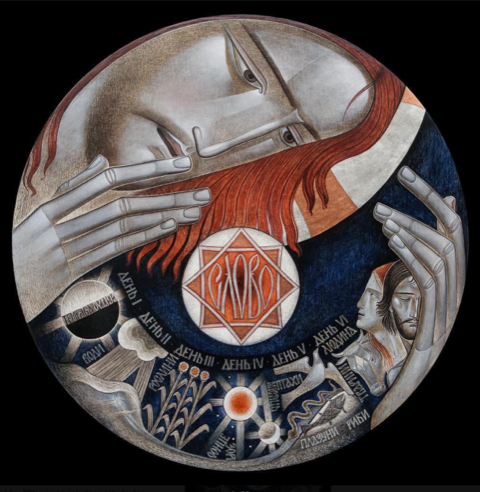
Author Debie Thomas describes why our belief in Jesus’ resurrection matters:
I believe that the historic creed I profess with countless other Christians on Sunday mornings tells me something essential and true: we believe in “the resurrection of the dead and the life of the world to come.” If we abandon this belief, we’ll do so to our impoverishment and our peril.
Why do I feel this way?… We live in a world marred by too many mass shootings to count, daily headlines of war, a rapidly worsening climate, increasing economic inequality, ongoing racist violence, and a second global pandemic of mental illness and anguish.
In the face of all this, I need to know that a better world is not just possible but assured. I need to trust that God’s salvation encompasses not only those of us who enjoy fairly comfortable lives here on earth but also those who will not experience the salvific love, vindication, healing, and justice of God in this life.
In other words, I believe in heaven because I believe in God’s salvation for the children who have died and will die in elementary school classrooms because the United States worships guns. For the millions around the world who died of the coronavirus before vaccines were developed. For Black, brown, Indigenous, gay, and transgender Americans who live in perpetual fear of violence and recrimination on our streets. For the young people who live under the shadow of mental illnesses that modern medicine can’t yet alleviate. For casualties of war around the world. For people in chronic pain….
For all these people … I need to know that, while we have every obligation to alleviate suffering in this world, the salvation of God’s precious children does not, finally, depend upon our clumsy efforts.…
I worry [that] … if Christians lose our belief in the resurrection of the dead and the life of the world to come, we will also lose the ferocity of our hope, the holy restlessness that leads us to action, the commitment to justice that fuels our prophetic lament, solidarity, resilience, and courage. After all, how will we pray for God’s kingdom to come, and how will we credibly usher in that kingdom in whatever small ways we can here and now, if we don’t believe in its ultimate fulfillment? [1]
Thomas names the paradox of Jesus’ resurrection and continued woundedness:
If the resurrection really is the best good news that has ever hit the planet, then its goodness doesn’t depend on us.… The tomb is empty. Death is vanquished. Jesus lives. Period. We are not in charge of Easter; God is.
In fact, Jesus’s own resurrected body speaks to the importance of lament in the midst of joy. Even in the most triumphant story ever told in Scripture or history, scars remain (John 20:27)…. Resurrection is a way forward from the grave that honors the scars we carry, helping us to bear them with resilience and hope. [2] ===================
| Holy Ground |
 The Bible contains many unexpected conversion stories. There’s Saul’s famous encounter with the risen Jesus while on the road to Damascus to persecute Christians. The first pagan convert was an unlikely Roman soldier named Cornelius who received the Holy Spirit along with his entire household. And many find hope in the story about the thief crucified next to Jesus who was welcomed into paradise. The Bible contains many unexpected conversion stories. There’s Saul’s famous encounter with the risen Jesus while on the road to Damascus to persecute Christians. The first pagan convert was an unlikely Roman soldier named Cornelius who received the Holy Spirit along with his entire household. And many find hope in the story about the thief crucified next to Jesus who was welcomed into paradise.These stories, and many more, all have one thing in common. They are all found in the New Testament. Conversion stories are exceptionally rare in the Old Testament, although there are a few examples of outsiders committing themselves to Israel’s God—Rahab, Ruth, and Naaman are the most cited stories. But even in this very small group, Naaman’s conversion is especially odd.Like Naaman, Rahab and Ruth were non-Israelites who gave their allegiance to YHWH. But unlike Naaman, these two women lived within Israel and among God’s people. In a way, their religious conversions were a byproduct of their cultural assimilation. Rahab and Ruth were absorbed into Israel’s covenant community, so it made sense for them to worship Israel’s God. But that was not true for Naaman. He was not incorporated into God’s covenant community, and he would not live among God’s people. He had to return to Syria where no one worshipped Israel’s God and no one obeyed the commands of Israel’s law. Despite all of this, Naaman still gave his allegiance to YHWH and vowed to never worship any other deity. For this reason, Naaman’s conversion may be the most remarkable in the entire Bible. Unlike any other Old Testament character, Naaman was willing to defy the norms of his homeland and the values of his community by giving his complete allegiance to a foreign God. This was, quite simply, unheard of.The sincerity of Naaman’s commitment is revealed by his request for dirt in verse 17. It was commonly believed in the ancient Near East that gods were territorial. Deities were linked to specific lands, and they were served by the people in those lands. Therefore, to properly worship a god required offering sacrifices on the land belonging to that god. Because Naaman could not remain in the land to worship Israel’s God, he asked to take a bit of the land with him presumably to build an altar upon it. In an unholy land devoted to false gods, Naaman would establish a tiny oasis of holy ground for the true God. DAILY SCRIPTURE RUTH 1:16-18 2 KINGS 5:1-27 WEEKLY PRAYER. Hippolytus of Rome (190 – 236)Christ is risen: The world below lies desolate. Christ is risen: The spirits of evil are fallen. Christ is risen: The angels of God are rejoicing. Christ is risen: The tombs of the dead are empty. Christ is risen indeed from the dead, the first of the sleepers. Glory and power are his forever and ever. Amen. |